Feeds:
Posts
Comments

Posts Tagged ‘family’

This too is a story about gifts.
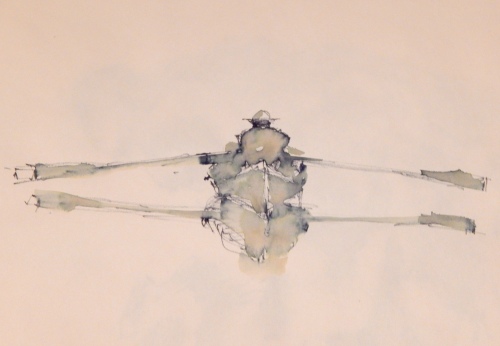
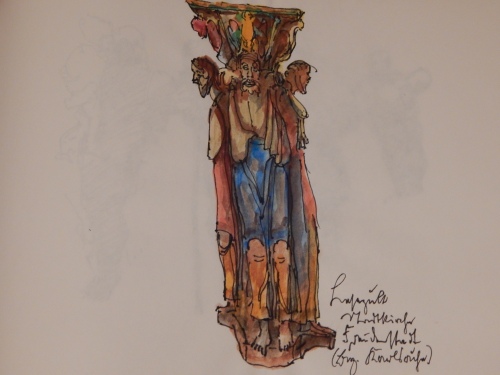
watercolor by ludwig a. joutz

Ludwig Aloysius Joutz (1910 – 1998) was an architect noted for his work with religious and educational institutions primarily in the Washington, DC area.  I learned of this gentleman while researching Joseph Anthony Horne as part of my Interlude Series.

By the time Horne meets Joutz, Joutz had already earned his doctorate. His 1936 thesis is still referenced with regard to medieval church architecture.  In 1939/40 he was awarded a travel grant from the German Archaeological Institute but was perhaps unable to use it because of the outbreak of World War II.   He would be drafted into the German army and become a prisoner of war.

Exactly how he and Horne originally met is unclear.  It might have been as early as the Invasion of Italy where Joutz was captured but certainly by the end of the war they were fast friends.  The earliest document that I’ve been able to find so far is dated May 1947.  In that year, Horne was working with the Monuments, Fine Arts & Archives unit.

As the Monuments Men continued their efforts to find, catalog and restitute items looted by the Nazis and others during the war, Joutz would become a valuable resource.  German-born, he was fluent in English and several other languages and knowledgeable about the art and literary worlds. Horne, American-born and fluent in German thanks to his immigrant parents, was culturally sensitive and knowledgeable about the arts. They apparently worked well as a team.
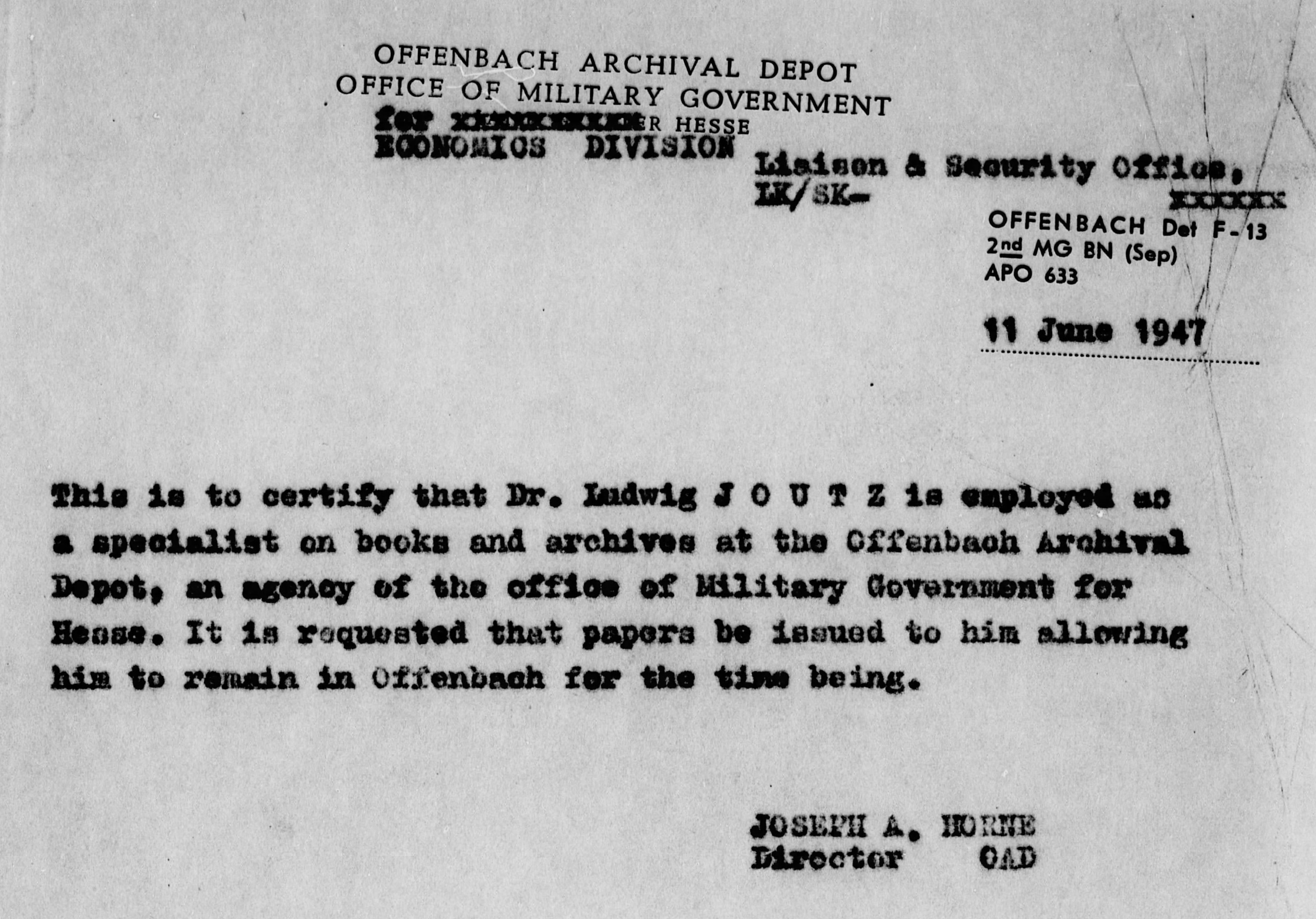
LJConfirmation

Between June 1, 1947 and March 1948, Joutz would serve as an operations specialist on books and archives at the Offenbach Archival Depot.  During that period, he and Horne, by then director of the Depot, would become great friends. Horne would aid Joutz in resettling in the U.S. where he would establish himself as architect. They would become godparents to each other’s children and remain friends until the end of their days.
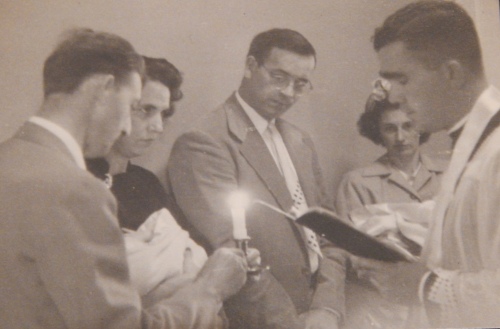
familyceremony

joseph and elsie horne and ludwig and lucy joutz

Throughout out his personal and professional life, Joutz would travel around the world.   As part of those travels, whether for work or for pleasure, he would view his surroundings with an artist’s eye and try to capture what he saw.  Yes, with a camera like his friend Horne, but Joutz would also explore many different forms and techniques of art. He experimented with pen and ink, pastels, watercolor, woodblock prints, papercutting and more.  How do I know this? By a gift he painstakingly assembled for his son.
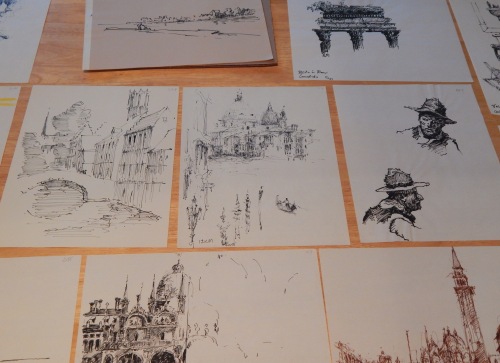
When visiting Joutz’s son, Frederick, a noted economist, I noticed a stack of suitcases tucked in a corner. Now these suitcases were the old-school, at least 1950’s if not earlier, kind of suitcases that are deep enough to curl up and go to sleep in and strong enough to, well, last a lifetime.  Frederick explained that they contained his father’s artwork. Now at first I thought he meant prints related to his father’s architectural practice, photos of completed projects, etc.  But that was not so.
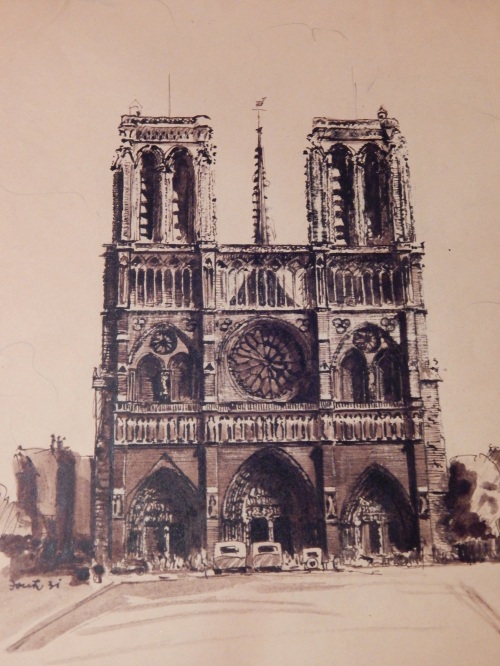
artwork by ludwig joutz
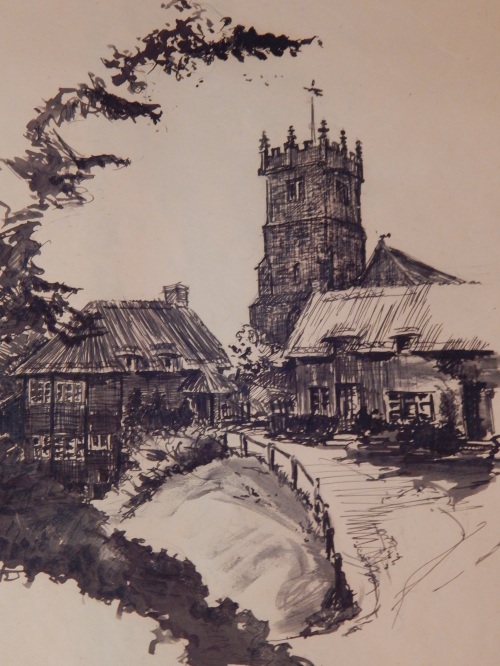
artwork by ludwig joutz

artwork by ludwig joutz

Inside the suitcases was artwork spanning nearly five decades. Joutz had carefully organized his artwork, everything from sketches on the back of used envelopes to sweeping washes of color applied to delicate Japanese papers.  It was all layered in stacks in these deep suitcases.  The son remembered his father engaged in the process and how he culled items along the way. One can only imagine what the father may have considered not worth saving.
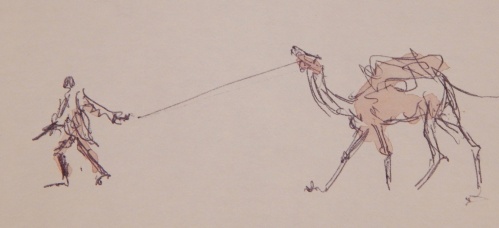
artwork by ludwig joutz

What I managed to see, the content of only two of the many suitcases, was breathtaking in its scope, in the diversity of imagery, and the range of techniques attempted. Each image suggested a story. On some of the pages were notes. What did they mean?
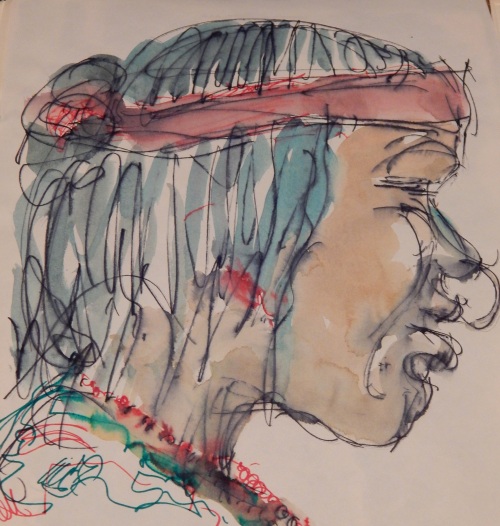
artwork by ludwig joutz
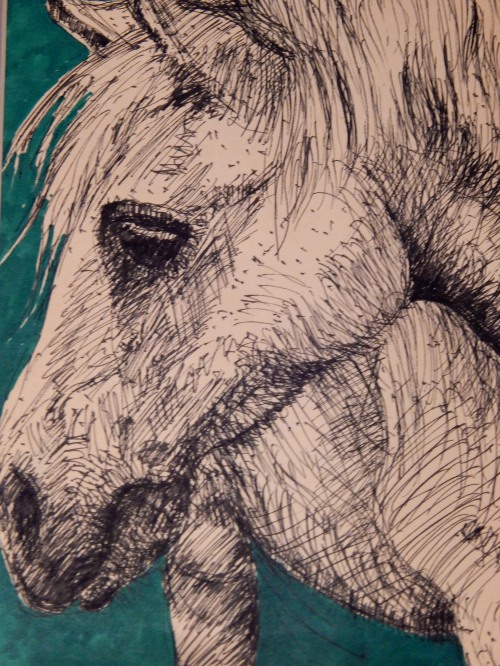
artwork by ludwig joutz

Some of the works were clearly copies of masterpieces, as done by any art student spending a day in an art gallery might do, but many images appeared to be of ordinary people.  Perhaps seen in European town squares or along desert routes when he traveled in Egypt?
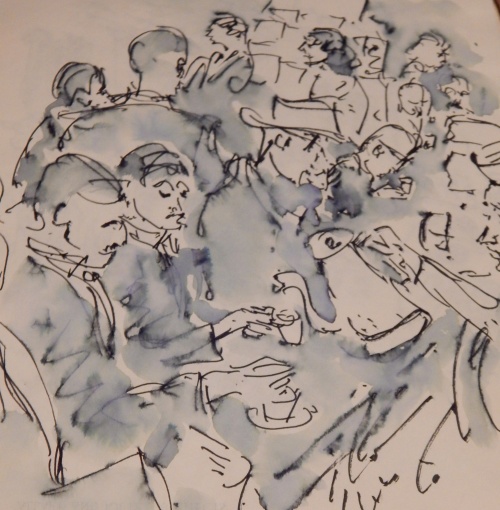
artwork by ludwig joutz
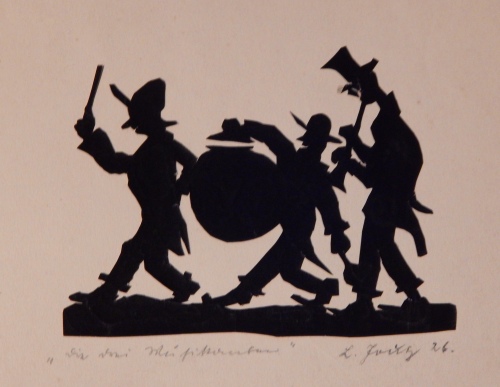
artwork by ludwig joutz
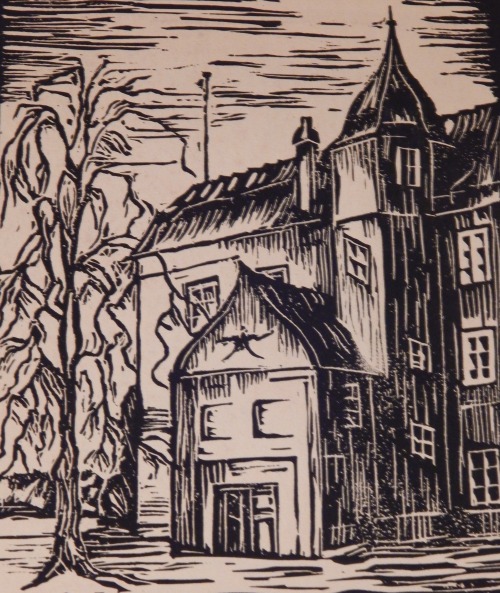
artwork by ludwig joutz?

Then there are the images that are ecclesiastical in nature … were they the early concepts or cartoons for church murals? Did the murals still exist or had they become lost and all that remains are these vestiges?
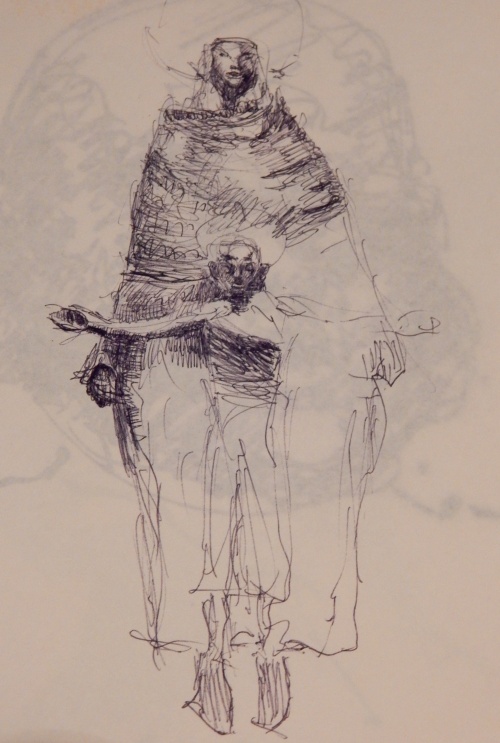
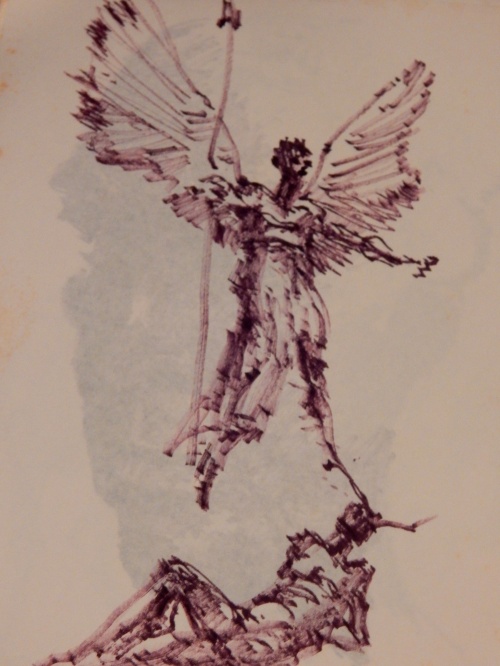
Those are stories that others may choose to research and tell one day. I am grateful that his son allowed me to see just a fraction of what is contained in those suitcases.  And a salute to Mr. Joutz for preserving his own artwork as he helped to preserve the works of others throughout his career.
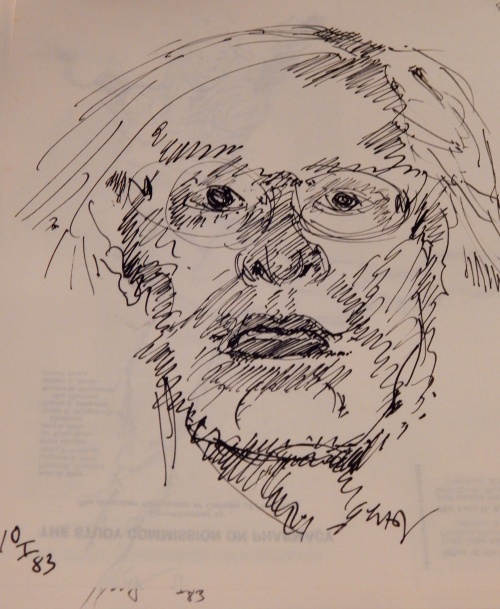
artwork by ludwig joutz


Sources and Additional Readings …

Fold3.com Holocaust Collection


Read Full Post »

Lin A. Nulman is an Adjunct Professor of English at Bunker Hill Community College.  Her poetry has appeared in Black Water Review, Tanka Splendor, and the anthology Regrets Only: Contemporary Poets on the Theme of Regret, among others. Lin puts her heart and soul into teaching and while I’ve yet to take a formal class, I have felt a student. In her own unique ways, she has challenged me to both appreciate and expand upon the work that I do as writer and photographer. It’s with pleasure I share Lin’s words and images about her grandmother, a great influence in her life.

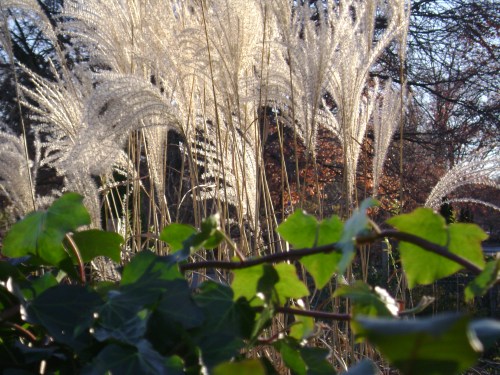
photo by Lin A. Nulman

“Oh, you see one tree, you’ve seen them all,” a woman once said to my grandmother, who had just remarked on a tree she found beautiful. Gram repeated the comment throughout my childhood as “the saddest thing I ever heard anyone say.” I think so, too, and I’m thankful for the gift of knowing why.

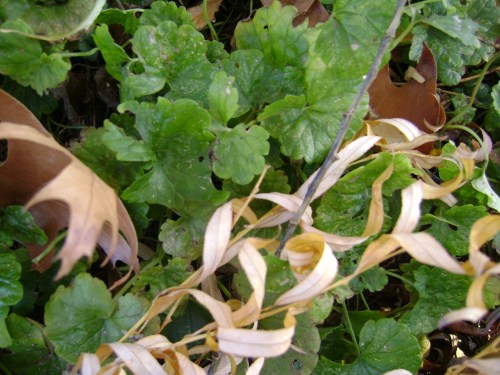
We took walks when I was a little girl, and even not so little, in our neighborhoods and on the beach. Often Gram would stop to look at something commonplace, such as weeds in a patch by the side of the road. Isn’t it amazing, she would say, how Nature creates so many shapes of leaves in just this one place?

photo by Lin A. Nulman

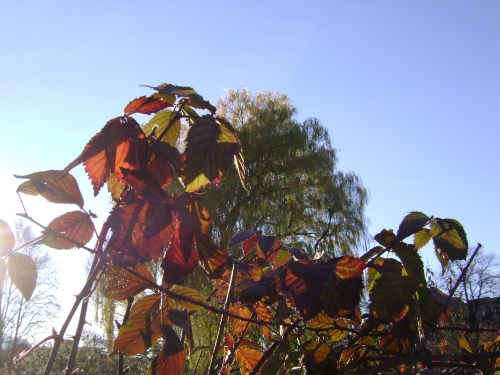
photo by Lin A. Nulman

Eventually I reached the age of impatience with what grown-ups noticed that wasn’t rare blue beach glass or a good climbing tree. But even when I felt impatient, I knew I could see what she was talking about. I don’t know if Gram believed in God, certainly not in a kindly God, but she did deeply believe in Nature, wonderful and endlessly giving. If you looked at it that way. And I do, and I have to, despite all the other ways my eyes still need to open. Her view was one of my starting places, creatively and spiritually.

photo by Lin A. Nulman

Recently a latent love for bohemian style has sprouted in me, thanks in part to author and blogger Justina Blakeney. I stay up too late turning pages of her new book and feeling out of breath. Justina defines bohemian style as the product of “a creative life and an active engagement in the search for alternative ideals of beauty…Our worldly collections are as eclectic as we are…Decorating is about feeling free, having fun, rejecting traditional notions about what goes with what…and getting a little bit wild.” [I’m quoting from her introduction to The New Bohemians: Cool & Collected Homes. UNputdownable.]

photo by Lin A. Nulman

photo by Lin A. Nulman

Even my 1906 copy of Putnam’s Handbook of Etiquette warns New York High Society about the habits of “Bohemia”, over there in Greenwich Village, beyond “the borders of wise convention”, definitely over the edge and unacceptably wild.

photo by Lin A. Nulman

photo by Lin A. Nulman

Her book was in my mind recently on a walk through the Fens, one jewel in the Emerald Necklace of green spaces that loops through Boston. It has a wide area of community gardens, where dozens of people fulfill their own visions with flowers, trees, bushes, berries, vegetables, bamboo, grasses, and leafy plants. It is a wonderful place to open my grandmother’s eyes, to see the shades and shapes Nature creates in just one corner of a park, sometimes helped along by a little human artistry: a painted gate, a statue, a purple disco ball. On this walk, my looking as I was taught to look revealed Nature, to my joy, as The First and Ultimate Bohemian. Everything goes with everything, so feel free and always be a little bit wild.

photo by Lin A. Nulman

photo by Lin A. Nulman

I challenged myself to photograph the gardens in December, without most of the flowers to help, and still found colors and forms running madly, beautifully together, eye-catching contrasts of silhouette, especially as I lost the light, and small places full of texture and depth. Thanks, Gram.

photo by Lin A. Nulman

photo by Lin A. Nulman

Please look for my blog, The Creative Part-Timer, in early 2016.

Read Full Post »

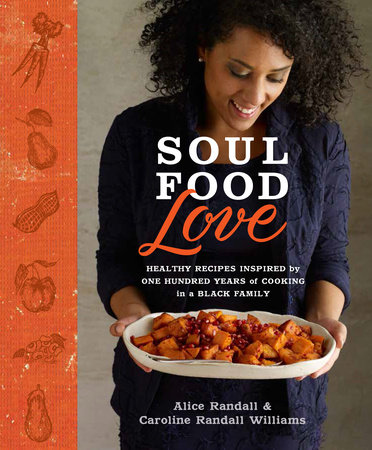
The recipes are good. They are simple, elegant and refined, like the family sharing its history through food.  The preface describes the book as telling the story of five kitchens and three generations of women. “Mother-daughter duo” Alice Randall and Caroline Randall Williams use the book to share stories from the kitchen, a place that could be both forboding and a place of great calm, depending upon one’s generation (e.g. slavery) and one’s location (e.g. north vs. south).  Traditional, mostly southern recipes, are reworked.  Flavoring agents like bacon dripping, ham hocks, and butter are replaced by olive oil, or no oil at all.  But fear not.  As I told my big brother, a traditional southern cook, flavors have been retained if not indeed heightened with the liberal use of spices. My favorite recipes were the simplest like the Warm Onion and Rosemary Salad, Herb-Roasted Salmon Fillet, Fiery Green Beans and Links Salad composed of green beans, green peas, cucumber and basil.

There’s a Homemade Peanut Butter recipe. The authors describe peanut butter “as a bass note that can carry a wide variety of top notes” and encourage users, once comfortable with the basic recipe, to add spices. Be creative. Set no limits.  It’s a sentiment that fits the family.

Many of the book’s recipes from Mama’s Tequila Ice to Eggplant Tower with Mashed White Beans open with brief headnotes that describe the family connection to the dish.  Whether its a variation on a meal served while hosting parties during the Harlem Renaissance or a reworking of a meal had as family members traveled overseas in Yugoslavia, each recipe clearly has meaning.

While its an eclectic mix of recipes, overall the book is quite a culinary inspiration.  The recipes don’t begin until page 80.  Those first seventy-nine pages are a poetic examination of five kitchens, and American history, beginning with Minnie Randall (1897-1976) through Caroline Randall Williams (b. 1987).  Reviewing the book has reawakened my desire to ask family members about their memories of food past and what they’d like to cook in the future.  You don’t need to be of African American heritage to enjoy this book.  It’s an American experience that can be shared, quite deliciously, by all.

I received this book from Blogging for Books for this honest review.

More Info …

Author Bios

SoulFoodLove

Read Full Post »

Nancy Li, owner of TAO Select Image courtesy of artist.

Nancy Li of TAO Selection
Image courtesy of artist.

Believe it or not, porcelain had been on my mind just before my chance encounter with Nancy Li of TAO Selection.  I had come across a review of Edmund de Waal’s new book, The White Road.  A noted potter, the book chronicles de Waal’s “journey into an obsession” to learn more about the origins and reinvention of porcelain.  The prologue opens with de Waal in China: “I’m trying to cross a road in Jingdezhen in Jiangxi Province, the city of porcelain, the fabled Ur where it all starts …” Nancy Li is quick to tell you, and rightfully so, her family is from this region of China and that she is a third generation designer of porcelain.

Image courtesy of artist.

As I later told her, what I most admired about our first brief encounter outside of a church gift shop was her determination to find venues to market her jewelry, and also to share the story of her family and cultural heritage of working with porcelain. In his book de Waal writes of working with porcelain clay to make a jar. Though his studio is in South London, he writes, “… as I make this jar I’m in China. Porcelain is China. Porcelain is the journey to China.” During an interview, Nancy Li made a similar statement.

Image courtesy of artist.

We met briefly in Cambridge during her lunch break.  Again, with great passion, she began sharing the story of her family especially of her grandfather, a porcelain master.  For three generations the family and 15-20 employees have been working with clay using a proprietary process, molding it in forms from pendants to bowls to large statuary, hand-glazing and then firing the pieces in her family’s kiln.  I’ve always thought of porcelain as fragile but porcelain can be strong as Nancy demonstrated by dropping a lovely blue and white bracelet on the floor. It made a beautiful ringing sound and remained unbroken.

On her website, Nancy describes attending the top fashion school in China, Donghua University.  In talking with her I learned that six years ago she moved to the U.S. where she also received a Ph.D. in Materials Engineering from Boston University and a Management Degree from the MIT Sloan School of Management, part of her dual efforts to better understand the science behind porcelain and to raise awareness globally about the family business and the high-quality of the artwork produced.

Image courtesy of artist.

On top of her full-time job as a Systems Engineer, Nancy makes time to interact with people around Boston, educating them about porcelain and obtaining feedback about peoples’ fashion interests.   She shares the feedback with her family, including producing sketches for alterations and new designs, inspired by what she hears and by her own artistic background.

She describes wanting to help people understand that high-quality porcelain is not only for the wealthy.  It is not only something from the past to be found in antique stores.  It is contemporary and it is art, an art that represents a culture.  “Each piece of art has a story behind it,” she says at one point, holding a necklace in her hand.  “It is art that inspires, that’s meant to be shown and shared. I think Americans have a wrong impression that everything made in China is cheap quality. What my family does in its local community, what it has been doing for so long, is of the highest quality and I want to share that work, our work, and help it evolve.”

Following are links to learn more about and connect with designer Nancy Li and to view more of her wearable porcelain art.

TAO Selection Etsy Shop

TAO Selection Website

Following are links to learn more about artist and writer Edmund de Waal and his passion for porcelain.

http://www.edmunddewaal.com/

The White Road

Read Full Post »

Remember the hand of the budding artist? Well, mom is artist Zoe Langosy.  Recently, she mentioned how important this period of fashion weeks around the world had been in her artistic growth and I asked her to share more through her words and images …

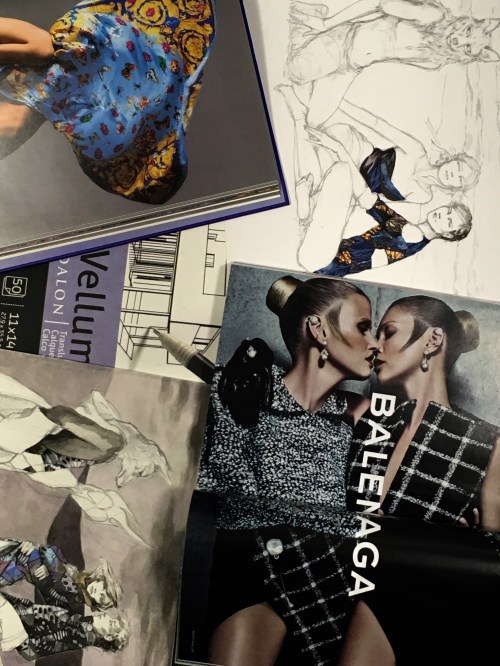
When I was 14, the fashion world became a magic kingdom to me. Fashion took me on a journey through music, pop culture, the arts… I couldn’t get enough. Already developing into a figurative artist, my drawings became filled with long-legged, often tragic looking, beauties. All my characters were adorned in lavish attire made from a patchwork of fabrics and colors.  As this was before the internet, the way I kept up with my new found passion and muse was either on TV or through magazines.  My teenage bedroom began to overflow with Vogue’s from all over the world, Harpaar’s Bazaar, The Face, Sky… Nothing ever compared, though, to the September issue of American Vogue.

Each year seemed to compete with the year before… More pages, more looks, more exclusive inserts from designers. Each year, as summer drew to a close, my sister and I would check newsstands every day anticipating its arrival.  The first issue I purchased was in 1991. Linda Evangelista donned the cover, smoldering with red hair and tartan. I must have turned the pages of that issue a thousand times, and yet somehow kept it pristine like only a true collector could. Never letting any hands on it but my own.

photo by Zoe Langosy

24 years have passed, and I still feel a buzz when the September Vogue appears on the newsstand. It remains a guilty pleasure of mine, still inspiring my art … Of course, I have other inspirations these days as well.

These days, I’m okay if the cover gets scratched or my one-year old tears out a page. Now, it’s become so ingrained in my world it’s like buying a new set of pencils. Something I’m prepared to destroy and use purely as a visual playground that will set my imagination running.

Follow Zoe’s creative journey …

http://www.zoe.langosy.net/

Langosy Arts on Etsy

Read Full Post »

He kept asking for money but that I would not do.  In part, because I had too little of it myself and because I could not trust him.  He would most likely spend it on alcohol.  If he did not spend it on alcohol, I was worried that “friends” might siphon him dry.  I did want to send him something, to stay in touch, in addition to the occasional chat by phone.  I wanted him to know that I cared about him as much as I knew he cared about me.  I was still his baby sister and I respected that he was one of the big brothers who so carefully looked out for me as a child.

I think one day, with those thoughts in mind, I looked up into a cabinet and saw the dusty box.  I took out a couple of bags, dropped them into an envelope, included a note that said something like “Drink this and not that other stuff!” When I told him what I had done, he just chuckled, as delighted as a child.

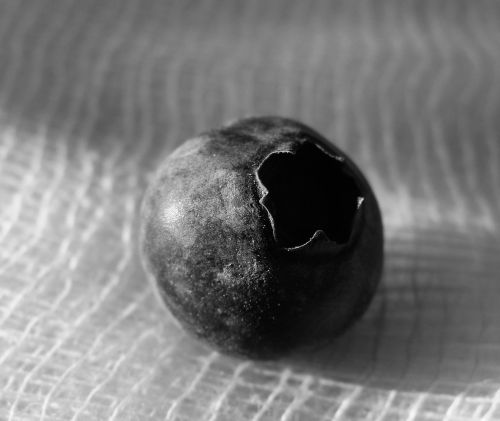
I became a connoisseur of tea design and flavor profiles.  I was not especially picky.  Whenever I stayed in a hotel I’d pocket the teas left in the room for guests with a goal to send them to him later.  While grocery shopping, I’d occasionally splurge on an herbal tea sampler and split up the packs to send him different flavors.  Later, I’d quiz him about which teas he’d liked and didn’t like.  Blueberry was a favorite but all flavors were welcome, I was told.

They had to fit inside a standard envelope (which I occasionally decorated).  Ideally the weight was such that I would only need at most two stamps so that I could drop my packages in a blue box on my way into work.  I didn’t want to wait in line in the post office to mail a larger box.  Sometimes I’d jazz up the mailings with little packages of coffee but I knew from childhood memories that he was more of a tea drinker. He and my mom would sit at the kitchen table drinking Lipton tea, her dark cup sweetened with just a bit of sugar, and his almost white with milk.

Why does this story surface?  Well, it has been a long summer in some ways.  Aside from a few mailings of seeds to family and friends and postcards to my kids club, I did not do much other mailing.  This weekend I was on the phone with this brother. We were having a good chat and as I was about to hang up he said, “Hold it. What happened to it?”

“What happened to what?”

“My tea,” he said.  “You haven’t sent me my tea.  It does help, you know.  When I have tea, I don’t drink.”

“Okay,” I said brightly. “I’m on it.”  Both laughing, we hung up. And then I cried.

That night I pulled together a short pile of envelopes and addressed them all to him.  The next day I bought a box of tea, many flavors.  Yesterday, I mailed him honey vanilla.  We’ll see what the next week holds.  Maybe strawberry. I think a big box of blueberry will wait until Christmas.


Read Full Post »

There is an elderly woman who lives in my childhood home in Virginia.  My brother tells me that she loves to grow tomatoes like some people grow wildflowers.  In every available space, as a border to the porch, in the spots where the roses and hydrangeas grew, all now tomatoes.  While wonderful to see such eccentric growth, it was also hard for my brother to see.  There was a part of him that wanted the old yard back, the flower beds and vegetable garden and the swathe of green grass just big enough for children to run about with clothes lines arching above.  He wanted the fence line back that separated our property from the neighbor’s, a wire fence covered in honeysuckle and milkweed and edged with wild mint.  And he wanted the trees, the maple, the plum and that short-lived apricot.

All had been gone for near two decades but in that moment, of seeing those tomatoes, he fiercely wanted it all back and with it the parents now deceased and the siblings spread far and wide.  “You alright, Daddy?” his son asked.  He looked down at his five-year old who was sprouting up like an oak.  “Yes, son.  Daddy was just remembering.  Remind me to tell you about the seeds I planted in this place.” The son nodded and then said, “Okay, but can we go to the playground first?” My brother laughed, tickled his son, and let the past fade knowing it would never disappear.  “Yes, son, let’s go.  We must have our priorities.”

Read Full Post »

Send a single packet of seeds through the mail enclosed in an envelope not much bigger than the seed packet.  Include a single slip of paper with words, to the effect of, I can’t wait to see how you photograph these.  That’s what my cousin did.  A simple gift of great encouragement.

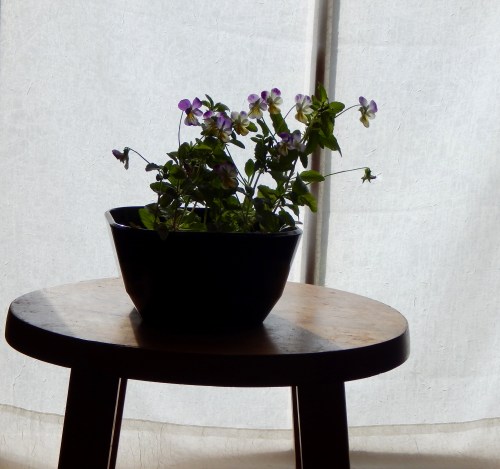
It took me a while, I must admit, to plant the seeds in a cereal bowl.  I was lazy on occasion, not watering the dark earth and letting the top get so dry it seemed an errant breath would blow everything away.  But I did water, pouring on cups at a time and then walking away.

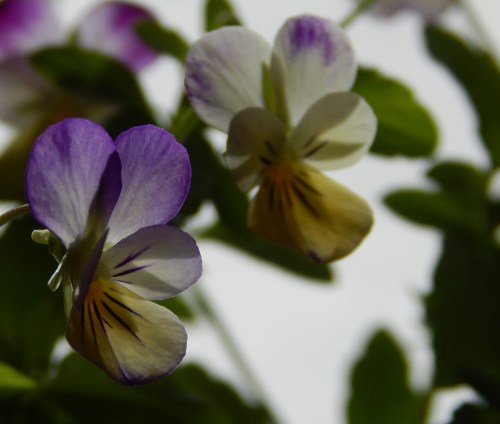
If you follow my blog, you know I grew impatient. I moved the bowl from room to room trying to follow the sun. But then, as happens often in nature, sprouts did appear and then stems and leaves and soon blooms.  Beautiful blooms.

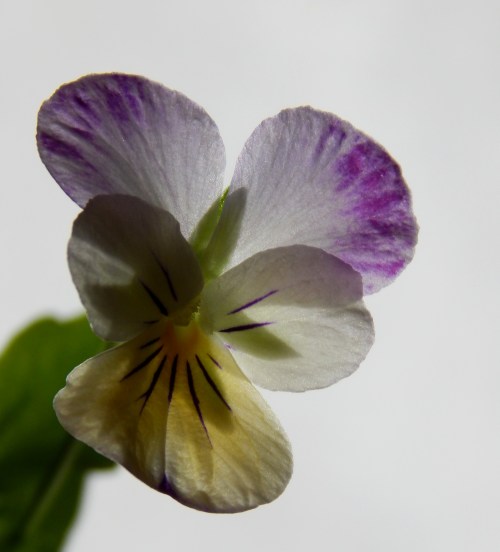
I could have eaten them, you know. Violas are edible but now I too wanted to see what would happen over time.  The blooms made people who were visiting, who were perhaps not in a happy space, smile as they walked past the bowl.  And even I, who can on occasion not find the bright side, they too made me smile as the sun struck the purple and gold.

Then one day as I was sitting in a room staring at the white curtain lit by the sun, and thinking perhaps that curtain was a bit too sheer for that particular room, I was then struck by a new thought:  what a wonderful backdrop for Lorraine’s flowers. And that’s how this series of pictures was taken.

Read Full Post »

The sunflower seeds that I sent to one of my brothers are doing well.  During the most recent heat wave in Virginia, he described diligently watering their stalwart green stems along with his green pepper plants.  I asked him this morning if they have yet to bloom and he replied, “No.  They just keep growing taller!  They are already taller than the porch.  The landlord worries they might overgrow the house. The stems are so thick and the leaves so broad, you can’t see anything. They are creating a natural wall.  The landlord may want to cut them down.” I encouraged him not to allow that to happen.  While they are not beanstalks for Jack to climb, who knows what’s to be found at the top of those flowers once they pierce the clouds?

As for these sunflowers, they were to be found in Boston’s Copley Square as I dashed through the Farmers Market this past Friday.  A delightful sight, living up to their name, like the sun come down to the ground.

Read Full Post »

I mean … viola! 🙂

Read Full Post »

« Newer Posts - Older Posts »