Feeds:
Posts
Comments

Posts Tagged ‘storytelling’

I recently ordered some seeds.  At first, it felt like an extravagance.  Not a lot of money was spent but there were certainly other things I could have put that money towards.  Immediate needs. But I bought the seeds thinking long-term for when the winter settles in, and all the leaves are gone from the oak tree and the sunlight shines through the many windows of the house.  Even in the bitter cold, when on the one hand I am able to photograph ice on the inside of the windows, there are sunlit nooks just warm enough for sprouts to grow and even on occasion my bucket of little potatoes.

The sprouts grow in little dishes so I’m not working with much dirt but whether a few inches of soil or a foot, it brings me joy sometimes and calm always.  I feel grounded.  Of late I’ve been interacting with friends, family and even strangers for whom the winter is a tough time. I’m tempted to send them all seeds so that they can create winter gardens and perhaps find calm and maybe even joy.  But I’m not sure that gardening works that way for everyone.  I may do it anyway, out of selfishness, because the act would make me feel good.

I did this past summer mail a young friend a package of edible flower seeds.  Someone who can be a little down and get stuck inside her head.  I thought working with her hands might be good.  She texted me back a picture of the unopened colorful seed packet sealed in a beautiful glass jar.  What else could I do but applaud her on the composition of the picture.  I mean, who am I to dictate how someone gardens.  Later when she came to visit in person I let her taste some of the sprouts I had growing, some mild mixture of greens.  I happened to have an unopened package of the seeds tucked away.  I gave them to her … along with a little bag of dirt.  The next text I received was of a bowl of growing greens.

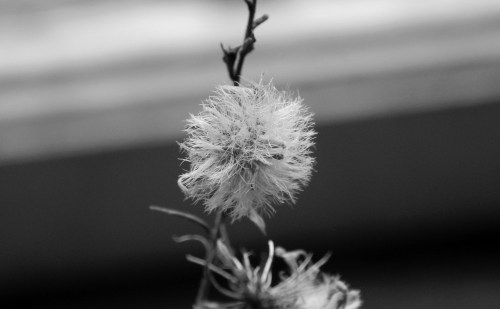
Just some random thoughts this Sunday morning as I stare at empty vessels waiting for their seeds. The pictures are images of dried flowers from the Belle Isle Reservation.

Read Full Post »

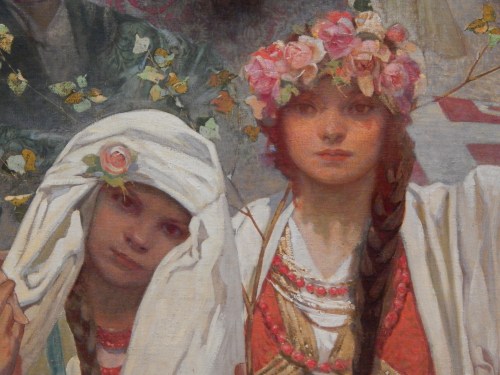
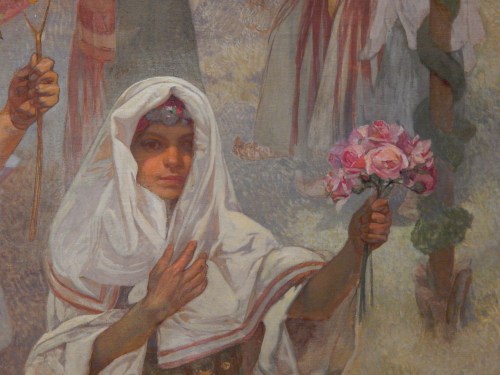
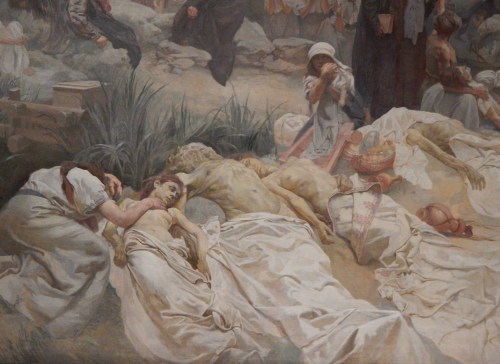
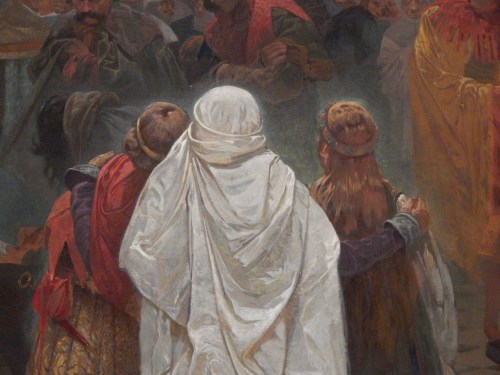
As far as I know, I have no Slavic blood in me but I do not think you need to be of Slavic heritage in order to appreciate the beauty and majesty of Alphonse Mucha’s Slav Epic anymore than you need to be of African American heritage to appreciate the Singing Windows at Tuskegee.

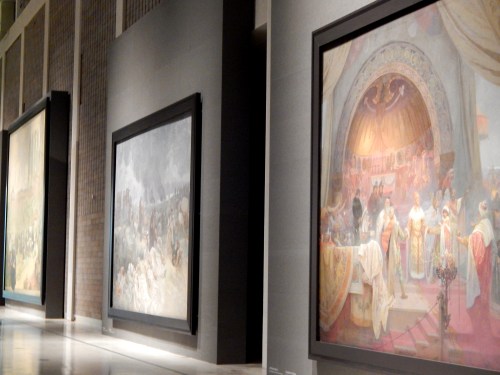
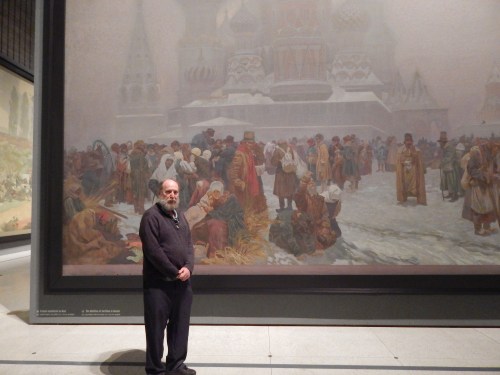
They both employ, in vastly different ways, visual storytelling to convey the histories of peoples and their journeys from subjugation to celebration, from despair to hope. As described on the Mucha Foundation website:  “The Slav Epic (Slovanská epopej) is a series of twenty monumental canvases (the largest measuring over 6 by 8 metres) depicting the history of the Slav people and civilisation. Mucha conceived it as a monument for all the Slavonic peoples …

The idea of the work was formed in 1899, while Mucha was working on the design for the interior of the Pavilion of Bosnia-Herzegovina, which had been commissioned by the Austro-Hungarian government for the Paris Exhibition of 1900.

In preparation for the assignment he travelled widely through the Balkans, researching their history and customs as well as observing the lives of the Southern Slavs in the regions that had been annexed by Austria-Hungary two decades earlier. From this experience sprang the inspiration for a new project – the creation of ‘an epic for all the Slavonic peoples’ that would portray the ‘joys and sorrows’ of his own nation and those of all the other Slavs. ”

On that website you will find a picture of all 20 paintings, a description of the stories depicted in each painting, and “related objects” which include photographs of Mucha at work on particular canvases, working with models, etc.

I read several reviews that said do not go out of your way to see this exhibit. I would say, if you have the opportunity to visit Prague, do all that you can to go out of your way to view this exhibit.  What struck me? The scale of this creation, the source of the inspiration, the vision of the artist and the dedication to completion. And of course the use of color and the expression of light.

It took Mucha approximately five years to shop his idea around and find a benefactor and then over a dozen years to produce his epic even as he produced all of the other art — the posters, the advertisements, murals, etc. — which are considered his definitive works.

Through December 2016 the exhibit can be found at the Trade Fair Palace in the City of Prague (http://www.ngprague.cz/en/exposition-detail/alfons-mucha-the-slav-epic/) and the online exhibit can be found on the Mucha Foundation website (http://www.muchafoundation.org/gallery/themes/theme/slav-epic).


Sources & Additional Readings

http://www.muchafoundation.org/gallery/themes/theme/slav-epic

https://en.wikipedia.org/wiki/The_Slav_Epic

1925 Article about the Epic as a Work in Progress

a 2010 post about the troubled history of the paintings

Read Full Post »

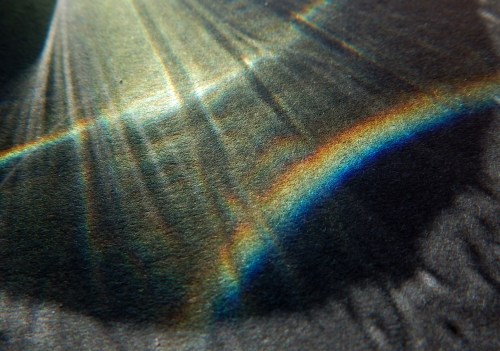
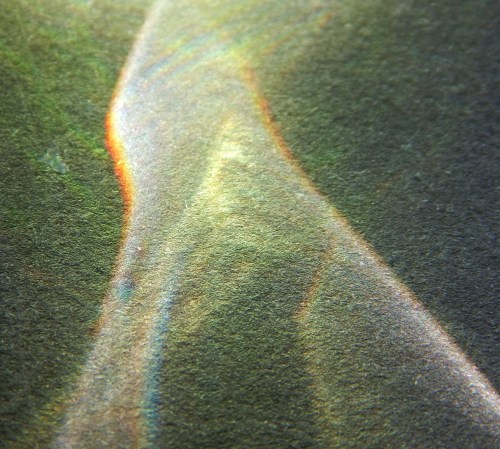
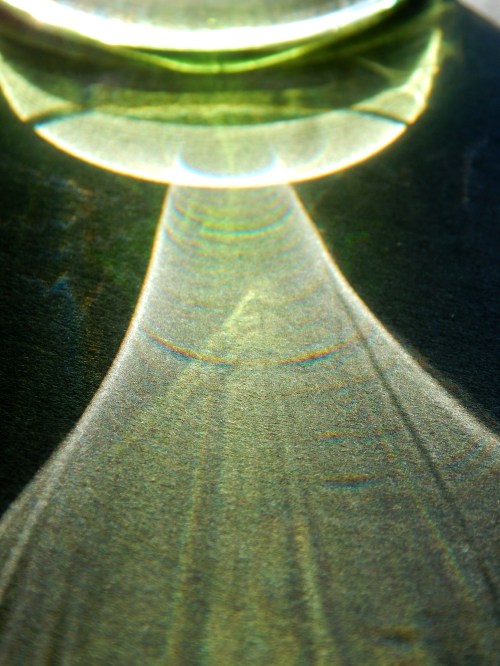
The drinking glass I picked up at a thrift store with the intention of planting sprouts in it this winter.  But for now it has been sitting on a table next to the window.  This morning I dropped two small tomatoes into it, just a placeholder until I chop them up for salad later.  Then that thing happened again.  While at the keyboard I happened to glance over my shoulder and there it was, a curious light on the tomato as the morning sun shone through the curves of the green glass.  At first my focus was purely the tomato but as I hunched over my still life I noticed what was happening at the base of the glass.  So I placed a piece of black cardboard beneath the glass, removed the tomatoes and added some water. This is what I saw.

I changed the level of the water. I placed the green glass on top of a clear glass to raise its height.  At one point I dropped in an ice cube.

It was just fun to see what changes might take place.

I set aside the green glass and replaced it with a clear square glass that has a thick bottom.  I photographed its pyramid like base and that was pretty cool.

Overall, my “experiment” took about 15-20 minutes.

Not much clean up.  Just some glasses to dry.

Just some glasses to dry.


Read Full Post »

Water flowed across the asphalt, a broken pipe perhaps.  In the bright light of the day were reflected the reds, greens, and golds of the overarching trees, and the thick dark lines of the neighboring fence.

And nearby a butterfly perched, the brightest one I’ve seen all year.

Read Full Post »

Previous Interludes

photo by Joseph A. Horne, Mt. Olivet Cemetery

photo by Joseph A. Horne, Mt. Olivet Cemetery

In 1949, when Joseph A. Horne received an award from the Netherlands for his part in the restitution of books to that country, he was Chief of the American Information Center in Frankfurt, better known as Amerika Haus.  In a 2013 blog post, illustrator Eric Carle described his experiences at Amerika Haus as a young man:  “The Amerika Haus countered the negative view of the United States and the free world. It housed a library with books and magazines mostly in English, arranged discussion groups, performed plays, concerts, movies and exhibitions, for instance, a show on architecture from the United States. From time to time, the Amerika Haus arranged joint ventures with German cultural institutes …  The concept of the Amerika Haus was ingenious, successful and resonated with the German population eager for more contact with the outside world from which it had been isolated for many years.” A 20-year old art student, Carle would be hired to design posters for Amerika Haus events.

Libraries as places of cultural exchange was not a new idea.  Since 1938, the U. S. State Department had operated a global Cultural Relations Program, working with private citizens and organizations like the American Library Association, establishing libraries, orchestrating and/or collaborating with others to produce a wide range of activities from teacher/student exchanges to fine art exhibitions.  In post-war Germany the first Amerika Haus was established in Frankfurt by October 1947.  Others quickly followed.

The_Logan_Daily_News_Thu__Oct_22__1953_(3)

These centers, soon located across Germany, drew peoples of all ages and backgrounds curious about the U.S. and seeking education and cultural opportunities that had been denied under Hitler, and then again under Stalin for those people living in Soviet-occupied areas.

By 1953, the libraries were being operated under the auspices of the United States Information Agency (USIA), known abroad as the United States Information Service (USIS).  Established under President Eisenhower, USIA focused on public diplomacy, and consolidated a number of foreign information activities into one agency, including the existing network of libraries.  The USIA would focus on delivering programming overseas with the Department of State providing foreign policy guidance. Titles changed and field operations shifted, but people like Joseph Horne continued what they had been doing since the end of the war, serving as liaison and ambassadors of U.S. culture and democratic ideals. The libraries were a focal point.  Pulitzer Prize winning journalist, Hal Boyle, reported from Berlin in 1954:

The centers were viewed by many as a strategic investment against the rise of the Soviet Union and communism, not by using force, but by using arts, literature, music and commercial publications.  As Joseph Horne would later tell his son, “One of the most powerful pieces of U.S. propaganda ever was the Sears Roebuck catalog.

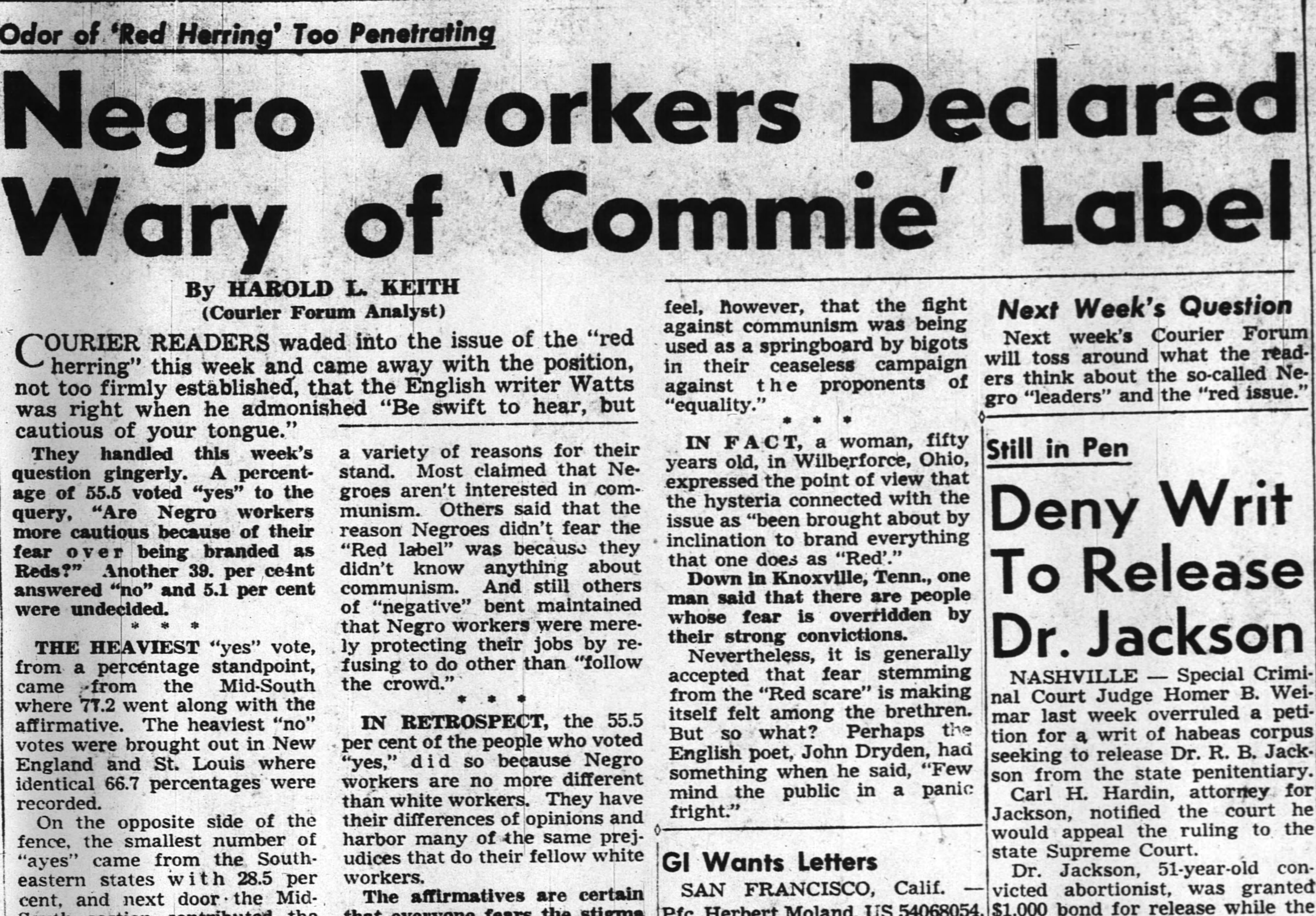
As the Cold War intensified, libraries, and especially Amerika Haus libraries in Germany, would become unexpected targets as the anti-Communist fervor intensified across the U.S.

Concerns had escalated to the point that government employees had to swear they were not Communist. Television networks made their employees sign loyalty oaths. Public media encouraged people to report anyone suspected of being “red.””

Excerpt from The_Pittsburgh_Courier_Sat__May_31__1952_

Excerpt from The_Pittsburgh_Courier_Sat__May_31__1952_

Lists were compiled by private groups as well as government agencies.  Celebrities were especially put under a spotlight.  People were blacklisted. They lost their jobs.  People were threatened with jail and expulsion from the country.

None more so than Wisconsin Senator Joseph McCarthy fanned the nation’s fears, with his fervent accusations of subversive activities at home and abroad.  In David Caute’s book, The Dancer Defects: The Struggle for Cultural Supremacy during the Cold War, he describes McCarthy’s interest in the State Department libraries, places where he believed Soviet and communist-leaning propaganda was being distributed.

McCarthy’s two aides, Roy Cohn and David Schine, would embark on a highly publicized tour of numerous European cities “striking at the cultural centers known as America House. … A major purge occurred in Berlin and throughout West Germany where the [United States Information Agency] had 40 branch libraries visited by an estimated 15 million people in the course of 1952.” He goes on to quote a 1953 Herald Tribune reporter as writing, “The burning of books is now progressing merrily in all American diplomatic missions abroad for all to see.

Russian American Vera Micheles Dean was head researcher for the New York-based, and anti-Communist, organization Foreign Policy Association.  In 1953, when her books were ordered pulled from the Amerika Haus libraries by the State Department, she put two questions to Secretary of State Dulles:  Who was responsible for drawing up the list of proscribed books? On what grounds were her writings forbidden?

In a 1953 article in opposition to McCarthy’s attacks against the libraries, correspondent Raymond Wilcove writes:  “More than 35 million people in 67 countries continue to throng America’s overseas libraries as Congress debates their value. Those who have seen them in operation say they provide America’s best show-window to the world.

Horne would later share that he remembered his phone calls from Cohn.  While he did not share the detail of the conversations, he was not complimentary about the interaction.  Despite the purge, in the end, the Amerika Haus libraries would survive McCarthy.  McCarthy would not survive Edward R. Murrow.

Edward R. Murrow

Edward R. Murrow

In the 1950s, on his CBS program See It Now, developed with colleague Fred Friendly, Murrow produced a series of reports about McCarthy’s activities.  His March 9, 1954 broadcast is widely hailed as one of television’s great moments.  Murrow began the report with these words,

Because a report on Senator McCarthy is by definition controversial, we want to say exactly what we mean to say, and I request your permission to read from the script whatever remarks Murrow and Friendly may make. If the Senator feels that we have done violence to his words or pictures and so desires to speak, to answer himself, an opportunity will be afforded him on this program. Our working thesis tonight is this question: If this fight against Communism is made a fight between America’s two great political parties, the American people know that one of these parties will be destroyed, and the Republic cannot endure very long as a one party system.”

Having been diligent at collecting film and audio clips of the Senator speaking in public, Murrow proceeded to air clips of the Senator, in his own words, making statements in one setting that he makes very differently in another. Murrow remarked,  “On one thing the Senator has been consistent. Often operating as a one-man committee, he has traveled far, interviewed many, terrorized some, accused civilian and military leaders of the past administration of a great conspiracy to turn over the country to Communism, investigated and substantially demoralized the present State Department …

Murrow was dogged in his examination of the Senator, finally concluding, “No one familiar with the history of this country can deny that congressional committees are useful. It is necessary to investigate before legislating, but the line between investigating and persecuting is a very fine one and the junior Senator from Wisconsin has stepped over it repeatedly. His primary achievement has been in confusing the public mind, as between the internal and the external threats of Communism. We must not confuse dissent with disloyalty. We must remember always that accusation is not proof and that conviction depends upon evidence and due process of law. We will not walk in fear, one of another. We will not be driven by fear into an age of unreason, if we dig deep in our history and our doctrine, and remember that we are not descended from fearful men — not from men who feared to write, to speak, to associate and to defend causes that were, for the moment, unpopular.
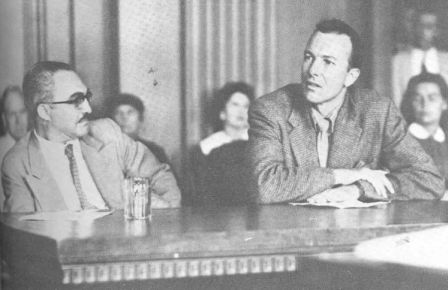
Pete Seeger Before McCarthy

Pete Seeger Before McCarthy Hearing

This is no time for men who oppose Senator McCarthy’s methods to keep silent, or for those who approve. We can deny our heritage and our history, but we cannot escape responsibility for the result. There is no way for a citizen of a republic to abdicate his responsibilities. As a nation we have come into our full inheritance at a tender age. We proclaim ourselves, as indeed we are, the defenders of freedom, wherever it continues to exist in the world, but we cannot defend freedom abroad by deserting it at home.

Langston Hughes Before McCarthy

Langston Hughes Before McCarthy Hearing

The actions of the junior Senator from Wisconsin have caused alarm and dismay amongst our allies abroad, and given considerable comfort to our enemies. And whose fault is that? Not really his. He didn’t create this situation of fear; he merely exploited it — and rather successfully. Cassius was right. “The fault, dear Brutus, is not in our stars, but in ourselves.”

Good night, and good luck.”

McCarthy’s influence waned. By the end of the year he would be censured by Senate.  In 1957 he died at the age of 48.  The libraries that he had so maligned were still going strong.  In 1959,  journalist Tom A. Cullen would write: “I have just visited the American “spy factory” in West Berlin.  That’s what the Communists call Amerika Haus, the new $250,000 United States Information Center.  But in an afternoon there I could find nothing more sinister than a few gray-haired grannies reading newspapers.  Or maybe it’s American jazz that’s sinister – there was a whole group of eager German youths listening to the latest long-playing jazz discs from the States.

Throughout this period, Joseph Horne’s foreign service activities would take him from Frankfurt, Germany to Genoa, Italy where he served as Public Affairs Officer. Intermittent time would be spent in the U.S. as his family grew.  In approximately 1957 or 1958 he would be assigned as Cultural Affairs Officer in Bangalore, India.  In 1961, President John F. Kennedy would appoint Edward R. Murrow as director of the United States Information Agency.  “Edward R. Murrow was my boss,” Horne would tell his son. India during this time, like much of the world, was going through great change. More to follow in the next Interlude.


Sources & Additional Readings

Amerika Haus: The First Fifty Years

History of the Amerika Haus

http://ericcarleblog.blogspot.com/2013/08/amerika-haus.html

DAI Heidelberg Library & USA Information

Information Bulletin April 1949

The Dancer Defects: The Struggle for Cultural Supremacy during the Cold War … by David Caute, page 26

Joseph McCarthy

Cohn & Schine Time Cover 1954

Vera Micheles Dean

Edward R. Murrow addresses Joseph McCarthy full video

Transcript of Murrow addressing McCarthy

https://en.wikipedia.org/wiki/Communist_Control_Act_of_1954


Read Full Post »

Yes, through the rippled glass.  The landlord recently told me that he had specifically selected that rippled glass. A carpenter, he had found the glass in a building being demolished.  And when he assembled the windows for his home, he used the rippled glass.
Read Full Post »

… there was a school and on the campus there was a chapel and inside the chapel there was a stained glass window known as The Singing Window.

photo by Carol M. Highsmith

photo by Carol M. Highsmith


Sources and Additional Readings

Learn more about the photographer Carol M. Highsmith on the Library of Congress website: Carol M. Highsmith Archive.

Learn more about Tuskegee University including its tours and the history of the chapel.

Read Full Post »

Remember the hand of the budding artist? Well, mom is artist Zoe Langosy.  Recently, she mentioned how important this period of fashion weeks around the world had been in her artistic growth and I asked her to share more through her words and images …

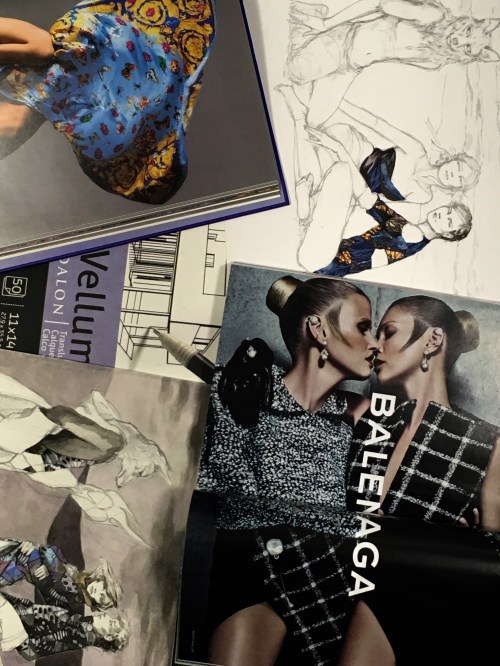
When I was 14, the fashion world became a magic kingdom to me. Fashion took me on a journey through music, pop culture, the arts… I couldn’t get enough. Already developing into a figurative artist, my drawings became filled with long-legged, often tragic looking, beauties. All my characters were adorned in lavish attire made from a patchwork of fabrics and colors.  As this was before the internet, the way I kept up with my new found passion and muse was either on TV or through magazines.  My teenage bedroom began to overflow with Vogue’s from all over the world, Harpaar’s Bazaar, The Face, Sky… Nothing ever compared, though, to the September issue of American Vogue.

Each year seemed to compete with the year before… More pages, more looks, more exclusive inserts from designers. Each year, as summer drew to a close, my sister and I would check newsstands every day anticipating its arrival.  The first issue I purchased was in 1991. Linda Evangelista donned the cover, smoldering with red hair and tartan. I must have turned the pages of that issue a thousand times, and yet somehow kept it pristine like only a true collector could. Never letting any hands on it but my own.

photo by Zoe Langosy

24 years have passed, and I still feel a buzz when the September Vogue appears on the newsstand. It remains a guilty pleasure of mine, still inspiring my art … Of course, I have other inspirations these days as well.

These days, I’m okay if the cover gets scratched or my one-year old tears out a page. Now, it’s become so ingrained in my world it’s like buying a new set of pencils. Something I’m prepared to destroy and use purely as a visual playground that will set my imagination running.

Follow Zoe’s creative journey …

http://www.zoe.langosy.net/

Langosy Arts on Etsy

Read Full Post »

On October 22, 2015, Congressional leaders will present a Congressional Gold Medal in recognition of the Monuments Men.  The Congressional Gold Medal is the highest honor the U.S. Congress can bestow upon civilians.  One of the civilians being recognized in this case will be Joseph A. Horne (1911-1987).

Joseph A. Horne

It has been my pleasure over the past few years to research just a bit into the life of Mr. Horne. Through his life journey, I’ve gained a deeper understanding of U.S. and world history.  I’ve been cataloging and sharing my findings on this blog in a series of Interludes.   Mr. Horne served his country throughout his life and part of that service included a very active role as a Monuments Man.  While I hope you have a chance to review the whole Interludes series, following are links to the two specific chapters chronicling efforts made by dedicated men and women during and after World War II to preserve, protect and return stolen works of art and books … efforts that actually continue to this day.

interlude: to protect, preserve and return … if possible

interlude: offenbach archival depot


P. S. I hope to complete the Interludes series by year’s end.  After service as a Monuments man, Mr. Horne continued his career with the U.S. Information Service, interacting with people around the world, rich and poor, literary giants, musicians, and with kings and queens.  “Walking” with him offered me a glimpse of worlds that are no more. I look forward to sharing the stories.

West End Hotel, Bangalore

Press Release Gold Medal Ceremony for Monuments Men

Monuments Men Foundation


Read Full Post »

As I read Maitland Armstrong’s words, I heard David McCullough’s voice as he narrated Ken Burn’s The Civil War.  Maitland Armstrong (1836-1918) did many things during his long life but I was particularly interested in his journey as painter and stained glass designer.  I’d first learned about him as part of my research into the artists involved with decorating Trinity Church.  Maitland’s name had surfaced as a friend and contemporary of John LaFarge.

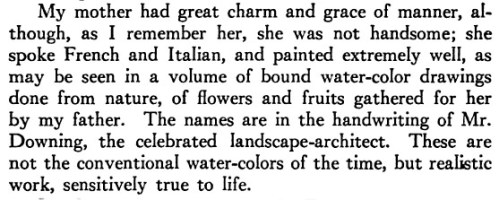
I chanced upon his memoir, Day Before Yesterday: Reminiscences of a Varied Life, published posthumously in 1920.  It opens, “I was born on the 15th of April, 1836, at Danskammer on the Hudson, near Newburgh.” In it he writes with great affection for his family and especially his mother.  He describes her southern roots, how she would sometimes leave New York to winter in Charleston, South Carolina, and how she nurtured his interest in painting before her death in 1853.

I had planned to skim Armstrong’s memoir focusing on his friendships with people like John La Farge and Augustus St. Gaudens.  In the table of contents, there is a chapter, St. Gaudens and Others.  But there was also a chapter, The South Before the War.  What did this artist have to say about such a time and place?

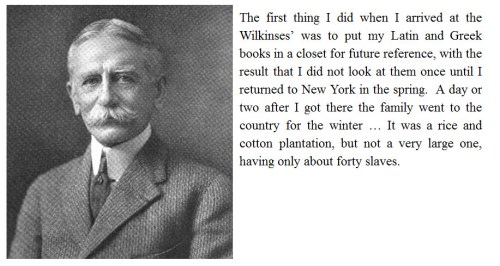
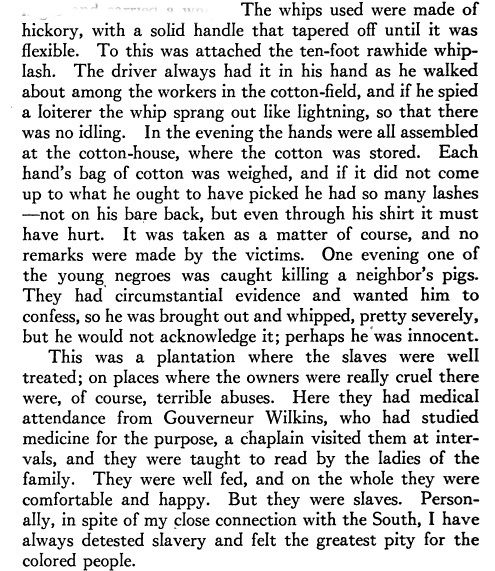
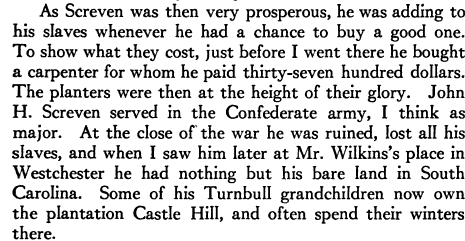
Well, what he does is describe in great detail, by painting with words, life in the south on a small network of plantations and the neighboring environs.  Even with his blood ties to a number of the families, he reports with a northern perspective.  He enjoys the hunting and accepts the slavery.  He learns a new language about the poor whites known as crackers and the slave assigned to him, his little darky.

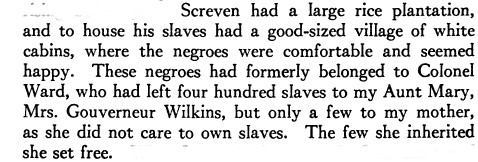
It was in 1853, perhaps after the death of his mother, that Armstrong and his brothers traveled to Charleston.  There, while he is staying with relatives, the Wilkins family, they drive to their plantation Kelvin Grove, where Armstrong describes there was “a nice little village of comfortable white cabins for the negroes. But there always was in evidence a driver, as he was called, who was a superior negro and carried a whip.

He visited several family relations while in the South, from the Wilkins to his cousins, the Screvens.

The detachment with which Armstrong is able to describe the scenes that took place around him in the south (and in a later chapter his description of turmoil in New York) make clear his compassion for others but also his upper class background that separated him from those others.

At the end of the chapter Armstrong describes how that period in the south was one of the most delightful times in his life.  No cares, no worries. He would receive a letter decades letter from a family member describing the loss of the plantations and the slaves, the occupation by Union troops, and the auctioning off of property to pay debts.

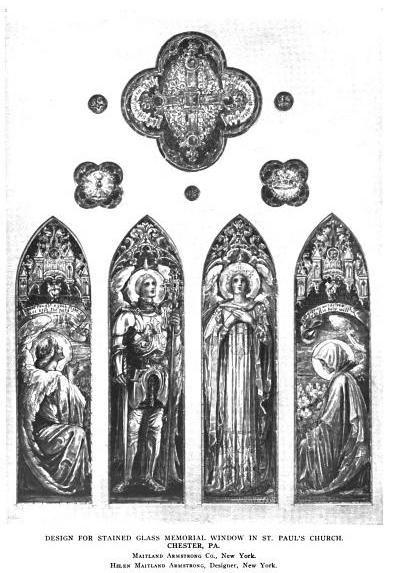
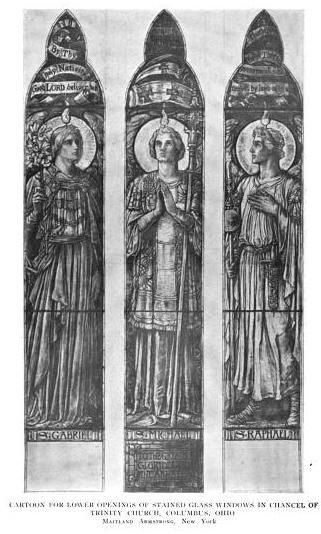
Armstrong would return to New York, attend the very best schools, and travel the world.  His life was truly varied serving as student and teacher in several different fields.  As a stained glass artist he would collaborate on masterpieces with his daughter, Helen Maitland Armstrong.  He would serve as a Consul General in Rome.  And near the end of his days, he decided to chronicle that life.

For anyone researching artists of a particular generation who ran in the same circles – La Farge, St. Gaudens, McKim, White, etc – this book could be an interesting resource. Armstrong describes personal vignettes of how these people interacted socially and appreciated each others work.  You could even completely ignore that chapter about the south.  But I think that chapter is important because, from a different source, it shines a light on life in the past … and it is that past that is the shaky foundation upon which we continue to try to build a brighter future in this country.

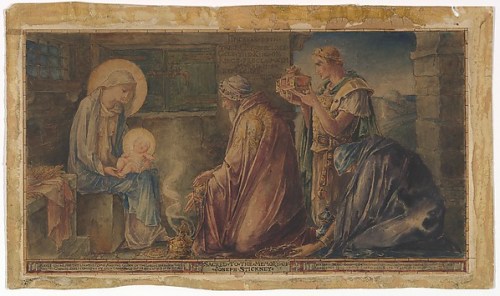
Nativity: Design for the Stickney Memorial Window, Faith Chapel, Jekyll Island, Georgia, Metropolitan Museum of Art

Nativity: Design for the Stickney Memorial Window, Faith Chapel, Jekyll Island, Georgia, Metropolitan Museum of Art


Sources/Additional Readings

Day Before Yesterday: Reminiscences of a Varied Life, 1920

Old Glass New Windows by Will H. Low, Scribner’s Magazine, Volume 4, 1888

Metropolitan Museum of Art, The Collection Online

Wikipedia — Maitland Armstrong

Year Books of the Architectural League of New York (late 1800s, early 1900s)


Read Full Post »

« Newer Posts - Older Posts »