Feeds:
Posts
Comments

Posts Tagged ‘storytelling’

last ray's of sunlight falling on the kitchen table

last rays of sunlight falling on the kitchen table

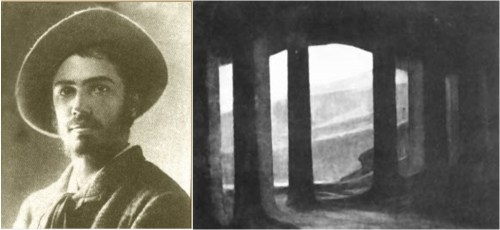
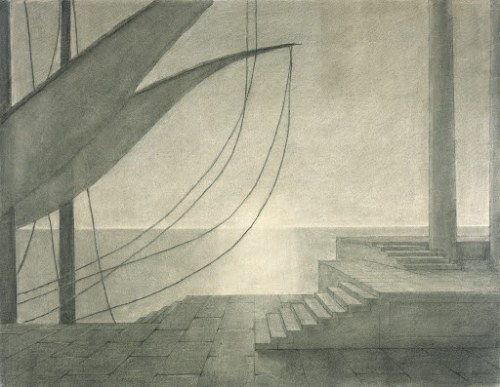
Well, in my walk through history with Mr. Horne, I’ve been introduced to a number of people who have stirred my imagination.  One of those people is Adolphe Appia.  Like Edward Gordon Craig (for whom I did post an interlude extra), Adolphe Appia (1862-1928) transformed set design in the theater world by developing and exploring, among other ideas, new theories of using light and shadows as a way to unify productions.

Adolphe Appia and his set design for Parsifal (1896)

Adolphe Appia and his set design for Parsifal

Appia’s (and Craig’s) dark illustrations struck a chord.  As if I didn’t love shadows before, but now, more so than ever, when I see shadows lengthening upon a table or wall, I wonder:  what scene is being set for what story?  Thus, the reason why I photographed sunlight on a kitchen table.  😉

more light falls on the kitchen table

more light falls on the kitchen table

Perhaps, one day I will sit with these images and write a story.  Meanwhile, if you’d like to learn more about Appia, in December 2013 an architectural group produced this great visual overview of Appia’s work.  Here is his Wikipedia page listing works and references.  And highly recommend this brief read by Pericles Lewis of Yale.  Below are more of Appia’s drawings from the late 1800s and early 1900s.

Read Full Post »

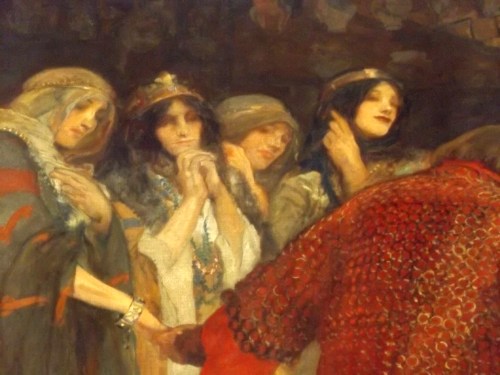
The Abbey Room at the Boston Public Library, with its richly colored wall paintings, is one of my favorite indoor sites in Boston.  The murals depict the Quest and Achievement of the Holy Grail and, according to the Boston Public Library website, were installed in 1895 by Edwin Austin Abbey.  Today I had the opportunity to drop in for a moment to snap a few photos. Here are a few favorites from the day.  You can read more about the Grail story here and you can read more about Edwin Austin Abbey here.

Read Full Post »

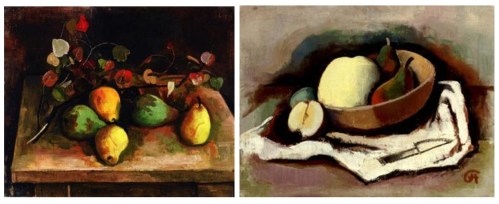
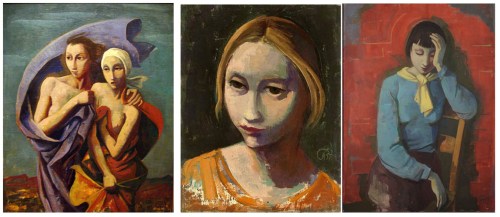
paintings by carl hofer

paintings by carl hofer

I enjoyed photographing the apricot and other fruits earlier this week.  In part, I was inspired by Carl Hofer‘s Bowl of Peaches and his other fruit still life paintings.  I did not know he was an artist when I began researching his life, nor could I imagine how much I would love his work.

paintings by carl hofer

paintings by carl hofer

My research began with only a name engraved on custom stationery and a signature at the bottom of a handwritten letter, dated 1948, addressed to Joseph A. Horne, the Director of the Offenbach Archival Depot.  The script was beautiful but illegible for me since it was in German.  Horne’s son remembered his father referring to the man but no other details about who he was or how his father and this Hofer might have met.

carl hofer painting

carl hofer painting

As part of my ongoing walk through history with Mr. Horne, I wanted to know more about this man in his life.  Translation of the letter would come later, but I began by researching the only words in the letter I could immediately understand, his name.

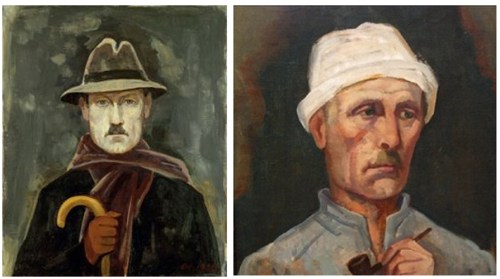
carl hofer self-portraits, spanning1920-1945

carl hofer self-portraits, spanning1920-1945

I quickly learned that Carl Hofer (1878-1955) was a noted German expressionist painter, printer and illustrator whose work  had been appearing in exhibits around the world since the early 1900s. At the end of this post are some of the links I found describing this important artist and teacher whose name may not be that familiar today outside of art circles. If not for Horne’s letter, I would not have learned of his work.

carl hofer paintings

carl hofer paintings

Of the many documents lost over time, that letter was one of the few that Horne retained.  For those of you familiar with my Interludes series, you know that Horne was involved with the recovery and restitution of stolen artwork, books and other cultural items in post-war Germany.  And he was also involved with those activities to foster and reinvigorate the artist communities in a war-ravaged Germany.  It is undoubtedly through these activities that Horne and Hofer met in the late 1940s.

carl hofer in later years, late 1940s

carl hofer in later years, late 1940s

Earlier, in the 1920s Hofer had been teaching art at a respected German institution and his work celebrated world-wide.  But, by the 1930s, he’d made Hitler’s list of degenerate artists.  He was removed from his teaching post.  Over 300 of his works were confiscated from museums and several included in a traveling exhibit of degenerate art alongside the works of Beckmann, Chagall, Kadinsky, Klee, Nolde and other artists.  By the war’s end, in Allied Occupied Germany, he would be reappointed as teacher and director of a new arts academy. As for the years in between and soon after …

carl hofer paintings, period 1947-1948

carl hofer paintings, period 1947-1948

In his memoir, From the Ashes of Disgrace, sociologist Hans Speier describes what happened to Hofer under the Nazis and Speier’s impressions of the man after they met in late 1945:

…The failure to find a safe place to work and live pushed [Hofer] to the brink of despair.  In 1943, a fire destroyed his studio along with all his paintings from the past ten years. He resumed work at once in a room in his apartment, only to be completely bombed out and lose everything in November 1944.  Thereafter he finally found refuge in a sanatorium in Babelsberg near Berlin, where the Nazis were hiding the French politician Herriot … Now [in November 1945] he owns no furniture, and he is hungry.  Nor has he suitable quarters for doing his work.  However, as president of the academy, which has been reconstituted … he is quite busy.  I was almost awed merely by seeing the expression on his face, and by his reserve and his dignity.” (page 25)

I was especially excited to find Speier’s 1945 account because his words corroborated and complemented what Hofer would write to Horne three years later in March 1948.  Once translated, the poignancy of the content came across although the specific meaning of words and references were not immediately clear.  Hofer writes of being touched by Horne’s inquiry into his well-being.  Then, he writes, after having been in the insane asylum for years, “now we are back in an asylum again.” He alludes to the monetary reforms of  postwar Germany that result in the “black market blossoms as never before, only this time prices are higher.”  Finally, he writes of “the American planes drone above our heads, reassuring us day and night that we won’t starve, unless the red Hitler gobbles us up.  It has been a crazy time, so different from what we pictured in our naive hope three years ago.

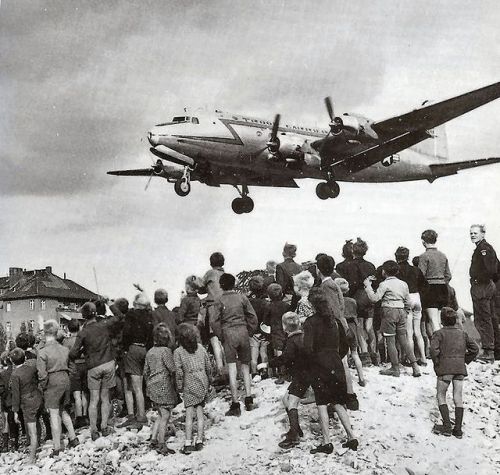
Berliners watch a C-54 Skymaster land at Tempelhof Airport, 1948

Berliners watch a C-54 Skymaster land at Tempelhof Airport, 1948

It wasn’t until I spoke with a woman who grew up in the Soviet Union that I understood that the reference to red Hitler was Stalin.  And when I looked more closely at the letter’s date, then did I understand the reference to crazy times, the security of American planes overhead and the possibilities of starvation.  Hofer wrote the letter only a short time before the Berlin Blockade.  As the Soviet blockade took place (June 1948-May 1949), Western Allies dropped food and other supplies into Western Berlin by air.  While the blockade would eventually end, the Cold War was only just beginning.  Hofer survived the blockade, and would continue to teach and to create art for several more years.

Life Magazine article, 1954

Life Magazine article, 1954

Today his work is found in museums, galleries and private collections around the world.  While there are a few more bits of correspondence between Hofer and Horne that I’ve found, their translation is a future project.  For now, it has been my pleasure to learn just a little bit about this influential artist, his perseverance, and the beauty he created until the end of his days in 1955.


Sources/Additional Reading

Degenerate Art Overview Wikipedia

Spaightwood Galleries Hofer Bio

Hofer Drawings at the Museum of Modern Art

Art Institute of Chicago Collection

Van Ham Art Estate and Hofer Archive

Life Magazine, May 10, 1954 Article

From the Ashes of Disgrace: A Journal from Germany, 1945-1955 by Hans Speier (page 25)

Berlin Blockade


Read Full Post »

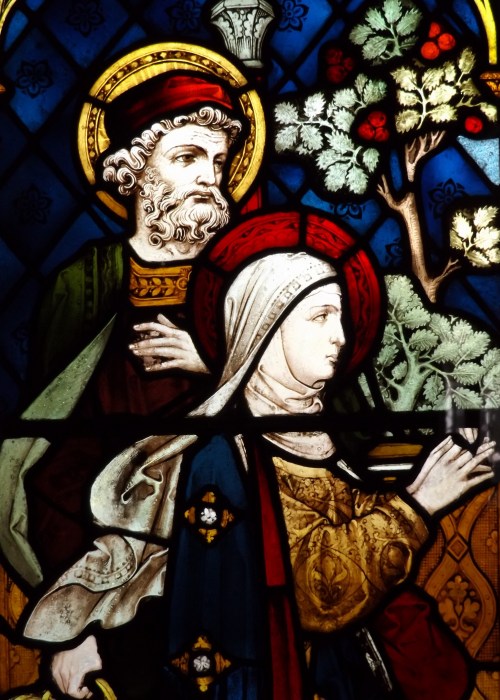
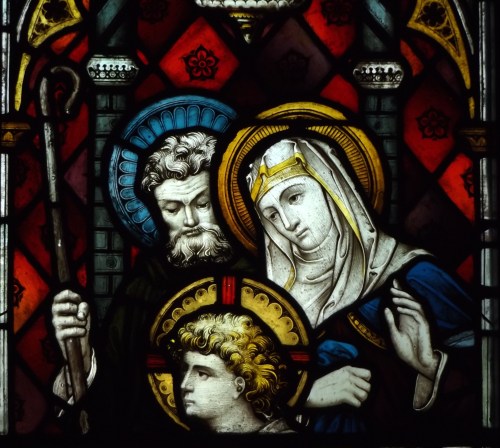
It is another one of those hidden gems in an architectural masterpiece that sits in the heart of the city of Boston.  The Sunday School Windows were designed by Clayton & Bell of London, England.  The left window depicts the story of the Presentation of Jesus, with Simeon holding the baby in his arms …

while standing nearby are Mary and Joseph.

The right window tells the story of Jesus in the Temple, with the doctors in the room …

as a young Jesus both listens and asks questions …

with two little children beside him.

Most captivating to me are the hands and the eyes, and the mix of colors and patterns within the glass, and how all of these components are pulled together to tell stories without words.

While these windows, a gift of the Children of Trinity Sunday School, are not viewable as a part of a traditional tour of Trinity Church in Copley Square, many other beautiful works can be seen as part of a tour of this historic landmark.  Learn more here.  Meanwhile, I look forward to sharing more images from this building and other structures in the future.

Read Full Post »

Excerpt from Edward Gordon Craig's Book of Penny Toys, 1899

Excerpt from Edward Gordon Craig’s Book of Penny Toys, 1899

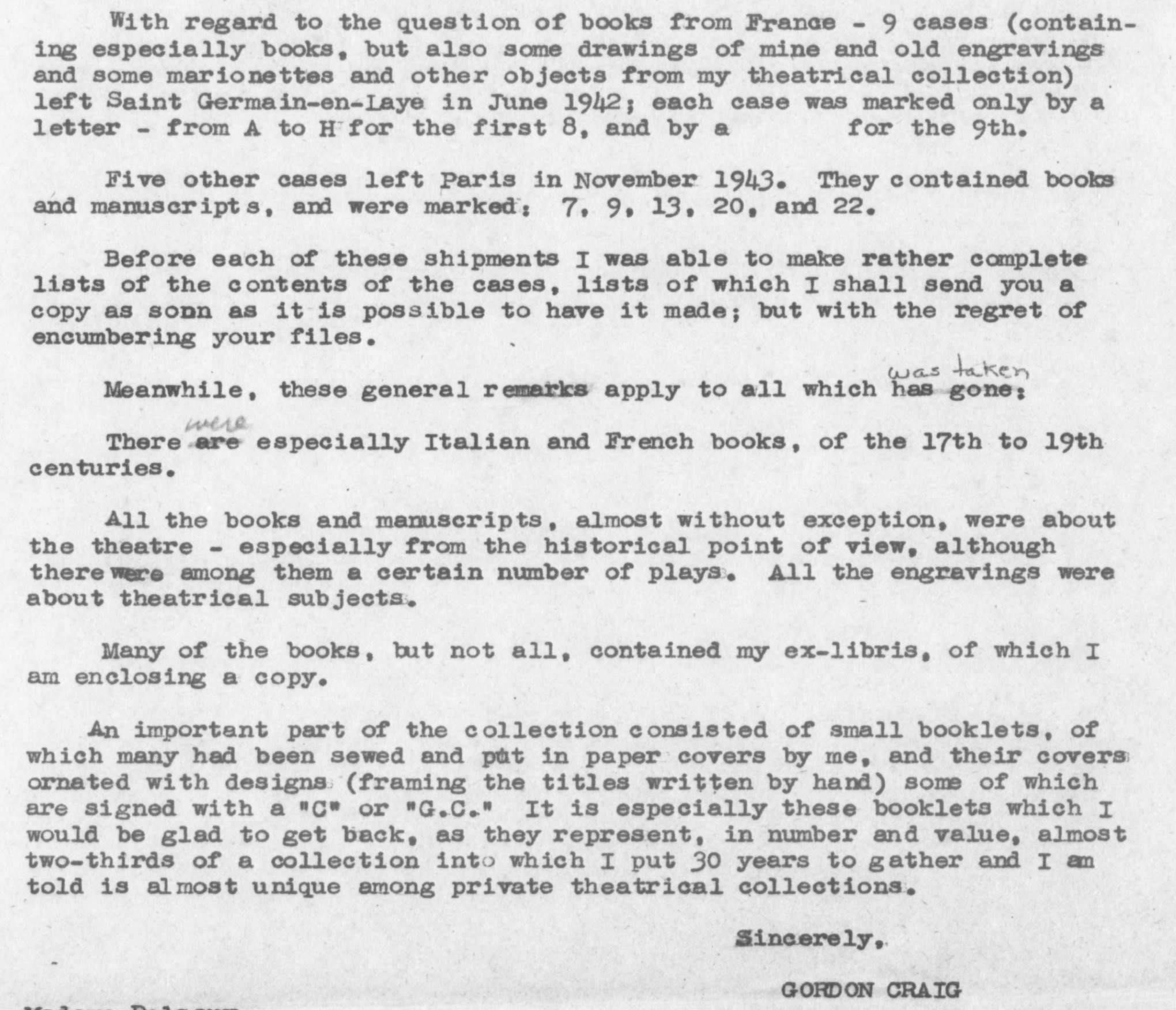
One day, as I was perusing the files of the Monuments, Fine Arts and Archives Unit as part of my walk through history with Mr. Horne, I kept coming across the name, Gordon Craig.  In a series of letters, Craig appealed to different agencies seeking the return of items stolen in France and taken to Germany.  In one letter, he even presented a list:

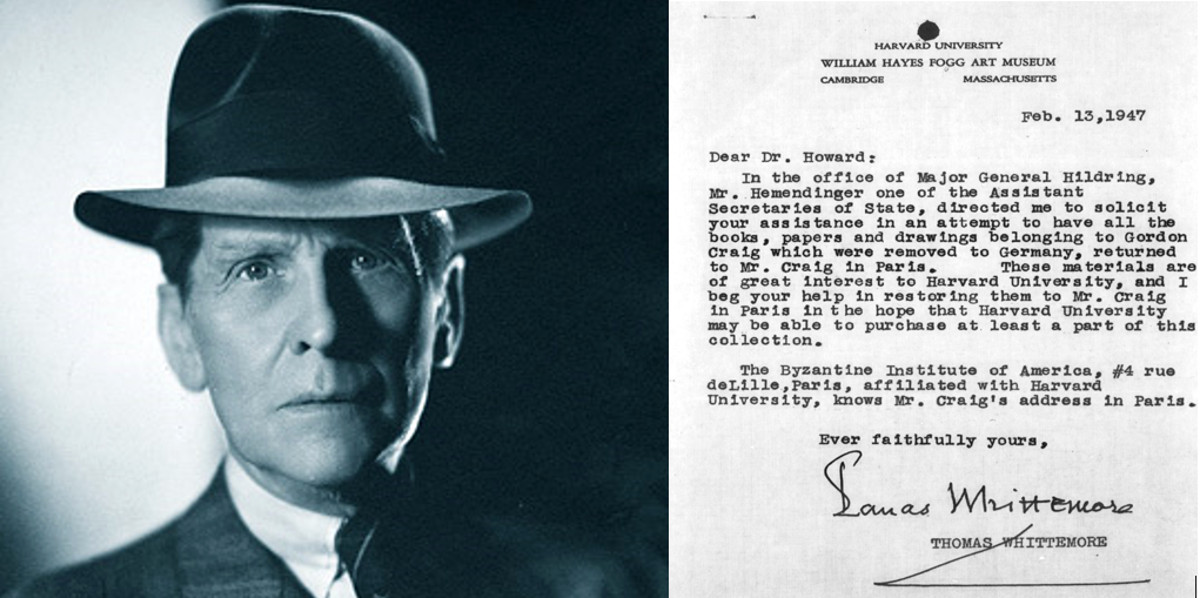
Additional letters had been been submitted on his behalf by noted scholars in the art world, like Thomas Whittemore.

The correspondence, like this one, that first caught my attention was dated 1947.  By this time, many collections of books and papers recovered postwar had been shipped to the Offenbach Archival Depot in Germany, awaiting restitution.  And, by this time, Joseph A. Horne had been assigned as the third director of the Depot.  Horne was contacted and requested to make a search.  His findings:

Further inquiry would reveal that Craig’s property was in the hands of U.S. forces but in Austria, not Germany.  Unfortunately, while it was clear who had amassed the collection, it was unclear to whom the collection belonged, to which institution or even to which country.  But before I learned about that intrigue, I first had to learn about this Gordon Craig.  I was just curious.  Why was this man’s boxes of books and drawings of such interest?

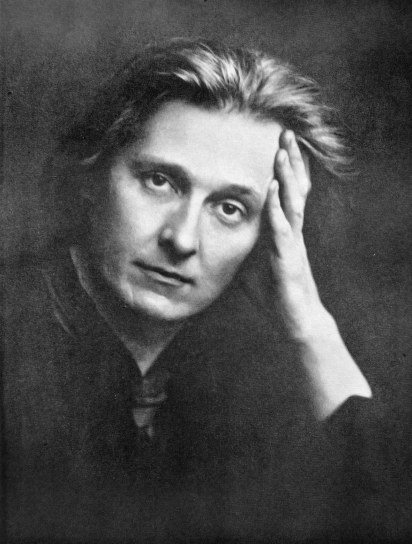
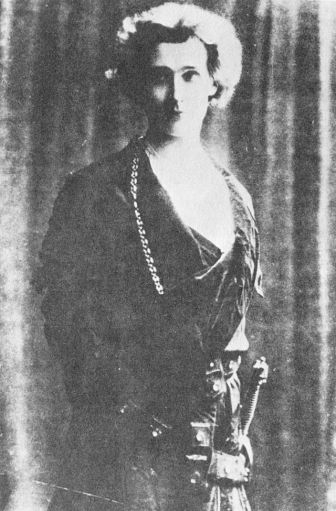
Edward Gordon Craig

Edward Gordon Craig (1872-1966)

It didn’t take long to discover that he was one of the most innovative forces in theater whose influence is felt to this day.  A rather renaissance figure, an actor from a distinguished acting family…

as Hamlet, 1897

as Hamlet, 1897

a set designer and theatrical producer who revolutionized the use of light, space and costumes for storytelling

Craig's design (1908) for Hamlet 1-2 at Moscow Art Theatre, directed by Stanislavsky

Craig’s design (1908) for Hamlet 1-2 at Moscow Art Theatre, directed by Stanislavsky

a writer and publisher

who also did woodcuts and other illustrations.

I found many online biographies describing his years of studying, performing,  and teaching, and how he eventually moved to France.  One document even stated, “In 1931 he went to live in France and in 1948 made his home in Vence, in the south of that country, where he wrote his memoirs entitled Index to the Story of My Days (1957).” (National Trust)  But what happened between 1931 and 1948?  In most online bios, and even in this wonderful timeline charting his career, about this time period little is written.  It is the events that take place during this time that establishes Craig’s presence in the U.S. National Archives and in the files relating to the work of the Monuments, Fine Arts and Archives Unit.

Edward Gordon Craig, 1941, by Dora Kallmus

Edward Gordon Craig, 1941, by Dora Kallmus

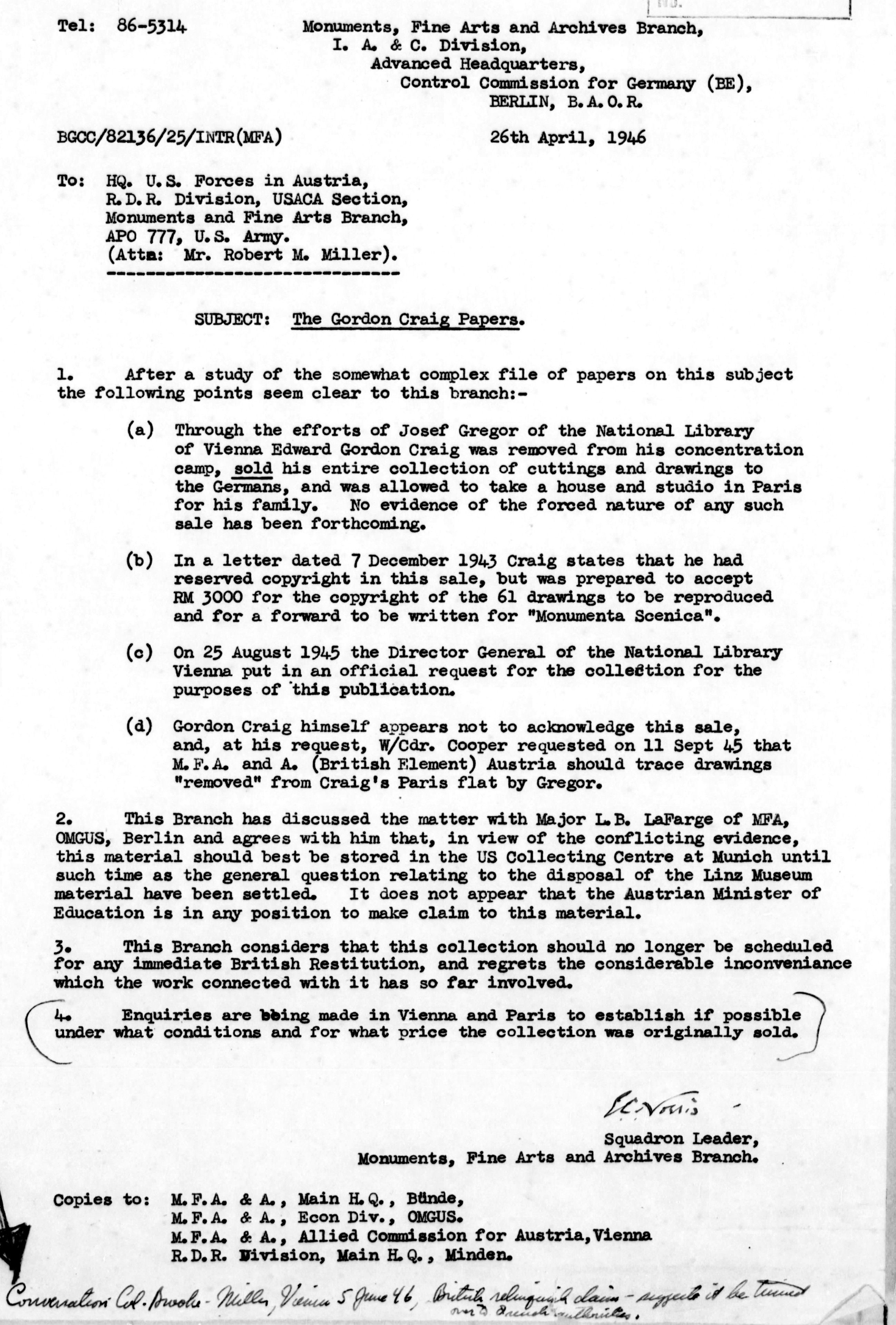
By the 1930s he had begun building his Gordon Craig Collection of writings and resources on the tools, techniques and artistry of theater.  In 1942 he would be arrested in German-occupied France and taken to a Nazi Concentration Camp.  He would be released, and his collection taken. Soon after, conflicting stories would arise, as evidenced in this letter, about whether or not he’d sold the collection and, if so, under what circumstances.

Joseph Gregor, mentioned in the above letter, had been working with Craig prior to the war.  Documentation suggests that Gregor and others at the Vienna library in some way facilitated Craig’s sell of his collection to Hitler, who wanted to add the collection to his planned museum and library at Linz, Austria. Craig also made claims that Gregor had personally removed drawings from his apartment without his agreement.

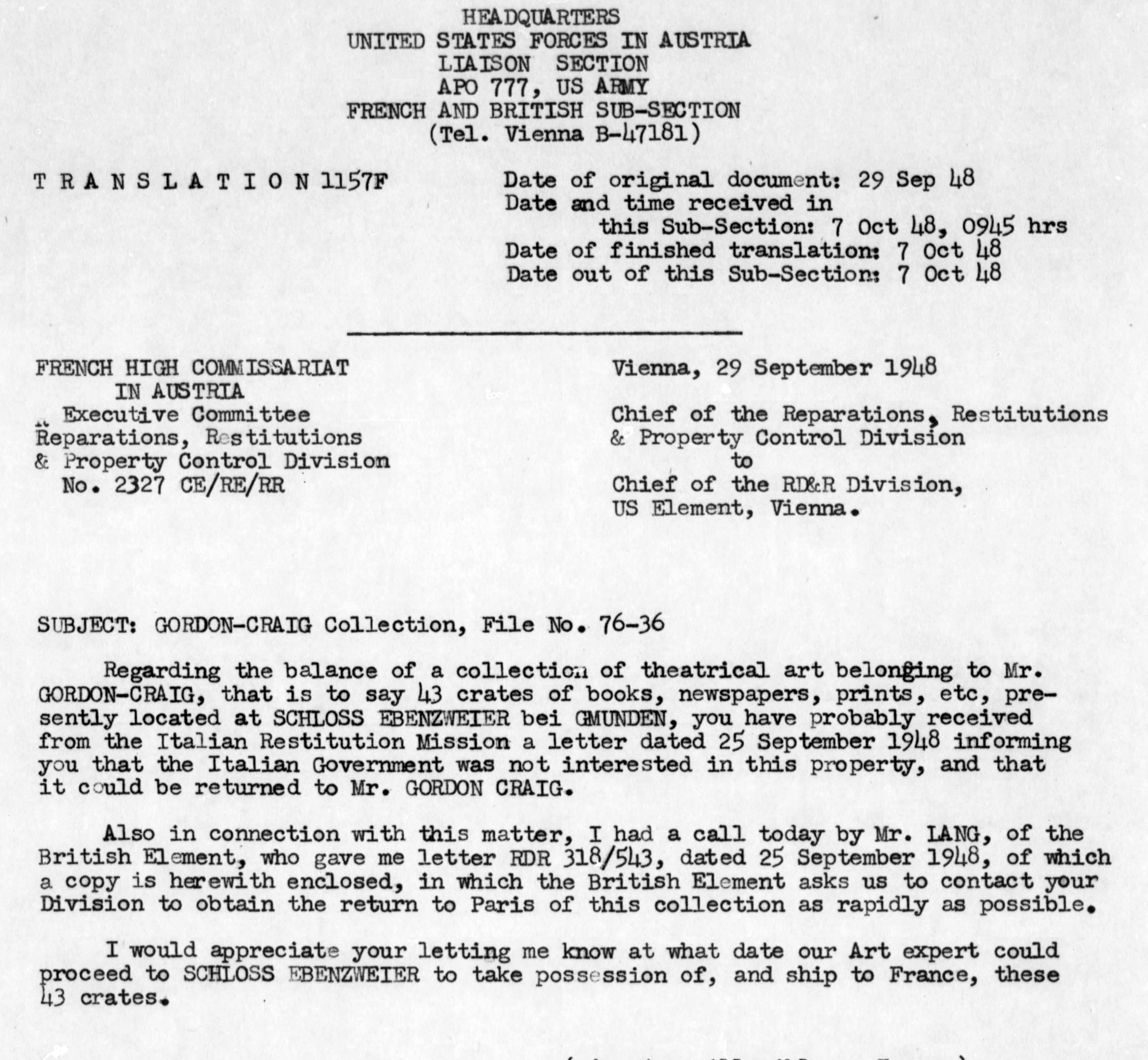
It took time and lots of paperwork but it appears that the items dispersed during the war were reassembled as a whole, and an attempt was made to return them to Craig.

In October 1948, MFA&A officer Evelyn Tucker handed over the 40-plus cases comprising the Craig Collection to a French representative.  The cases contained manuscripts, illustrations, back issues of The Mask and The Marionnette Magazine.  By November bills of laden were being exchanged between at least France and Britain to cover the cost of shipping the cases to Paris on behalf of Mr. Craig.

Nearly seventy years later, Edward Gordon Craig artwork and writings are distributed, as collections, in many major museums, universities and public and private libraries.  His vision remains respected to this day.  New articles are being written critiquing his work and his legacy, and exhibits of his drawings take place around the world.


Sources/Additional Readings

Biography of Edward Gordon Craig

Stage Design of Edward Gordon Craig

Victoria & Albert Museum early Craig images

National Portrait Gallery Craig image 1950

Digitized version of Craig’s Woodcuts and Some Words

Digitized version of Craig’s Book of Penny Toys

More about photographer Dora Kallmus aka Madame d’Ora

Beyond the Mask: Gordon Craig, Movement and the Actor

Edward Gordon Craig: A Vision of Theatre

About Thomas Whittemore


Read Full Post »

One day, one of  my brothers called and it was clear that he was in need of immediate assistance.  Not for physical trauma.  He needed someone to lean against, as we all do at some time.  I was thousands of miles away.  I could not get to him so I called a person that my brother had mentioned in recent years, an older gentleman who’d been an important figure in high school but I had not seen or spoken with him in over two decades.  That day I used the online white pages to track down his home number.  With barely a greeting, I told him I was sending my brother to him.  He simply said, in a lovely warm voice, “Okay, Cynthia.  I’ll be waiting.”  And then I called my brother and I told him that he needed to get to that gentleman’s house and when he did he was to call me.  He said, “Okay, Cynthia. I’m going.”  Time did pass but then the phone did ring.  My brother said, “It’s me.  Hold on.” Then he passed the phone to the gentleman who said, “Don’t worry.  I’ve got him under my wing.”

Why does that story come to mind today?  Years have passed.  My brother is fine. He and the gentleman remain close friends.  I think the story surfaces because over this past week I have been witness to other acts of kindness, and reminded of people like this gentleman, willing to spread their wings over those in need, without question and without expectation.  They are bits of brightness in the sometime dark, men and women who are often not recognized by others or even by themselves for the beauty they add to the world.  By the way, I have not seen the gentleman in this story, or spoken to him, since that day.  I did send him a postcard saying thank you.  And, he sent me a card back saying you’re welcome.

Read Full Post »

Following is an updated table of contents (TOC) for the series of interludes, a collection of historical vignettes, threaded together by following in the footsteps of one gentleman, Joseph A. Horne (1911-1987). It’s a glimpse into history that continues to shape this world.  It’s been a wonderful, sometimes surprising, experience for me. The interludes will conclude over the next few months including a few more “interlude extras.”  I hope you enjoy this journey of words and images.

I. interludes TOC

i. foreward to the interludes

ii. interlude: genesis

iii. interlude: exodus, part 1

iv. interlude: exodus, part 2

v. interlude: dust in the wind

vi. interlude: lamentations

vii. interlude: to protect, preserve, and return … if possible

viii. interlude: offenbach archival depot

ix.  interlude: amerika haus

II. interlude extras

interlude extra: arnold genthe

interlude extra: edward gordon craig

interlude extra: carl hofer

interlude extra: washington labor canteen, eleanor roosevelt and race relations

interlude extra: erich stenger

interlude extra: ludwig aloysius joutz

Read Full Post »

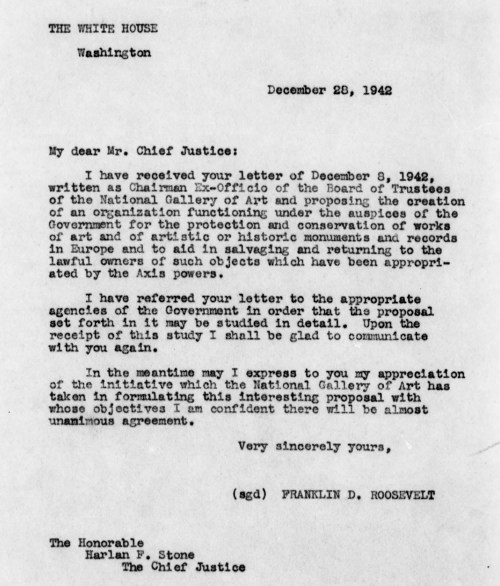
Nearly one-year after U.S. entry into World War II, after the bombing of Pearl Harbor, President Franklin Delano Roosevelt would receive a letter from Harlan F. Stone, Chief Justice of the United States.  He shared the concerns of many in the art and architectural fields at the destruction taking place in Europe.

Bombing of Hamburg, 1943

Bombing of Hamburg, 1943

While Germany must, of course, be defeated, Stone and the others were urging the development of an organization charged with the protection and conservation of European works of art. The organization would aid “in the establishment of machinery to return to the rightful owners works of art and historic documents appropriated by the Axis Powers.”
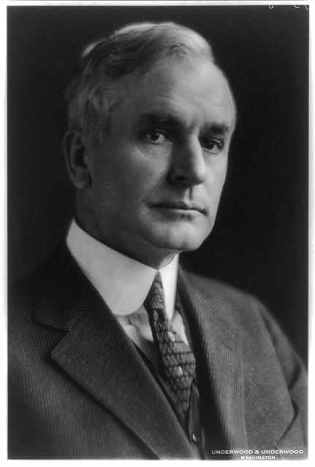
Cordell Hull, U.S. Secretary of State

Cordell Hull, U.S. Secretary of State

By 1943, FDR would establish this American Commission for the Protection and Salvage of Artistic and Historic Monuments in Europe, its intent to operate for three years and to cooperate with the appropriate branches of the Army, Department of State and civilian agencies. Secretary of State Cordell Hull recommended that it be headquartered at the National Gallery of Art in Washington, DC.

Archibald MacLeish, 1944

Archibald MacLeish, 1944

The Commission would include Archibald MacLeish, Librarian of Congress, Paul J. Sachs, Asst. Director of the Harvard Fogg Museum, and Francis Henry Taylor, Director of the Metropolitan Museum of Art.  Using this group’s networks of former students, colleagues and peers, experts would be sought to volunteer and help the Commission complete two functions:

Even prior to U.S. involvement in the war, efforts had been made to catalog endangered art and historic monuments. Card files were also compiled of scholars and specialists in the Fine Arts, Books and Manuscripts.  All information was considered significant, from scholarly skills to possible political leanings.

Detailed maps were created and/or collected showing areas to be spared, if at all possible, and aerial photographs were taken.

Example of Map Noting Cultural Areas to Protect in France

Example of Map Noting Cultural Areas to Protect in France

By April 1944, recognizing the need to prepare maps for the protection of art and historic monuments in Asia, as well, the Commission’s name would be altered, and the words “War Areas” would replace “Europe.”  In August, Supreme Court Justice Owen Roberts would become Commission chair.  Roberts was one of three Supreme Court Justices to vote against the plan for internment of Japanese Americans during the war.  Over time the Commission would simply be referred to as the Roberts Commission.
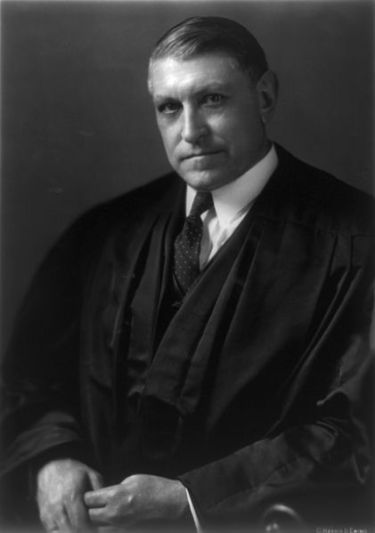
Supreme Court Justice Owen J. Roberts

Supreme Court Justice Owen J. Roberts

The Roberts Commission would establish the Monuments, Fine Arts and Archives Unit (MFA&A) within the Civil Affairs and Military Government Sections of the Allied Armies. Eventually numbering over 300 men and women, the unit’s “Monuments Men” included architects, archaeologists, art historians, artists, curators, and librarians.  During the war, they would be assigned in small numbers to Allied troops in the field.

George Stout

George Stout

Monuments Men had to be fluent in the languages of the places where they were to be assigned.  And to appease concerns about shifting manpower away from fighting forces, they had to be older than the age for fighting eligibility, so most were in their thirties or older. Early days for the Monuments Men, as they traveled with Allied troops, were difficult since they had little authority or supports in place.  That would change somewhat over time as Allied leadership including MacArthur in the Pacific and Eisenhower in Europe made clear that cultural preservation was a priority, though never one to outweigh the protection of soldiers’ lives.

American Zone Poster

American Zone Poster

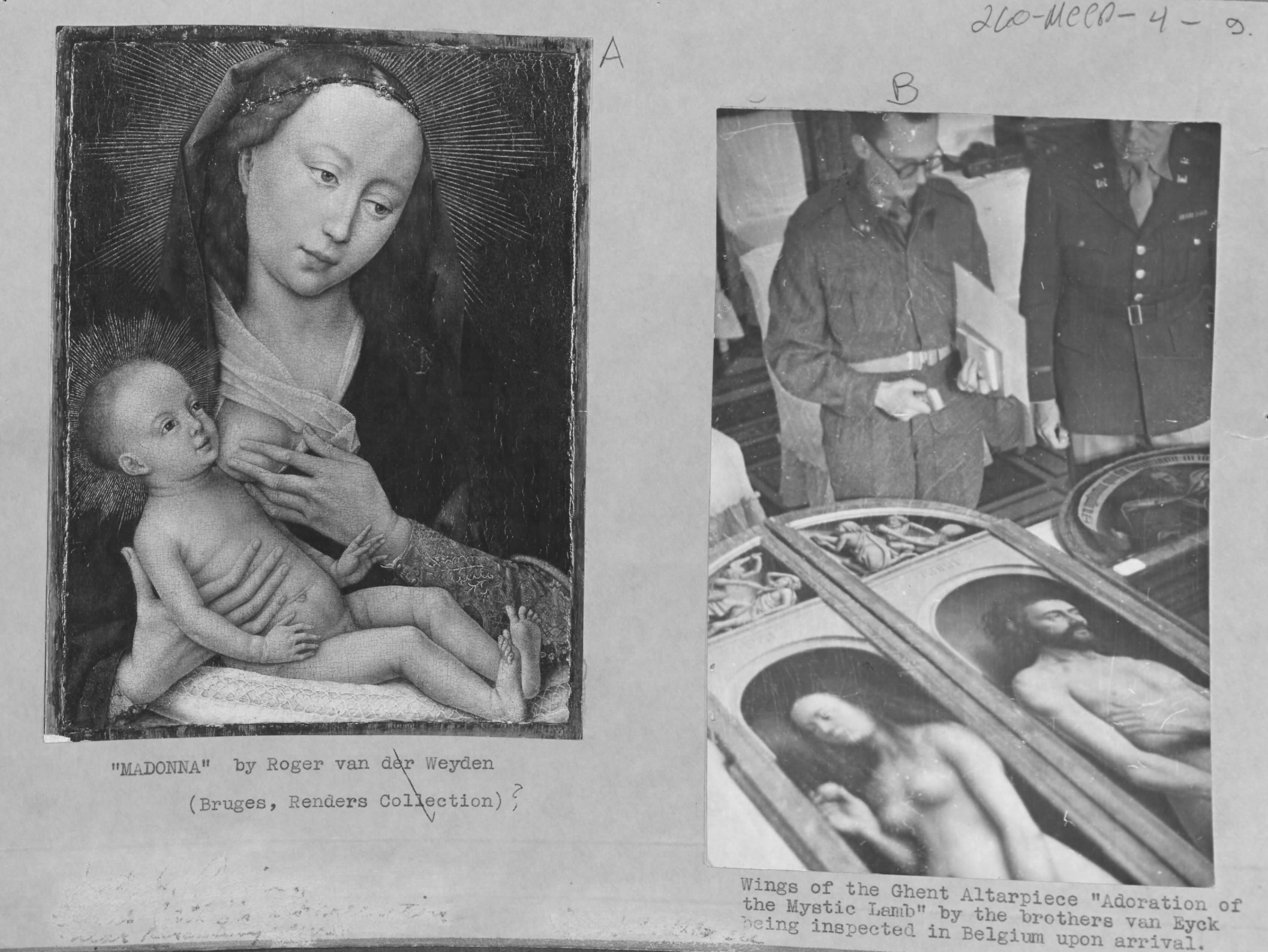
The preservation and protection of artistic and historic monuments would take place differently in the two different theaters of World War II — Europe and the Pacific.  In Europe, even before the war ended, there would be a focus by Monuments Men like Mason Hammond, George Stout and others on recovering the artwork and cultural items taken by Hitler and the Nazis from wealthy Jewish families, museums, university libraries and religious institutions. The goal:  to protect and preserve these cultural assets, and to prevent the Germans from using the stolen loot to fund German war efforts.
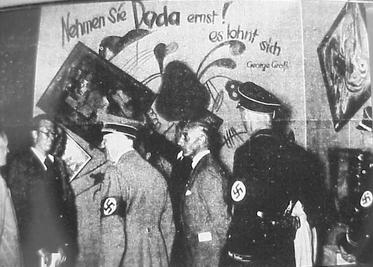
As early as 1937, Hitler’s intentions to use art as propaganda had been clear.  Expressionist and modern art was labeled as degenerate.  Those works not sold or destroyed outright were paraded for years in exhibits extolling their worthlessness. Less than a decade later, these same works would be celebrated in the U.S. National Gallery and other museums around the world.

MFAA_Officer_James_Rorimer_supervises_U.S._soldiers_recovering_looted_paintings_from_Neuschwanstein_Castle

MFAA Officer James Rorimer supervises U.S. soldiers recovering looted paintings from Neuschwanstein Castle

But before those works of art and their creators would be celebrated, the war in Europe had to end which it did in May 1945. As the Allied forces settled in, the Monuments Men continued to fan out, recovering art, and beginning the long process of cataloging and restitution.  In the Pacific theater, the war would end in August.

Hiroshima 1945

Hiroshima 1945

On August 6, 1945, the U.S. dropped the first atomic bomb over Hiroshima. “The explosion wiped out 90 percent of the city and immediately killed 80,000 people; tens of thousands more would later die of radiation exposure. Three days later, a second B-29 dropped another A-bomb on Nagasaki, killing an estimated 40,000 people.”  On August 15th, Emperor Hirohito would announce surrender.

Nagasaki Under Atomic Bomb, 1945

Nagasaki Under Atomic Bomb, 1945

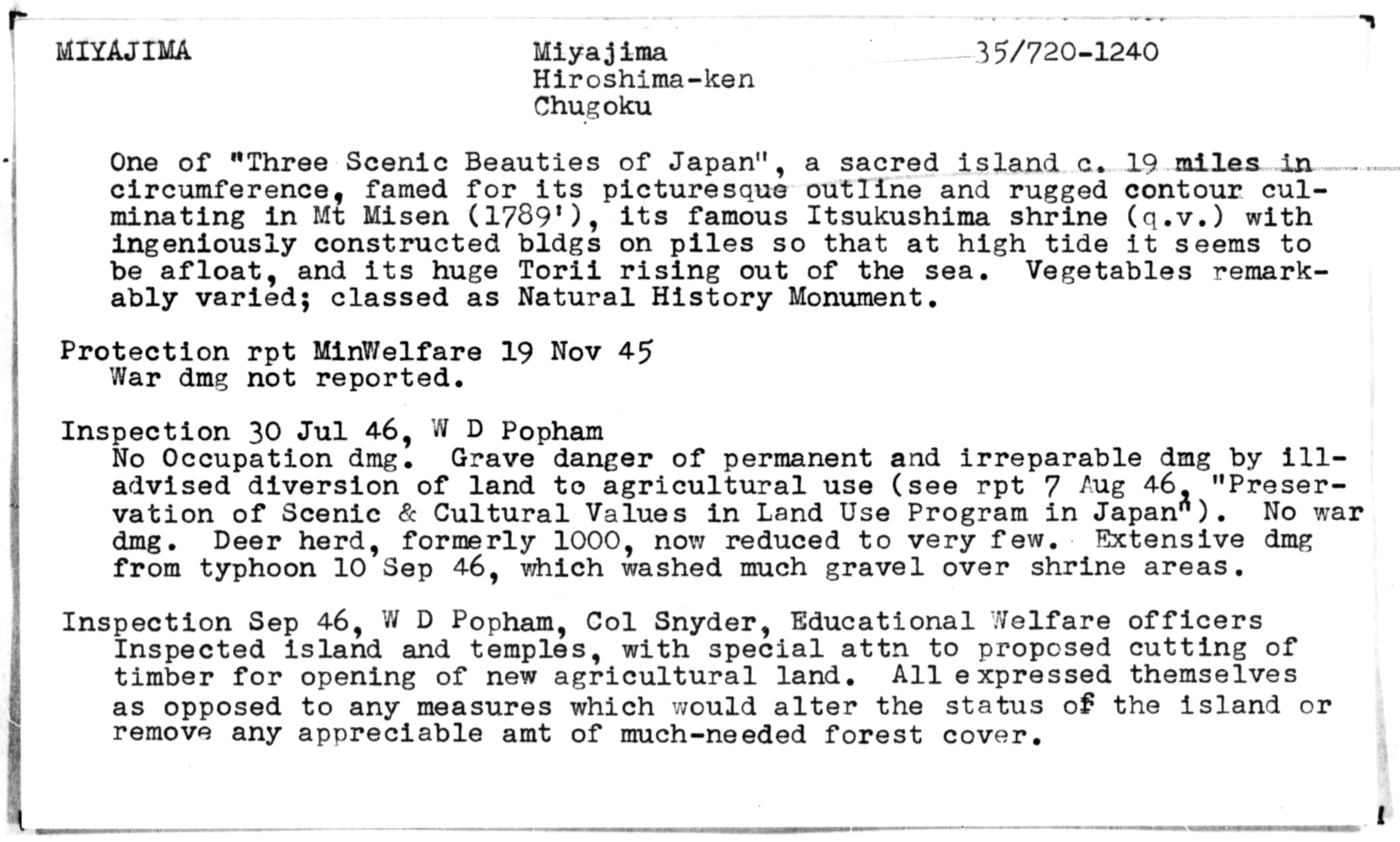
Into this devastated, postwar landscape, Monuments Men like Lt. Walter D. Popham would document damage done by the war and make suggestions for recovery and future protection of cultural assets.  Popham was a noted landscape architect and professor prior to the war.  He’d written books on the gardens of Asia including the tree-lined strees of Tokyo.  George Stout, respected for his work as a Monuments Man in Europe, was especially pleased to learn of Popham’s Japan assignment.  Stout had been one of several Monuments Men to recommend deploying the Monuments Men in Japan after its surrender.

The effort of the Monuments Men in Japan and across Asia is one that remains to be shared more widely.  Peruse just a few of the catalog cards, filed in the National Archives, in which Popham and others describe their perceptions of the postwar Japanese landscape, and their interactions with the populace, it is clear that many stories remain to be told.

With the war’s end, in both Europe and Asia, the role of the Monuments Men would shift.  Governments mobilized to literally rebuild whole nations.  How could one balance (and budget for) the collection, preservation and restitution of artwork while meeting the immediate needs of feeding, clothing and housing millions of displaced peoples?   Former allies were clearly becoming enemies.  What role could art have, if any, in forging new bonds or cementing old ties?

artwork collected at wiesbaden collection point

photographs of artwork collected at wiesbaden collection point

In Europe, by the spring of 1946, three central collection points were firmly established in Germany, in Wiesbaden, Munich and Offenbach.  The Offenbach Archival Depot would specialize in collecting and cataloging Jewish cultural items, books and archives.  The establishment of Offenbach was led by archivist Lt. Leslie Poste.  One of his assistants was Joseph A. Horne.

Joseph A. Horne, 1940s

Joseph A. Horne, 1940s

By February 1947, Horne would become the depot’s third director.  According to the memoirs of Lucy Dawidowicz, his friends called him Tony. “Before the war, he’d been on the staff of the Library of Congress’s photographic division.  Transferred from the MFA&A in Berlin, he was then new to the Depot, having taken over his duties barely two weeks before my visit.  About thirty, very tall, thin, lanky, and blond, he was the only American there.  He was in charge of a staff of some forty Germans.”

His tenure would coincide with one of the worst winters to strike Europe in recent memory.  The Cold War with the Russians was dawning.  The restitution (or not) of artwork and cultural items was to become a strategic tool used by military intelligence and policymakers on all sides.  Individuals, including war survivors as well as surviving relatives of those killed by the Nazis, universities and museums whose collections had been sacked … their demands for restitution and return of art, books and cultural items poured in.  Horne, like many others, would deal with these requests as respectfully as he could even as events unfolded around him that would place Offenbach at the center of one of the most unexpected efforts to return looted cultural items to Jewish communities around the world.

More to follow in July…


Sources/Additional Reading

World War II records from the National Archives searchable here

More information about Hamburg photo

Bombing of Hiroshima and Nagasaki, History.Com

About George L. Stout

About Mason Hammond, First Monuments Man in the Field 

About Ernst Barlach

About Lt. Leslie Poste

World War II Photography Database

2014 Degenerate Art Exhibit


Read Full Post »
All I know about music is that not many people ever really hear it.  And even then, on the rare occasions when something opens within, and the music enters, what we mainly hear, or hear corroborated, are personal, private, vanishing evocations.  But the man who creates the music is hearing something else, is dealing with the roar rising from the void and imposing order on it as it hits the air. What is evoked in him, then, is of another order, more terrible because it has no words, and triumphant, too, for that same reason. And his triumph, when he triumphs, is ours.”  — Sonny’s brother in Sonny’s Blues by James Baldwin

boston harbor blue, may 2014

boston harbor blue, may 2014

I’ve been lucky enough to know people with a wide variety of tastes in music, and I’ve especially appreciated their attempts to express what the music evokes for them.  I wouldn’t mind asking my father what the blues did for him, but I don’t really need any concrete words. I’ll always remember the looks on his face as he played those 78s.  He loved listening to the blues (and wasn’t too bad playing along on a harmonica).   He played the blues a lot after my mother passed away, mostly, because he had the freedom to do so.  You see, my mother hadn’t been too keen on that music.  It made her too sad. But, that music, no matter how dark, seemed to put some pep in my father’s step even as he wiped away tears.

I was reminded of my parents, and other family and friends, as I recently read James Baldwin’s short story, Sonny’s Blues, about two brothers coming to understand one another.  Near the end, the youngest brother, the troubled one, and the musician, is up on stage, playing the blues as part of a quartet.  As the older brother reflects upon what he is seeing and hearing, the reader is reminded that music can be a salve for old wounds, a bridge between past and the present, and, perhaps most importantly, it is through music that life is shared.  As Baldwin writes, “For, while the tale of how we suffer, and how we are delighted, and how we may triumph is never new, it always must be heard. There isn’t any other tale to tell, it’s the only light we’ve got in all this darkness.

blue lillies along the mystic, 2014

blue lillies along the mystic, 2014

Read Full Post »

Read previous Interludes here.

WWII: Europe: France; “Into the Jaws of Death — U.S. Troops wading through water and Nazi gunfire”, circa 1944-06-06, by Robert F. Sargent

WWII: Europe: France; “Into the Jaws of Death — U.S. Troops wading through water and Nazi gunfire”, circa 1944-06-06, by Robert F. Sargent

On June 6, 1944, the Western Allies launched the invasion of Normandy.  It would prove to be a pivotal point in the course of the war as soldiers, by air, land and sea, fought to liberate France from Germany.  Troops landed at beaches all along the northern coast.  As part of the larger strategy, four port cities were identified for capture to facilitate future entrance of Allied troops.  One of these port cities was Le Havre.  Secured in September 1944, the city would then be turned into a major entry and exit point for military personnel and equipment needed at the front.

[Abandoned boy holding a stuffed toy animal amid ruins following German aerial bombing of London, by Toni Frissell, 1945

Abandoned boy holding a stuffed toy animal amid ruins following German aerial bombing of London, by Toni Frissell, 1945

By the end of 1944, the Germans were in retreat.  While an Allied victory was in sight, much of Europe lay in waste.

Polish kid in the ruins of Warsaw, September 1939, by Julien Bryan

Polish kid in the ruins of Warsaw, by Julien Bryan

Caen, 1944

Caen, France

As a new year dawned, the Allies were pressing hard and in great need of reinforcements. Fresh troops were crossing the English Channel into Le Havre.

40 and 8 Boxcar

40 and 8 Boxcar (in this image from World War I)

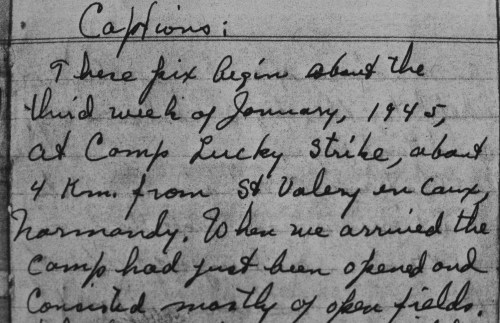
There they could be transported inland, either by rail or by road, to staging camps where men and machines were made ready for action at the front. On January 17, 1945, in Le Havre, Joseph A. Horne, with the men of the 929th Heavy Automotive Maintenance Company, was supposed to board troop train 2980.  The train was to make its way to a French village bordering one of the largest of the military staging areas, Camp Lucky Strike.  Indeed, the train’s 45 wooden cars, called Forty and Eights, were filled with U.S. personnel including men from the 553rd Ambulance Company, 656th Quarterhead Railway Company, 4th Squad of the 2nd Maintenance Platoon and 1471st Engineers.  And, indeed, the train did depart.  What happened next has been called an avoidable tragedy.

For much of its journey, the train crawled along, sometimes at 10 miles per hour, en route to the train station in St. Valery-en-Caux.  But then something happened. The train picked up speed.  With worn out brakes and no speedometer, there was little the engineer could do.  Packed tight into the cars and unaware of events, the military personnel were at first overjoyed to be moving faster.  They did not know the brakes had failed. The train crashed into the St. Valery railway station. Cars crumpled, piling mountain high.  The reports of the carnage were gruesome. At least 87 people were killed and 150 injured.

Horne and the men of the 929th were not on the train due to “some error on the part of an officer, as a result we rode the 40 miles from Le Havre to Lucky Strike in open trucks.”  Later Horne would take photos of the wreckage.  How do we know that? Because he says so in the caption notes he wrote that accompany the roughly 200 photos he took between 1945-1946 as he served in Germany and France.

His detailed notes, along with prints and negatives, are in a box in the Library of Congress.  They have yet to be digitized. Why he was taking photos with the 929th remains unclear.  Further research is needed.  After having worked as a photographer with the Farm Security Administration/Office of War Information, perhaps the military or some other arm of the federal government was continuing to utilize his photographic skill.

In any case, photocopies of at least 80 of the photos he took show images taken from January through at least June 1945 of the men of 929th at work, at play, and interacting with locals in France and Germany and of refugees, or “displaced persons”, from several other countries.  They show a war-ravaged European landscape, and they also capture the persevering spirit of people in the midst of war.

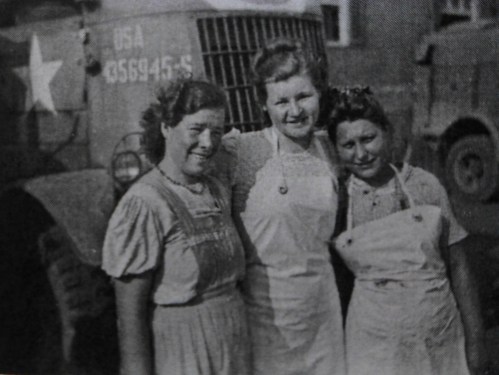
Russian girls who work in the kitchen of the 929th, by J. A. Horne

Russian girls who work in the kitchen of the 929th, by J. A. Horne

Former officer in the Russian army, captured by the Germans, and now attached to the Displaced Persons Unit of the 929th, by J.A. Honre

Former officer in the Russian army, captured by the Germans, and now attached to the Displaced Persons Unit of the 929th, by J.A. Horne

Frankfurt Vicinity, Germany. French family on Highway 8 returning home, by J. A. Horne

Frankfurt Vicinity, Germany. French family on Highway 8 returning home, by J. A. Horne

In his notes he describes taking photos from a moving train as the 929th travelled from Camp Lucky Strike to Verdun.  He describes holes in the sheet metal roof of a 929th shop caused by an air attack, and burned out tanks lined up to be salvaged near the shop area.  He describes a local elder, or burgermeister, in a German town pointing out the architectural highlights and history of his home.   The man refused to be photographed but he guided Horne around his city directing his photography.  Horne’s  caption notes, which are quite extensive, end with this statement:  “Other captions on back of prints.  Sorry I can’t do a good job on these captions.  There just isn’t time.”  The notes end around May 1945.

Around this time, the war is effectively ending in Europe.  The final battles are taking place, and soon Germany will surrender to the Western Allies and the Soviet Union.  And as German labor camps are secured, the full horror of the war comes to light.

Buchenwald Corpses, 1945

Buchenwald Corpses, 1945

What happens to Horne over the next six to twelve months is unclear.  He later summarizes that period of his enlistment as serving as an education officer.  Somehow, at some point, he comes into contact with the Monuments, Fine Arts and Archives Unit, the men and women tasked with recovering, preserving and eventually restituting the world’s great art, including the paintings, books and spiritual items that had belonged to the Jewish families of Europe.  By June 1946, he would no longer be enlisted in the Army but be employed with the MFA&A as a civilian.

U.S. soldier in a bombed church, by Toni Frissell

U.S. soldier in a bombed church, by Toni Frissell

He would be reunited with some of the same colleagues with whom he’d worked at the Farm Security Administration/Office of War Information.  He would be called upon to utilize his skills with language, especially German, his understanding of photography, and his experience in engaging with other cultures.  And, as he would later describe to his son, there would be the adventures to be had as former allies became enemies.

Stay tuned for further Interludes in June.


Sources/Further Reading …

About Cigarette Camps

Russell C. Eustice Recalls the Troop Train 2980 Tragedy at St. Valery-en-Caux During World War II

The WWII 300th Combat Engineers  553rd Ambulance Company

Area Soldier Survived World War II Train Disaster

More about the picture of the Polish boy in the Warsaw Ruins 

More about photographer Toni Frissell and Women at the Front

More about the Monuments Men

Introduction to the Holocaust

Read Full Post »

« Newer Posts - Older Posts »