
Seen while walking very very quickly by the Charles River today.
Posted in Inspiration, Nature Notes, Uncategorized, tagged beauty, Charles River, Inspiration, nature, Photography, urban landscape, water on February 1, 2017| 3 Comments »
Posted in Inspiration, Kitchen Inspirations, Uncategorized, tagged beauty, food, food photography, healthy eating, Inspiration, philanthropy, Photography, salads, social outreach on January 31, 2017| Leave a Comment »

beets, red onion, and edamame with ginger and rice wine vinegar


tomatoes, red onions and herbs served with warm bread
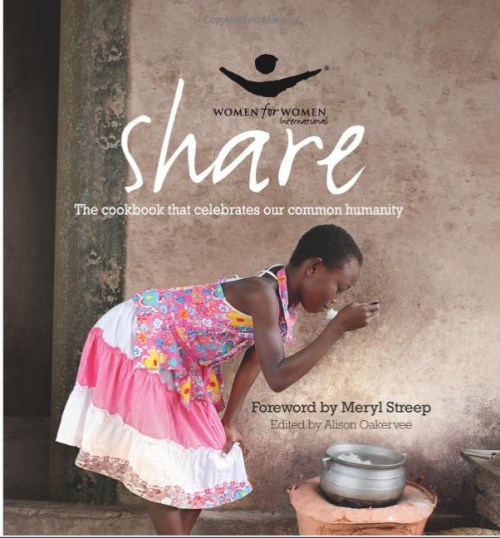
Two salads I made inspired by recipes in the cookbook Share: The Cookbook That Celebrates Our Common Humanity. The book was an unexpected find as I wandered through a local Ten Thousand Villages store. It kind of jumped into my arms with its beautiful photography, wide range of recipes from peoples around the globe from Kosovo to the Congo, and data about the challenges and opportunities for girls and women living in areas of great conflict. An inspiring book produced by Women for Women International.
Posted in Inspiration, Nature Notes, Uncategorized, tagged beauty, clouds, Inspiration, nature, sky, sunlight on January 30, 2017| Leave a Comment »
Posted in Inspiration, Uncategorized, tagged beauty, colors, Inspiration, John La Farge, Photography, Purity, stained glass on January 28, 2017| 1 Comment »

Detail from Purity by John La Farge
Posted in Inspiration, Uncategorized, tagged Abraham Lincoln, freedom, history, Inspiration, musings, Phillips Brooks, Photography, sanctuary, sanctuary cities, slavery on January 27, 2017| 3 Comments »
Eventually, it would work this way — some places were safe and some places were not. If you could make it to the safe place, sometimes woods, sometimes city, then you were safe. But eventually laws were changed, compromises made, and so then even if you made it to the safe place, you could be forcibly brought back to the unsafe place. Sometimes people stood up for you. Sometimes those people were steadfast but there were times when even those pillars were pushed aside. That is what the children remember. How if they did not have the right papers, and especially if they had no papers at all, how the pattyrollers could pick them up, hit them, chase them with dogs. It did not matter if they had made it to sanctuary. Laws said that they were less than human. Only 3/5ths. Until a President put pen to paper.

It took me a while to understand the word drawn from the childhood experiences of the former slaves, their fears of the pattyrollers. These patrollers were charged with keeping track of slaves in the slave owning states and eventually given legal right to enter into free states and bring back those who had sought a free land. Back into slavery the children would go … until a President put pen to paper.
That President was Abraham Lincoln. His pen upon paper produced the Emancipation Proclamation, an executive order issued on January 1, 1863.
In his famous eulogy for the slain President, Reverend Phillips Brooks made note that Lincoln served a divided nation and describes how Lincoln was able to stand forth in the struggle between two American natures.
“We are told he did not come to the Presidential chair pledged to the abolition of slavery. When will we learn that with all true men it is not what they intend to do, but it is what the qualities of their nature bind them to do, that determines their career! The President came to his power full of the blood, strong in the strength of Freedom. He came there free, and hating slavery. He came there, leaving on record words like these … “a house divided against itself cannot stand. I believe this government cannot endure permanently, half slave and half free. I do not expect the Union to be dissolved; I do not expect the house to fall; but I expect it will cease to be divided. It will become all one thing or all the other.””
Brooks goes on with great eloquence, an eloquence that cannot be conveyed in a blog post but these words stand out to me … “Do not say that [slavery] is dead. It is not, while its essential spirit lives. While another man counts another man his born inferior …” Brooks ends the sermon with Lincoln’s own words delivered at Gettysburg. “He stood there with their graves before him and these are the words he said” –
“We cannot dedicate, we cannot consecrate, we cannot hallow this ground. The brave men who struggled here have consecrated it far beyond our power to add or detract. The world will little note nor long remember what we say here, but it can never forget what they did here. It is for us the living rather to be dedicated to the unfinished work which they who fought here have thus far so nobly advanced.””
Over 150 years after the American Civil War, I live in what is known as a sanctuary city and I work in a place of sanctuary. I read of students demanding that their campuses become places of sanctuary. I wear no blinders, at least on this subject. What has happened before can happen again. But it does not have to. It does not have to. All this said as a new President of a different character continues to put pen to paper.
Posted in Inspiration, Uncategorized, tagged art, beauty, design, floral inspiration, glass, Inspiration, Photography, stained glass windows on January 26, 2017| 1 Comment »

Detail from the stained glass window Purity by John La Farge
Posted in Inspiration, Uncategorized, tagged america's future, American history, art, black history, immigration, Inspiration, Langston Hughes, Photography, poetry on January 25, 2017| 4 Comments »

a wall I saw today
Let America Be America Again
Let America be America again.
Let it be the dream it used to be.
Let it be the pioneer on the plain
Seeking a home where he himself is free.
(America never was America to me.)
Let America be the dream the dreamers dreamed–
Let it be that great strong land of love
Where never kings connive nor tyrants scheme
That any man be crushed by one above.
(It never was America to me.)
O, let my land be a land where Liberty
Is crowned with no false patriotic wreath,
But opportunity is real, and life is free,
Equality is in the air we breathe.
(There’s never been equality for me,
Nor freedom in this “homeland of the free.”)
Say, who are you that mumbles in the dark?
And who are you that draws your veil across the stars?
I am the poor white, fooled and pushed apart,
I am the Negro bearing slavery’s scars.
I am the red man driven from the land,
I am the immigrant clutching the hope I seek–
And finding only the same old stupid plan
Of dog eat dog, of mighty crush the weak.
I am the young man, full of strength and hope,
Tangled in that ancient endless chain
Of profit, power, gain, of grab the land!
Of grab the gold! Of grab the ways of satisfying need!
Of work the men! Of take the pay!
Of owning everything for one’s own greed!
I am the farmer, bondsman to the soil.
I am the worker sold to the machine.
I am the Negro, servant to you all.
I am the people, humble, hungry, mean–
Hungry yet today despite the dream.
Beaten yet today–O, Pioneers!
I am the man who never got ahead,
The poorest worker bartered through the years.
Yet I’m the one who dreamt our basic dream
In the Old World while still a serf of kings,
Who dreamt a dream so strong, so brave, so true,
That even yet its mighty daring sings
In every brick and stone, in every furrow turned
That’s made America the land it has become.
O, I’m the man who sailed those early seas
In search of what I meant to be my home–
For I’m the one who left dark Ireland’s shore,
And Poland’s plain, and England’s grassy lea,
And torn from Black Africa’s strand I came
To build a “homeland of the free.”
The free?
Who said the free? Not me?
Surely not me? The millions on relief today?
The millions shot down when we strike?
The millions who have nothing for our pay?
For all the dreams we’ve dreamed
And all the songs we’ve sung
And all the hopes we’ve held
And all the flags we’ve hung,
The millions who have nothing for our pay–
Except the dream that’s almost dead today.
O, let America be America again–
The land that never has been yet–
And yet must be–the land where every man is free.
The land that’s mine–the poor man’s, Indian’s, Negro’s, ME–
Who made America,
Whose sweat and blood, whose faith and pain,
Whose hand at the foundry, whose plow in the rain,
Must bring back our mighty dream again.
Sure, call me any ugly name you choose–
The steel of freedom does not stain.
From those who live like leeches on the people’s lives,
We must take back our land again,
America!
O, yes,
I say it plain,
America never was America to me,
And yet I swear this oath–
America will be!
Out of the rack and ruin of our gangster death,
The rape and rot of graft, and stealth, and lies,
We, the people, must redeem
The land, the mines, the plants, the rivers.
The mountains and the endless plain–
All, all the stretch of these great green states–
And make America again!
by Langston Hughes (1902-1967)
Read more Langston Hughes and find other poems for inspiration, reflection and perhaps even motivation at https://www.poets.org/
Posted in Branches, Inspiration, Uncategorized, tagged beauty, birds, hawks, landscape, nature, Photography, trees, urban landscape on January 25, 2017| 1 Comment »

Photo by DL
I love when friends share pictures. A friend shared this picture with me as she makes her way into work. As you can see the sun is shining. I’m heading out into the world with my camera. I’ll see what I can capture to share with you in the near future. Have a great day!
Posted in Inspiration, Uncategorized, tagged architecture, art, beauty, churches, colors, design, Inspiration, Photography, religious art, sacred spaces, stained glass windows on January 23, 2017| Leave a Comment »

When walking toward St. Paul Church, the exterior conveys a sense of simplicity as well as sturdiness, which makes sense given that the building’s design is romanesque in style. Its red brick facade blends into the surrounding historic landscape of Cambridge, MA. As it is an active Catholic church, I knew I had a short window of time to take photos before the midday mass. I felt like I had prepared myself to be focused in my photography by reading the in-depth online building tour found on the church website. Still, reading the words can never really prepare one for the actual firsthand experience of stepping into a sacred space.

As noted on the website, “An oblong hall is divided by matching rows of columns, surmounted by a barrel-vaulted ceiling and rounded arches. Since the weight is supported by the walls, the windows are small. St. Paul’s, designed by architect Edward Graham, is modeled after the Church of San Zeno Maggiore in Verona, Italy.”

I was ready to deal with “small windows.” I was caught off guard by the beauty of the encompassing friezes and statues.


Eventually my attention did return to the windows, of course. There are three stained glass windows near the choir stalls including John the Baptist, St. Elizabeth (his mother) and St. John the Evangelist.
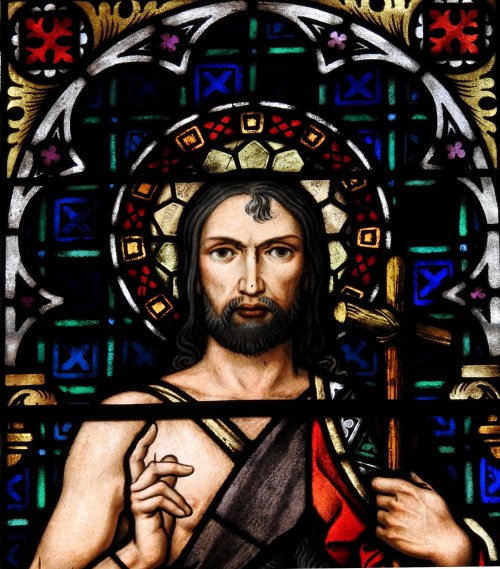
John the Baptist
The windows are narrow but their content looms large like these windows tucked in an alcove.


There are 10 windows in the lower part of the nave patterned after Renaissance images of the saints …

St. Jerome
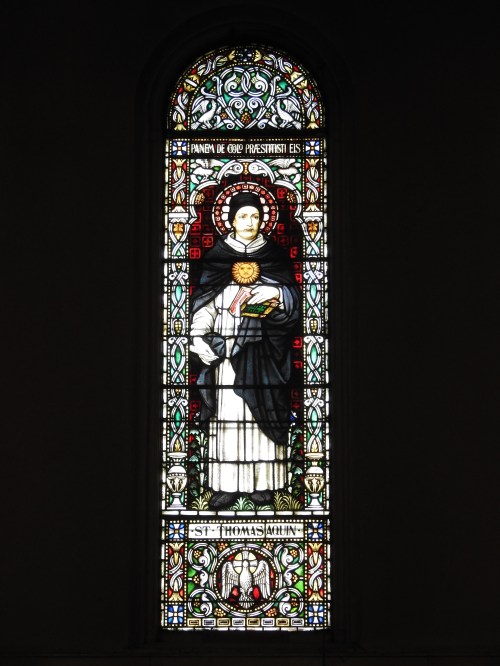

… and windows up high. Way up high.


These upper story windows were hardest to see but they glowed in the late morning light.
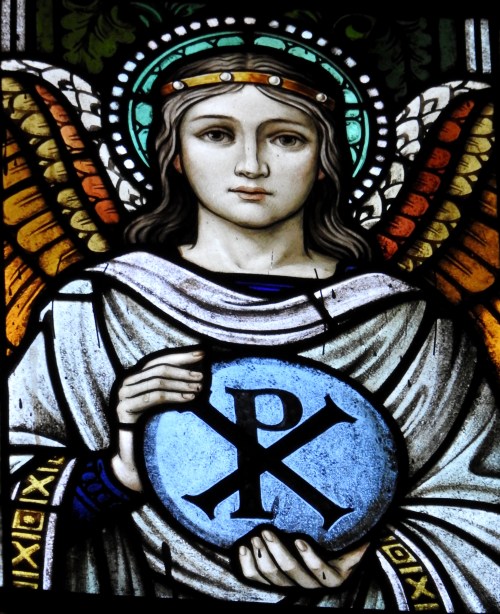
The church is an unexpected riot of color softened by the surrounding wood and marble. I’ve passed by the church for many years without ever stepping inside. I’m grateful to the staff for allowing me entry to photograph this very special place. You can read more about the interior of this historic building and find links for more information about its parish activities here: http://stpaulparish.org/building-tour/
Posted in Inspiration, Uncategorized, tagged American history, black history, Dwight D. Eisenhower, Fox Conner, George C. Marshall, George S. Patton, Ike Woodward, Inspiration, military history, Photography, slave narratives, storytelling on January 23, 2017| 1 Comment »
“The most valuable qualification in an officer is common sense; contrary to general belief, it is the rarest element found in mankind.” — Major General Fox Conner (1874-1951)

He would have been less than ten years old, I think. In a 1930s interview, eighty-two year old former slave Ike Woodward remembered as a child it was his job to lead blind Bob Conner around. Conner had been blinded in a Civil War battle. Woodward’s master, also named Ike Woodward, had sold the services of his young slave to the Conner family. In his his interview for the Works Progress Administration, Woodward would go on to remark that Master Conner was the papa of Mr. Fox Conner, a big man now in the army. That statement led me to ask: who was Fox Conner? An impressive figure it turns out.
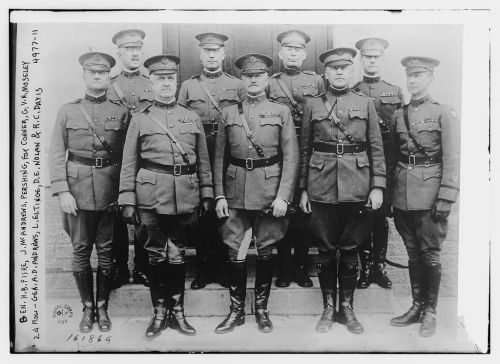
Conner to the left of Pershing (Source)
Conner would make his way from rural Mississippi to West Point and embark upon a stellar career in the military, serving in the Spanish American War, Pancho Villa Expedition and World War I. He earned military awards from the Purple Heart to the French Croix de Guerre. It was during World War I that he was selected by General Pershing to be a member of his operations section where one of Conner’s subordinates was George C. Marshall. A far-seeing strategist, he opposed the Treaty of Versailles seeing within it the seeds of a new world war with Germany.
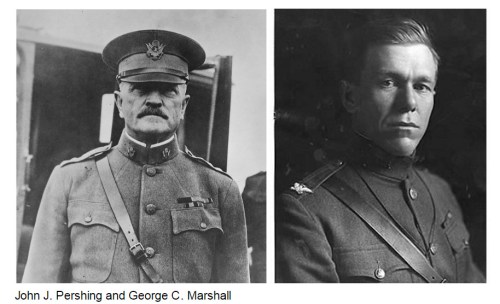
During World War I Conner would become reacquainted with and develop an enduring friendship with an officer by the name of George S. Patton. Back in the States, in the early 1920s, Conner and his wife were the honored guests of a dinner party hosted by the Pattons. Invited to this dinner was a young officer named Dwight D. Eisenhower, whom Patton thought Conner should meet. According to one biographer, Russ Stayanoff, “In Eisenhower, Conner saw a likable, eager young officer available for the “next one;” an officer that he could groom. Conner undoubtedly needed an executive officer with whom he could get along, and Eisenhower fit the bill. The fruits of that February luncheon became apparent when Conner telephoned Ike later in the same week and asked him if he would like the assignment as his executive officer in Panama.”

Today Conner is especially remembered for his mentoring of Eisenhower. As Executive Officer for Conner at Camp Gaillard in Panama, Eisenhower received an unparalleled education in military affairs that would be instrumental in his later success at the Command and General Staff School. Conner was a student of history. Whether personally with Eisenhower or through his later lectures at the Army War College, Conner influenced a generation of future leaders. He was a proponent of coalition building and the use of diplomacy in concert with strong leadership to bring about victory. His three axioms or principles of war for a democracy still discussed today: Never fight unless you have to; Never fight alone; and Never fight for long.
Thanks to the internet there appears to be an increasing amount of information available to the general public about Conner, as well as more detailed analyses of his teachings still relevant in this modern age. A biography was published in 2011 about him and a new book more recently published in 2016. In much of the discourse about Conner that I saw there is reference to him being the son of a blind Confederate soldier. The only way I learned the little that I have of this man and of his enduring legacy was to read the remembrances of the slave “lent out” to help guide his father. Ike Woodward would work at the Conner place until the day Ike’s brother rode in by horseback and scooped him up, conveying that they were now free.
Sources & Additional Reading
https://en.wikipedia.org/wiki/Fox_Conner
http://www.casematepublishers.com/index.php/general-fox-conner.html#.WIZFhVUrKM8

 Words + Images