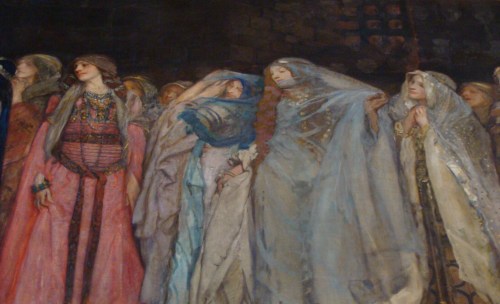
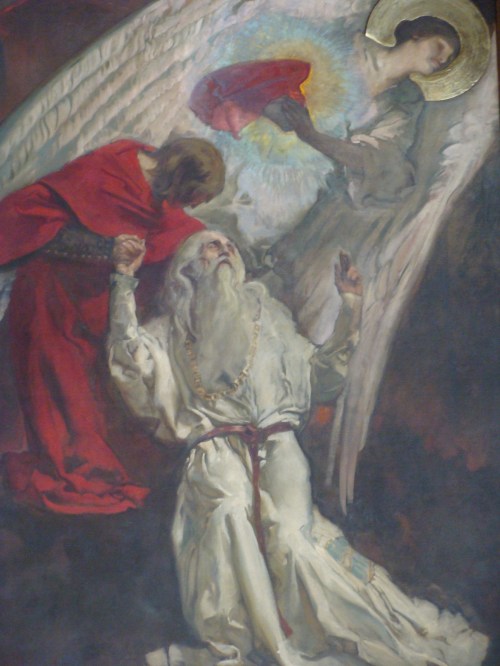
Following are pictures taken of the John Singer Sargent murals located on the top floor of the McKim Building at the Boston Public Library. You can read more about the murals creation and restoration here and here.


Posted in Inspiration, tagged architecture, art, Boston Public Library, illustration, Inspiration, john singer sargent, murals, painting, Photography, religion on May 30, 2013| 2 Comments »
Posted in Inspiration, tagged architecture, art, Boston Public Library, colors, Edwin Austin Abbey, faith, holy grail, illustration, Inspiration, murals, painting, Photography, storytelling on May 30, 2013| 6 Comments »

The Abbey Room is located on the second floor of the McKim Building in the Boston Public Library in Copley Square. Its high walls are covered by a series of mural paintings depicting The Quest for the Holy Grail. A lovely place to hang out on a rainy day in Boston.
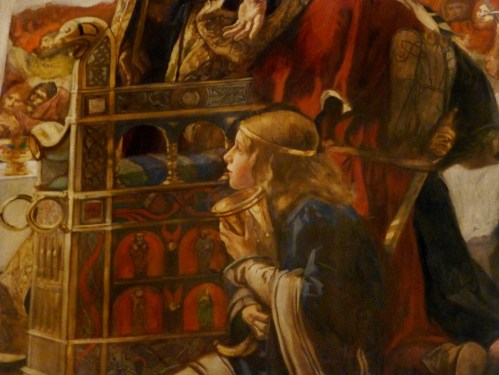



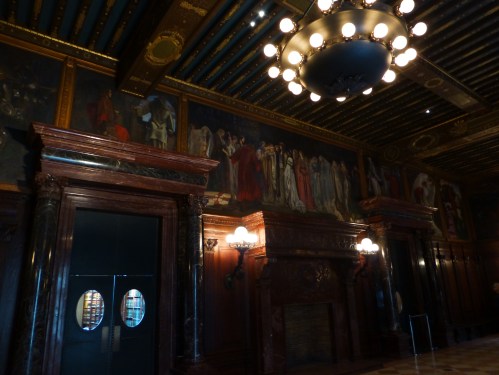
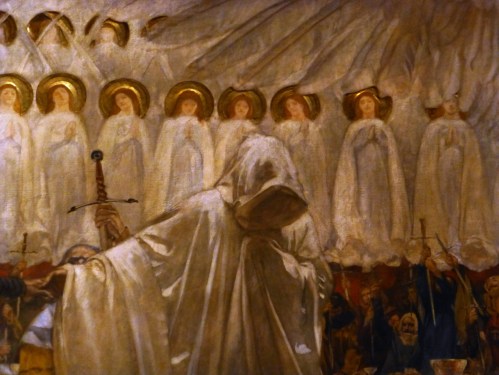


Painted by Edwin Austin Abbey.
Posted in Inspiration, tagged architecture, Boston, Cathedral of the Holy Cross, churches, faith, healing, Inspiration, light, religion, spirituality, stained glass windows on April 18, 2013| 8 Comments »

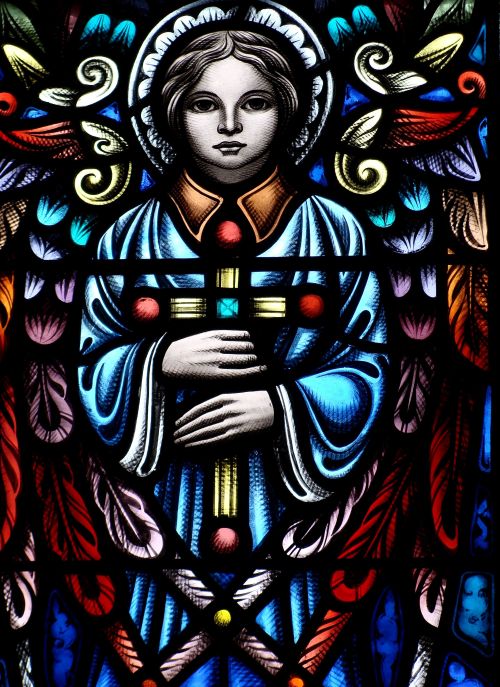
Today there is an interfaith service taking place in Boston at the Cathedral of the Holy Cross. All faiths, all peoples, are welcome to come together to continue the healing process.

It is a grand space. I was lucky enough to visit in the recent past to photograph a bit of the interior. Like today, it was a sunny day, with light shining through, creating warmth.

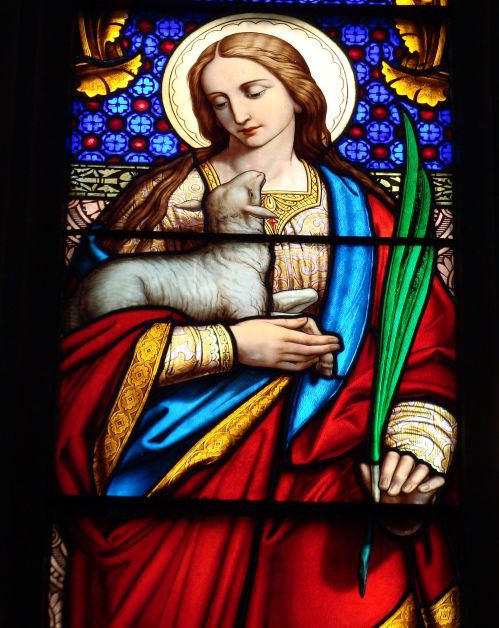
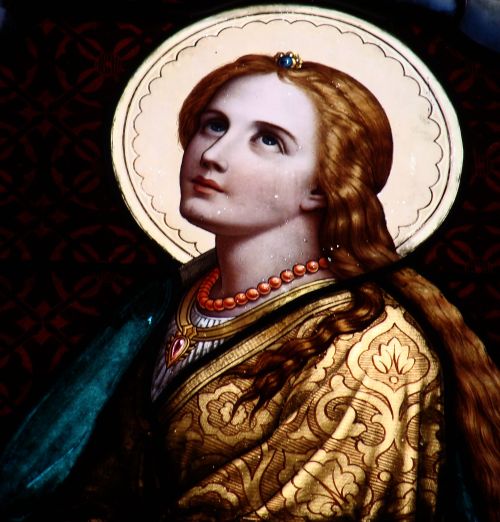
Regardless of one’s faith, if you’re in the area in the future, I’d encourage a visit, if only to sit in the calm.

Posted in Inspiration, tagged angels, architecture, art, arts, churches, Edward Burne-Jones, Fiona MacCarthy, illustration, love, muse, Photography, pre raphaelite artists, stained glass, stained glass window, Trinity Church in Copley Square on April 8, 2013| 5 Comments »
This scene is a detail from the Edward Burne-Jones and William Morris stained glass window, David’s Charge to Solomon, 1882. The window, designed by Burne-Jones and executed by Morris, is located in the baptistry of Trinity Church in Copley Square. I was drawn to this particular section because of the colors, the incredible drapery of the cloth, and the faces of the women.
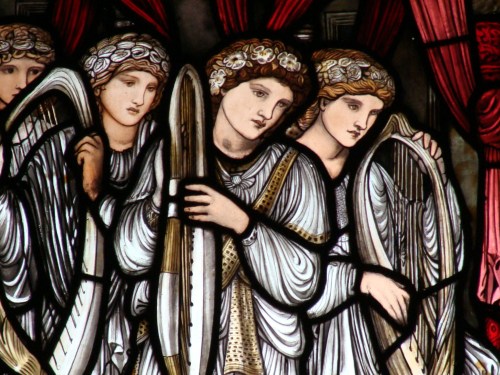
The faces of these women and apparently the faces of many of the women in Burne-Jones’s post-1860’s artwork all have a similar look. They are likely the face of his great love and muse, Maria Zambaco. She appears to have been the muse for many of the Pre-Raphaelite artists. This wikipedia article gives a broad overview of the Burne-Jones/Zambaco relationship, but I must say that this Oxford Today article referencing Fiona MacCarthy gives a much richer picture of a complicated man, his many muses and the influence of his art.

Study by Burne-Jones, c. 1870

Posted in Inspiration, tagged architecture, art, books, Boston Public Library, family, Inspiration, john singer sargent, murals, Photography, reading on April 1, 2013| 1 Comment »
Reading Emily Toth’s The Public Library Was My Bookstore just reinforced for me that there is no greater public institution than the public library. As a child in Lynchburg, Virgnia, the public library was one of the few places my mother would allow my younger brother and I to walk by ourselves. When we were older, and our young niece and nephew would visit for the summer, we would literally carry them piggyback to the library to keep them entertained. My nephew who is now 30 with a child of his own still remembers those rides. Once I moved to the Boston area, one of my homes away from home quickly became the Boston Public Library.
If you are ever in Boston, please visit the main branch located on Boylston Street in Copley Square. It was the country’s first public library and remains one of its most important. It is an expansive structure that has evolved over time. In the “old part” you will find some of the most beautiful and unique art of John Singer Sargent. In the “new part” you will find the books and there amidst the shelves and sitting at the tables you will find the mix of Boston’s humanity – young mothers with children, high school students studying (kind of), college students researching, business people escaping the office for a bit, the homeless resting, people learning English with tutors, tourists snapping photos (without flash), and everything and everyone in between. It is an experience.
Posted in Inspiration, Postcards, tagged architecture, art, colors, faith, Inspiration, light, murals, Postcards, religion, stained glass, Trinity Church in Copley Square on January 30, 2013| 5 Comments »
This winter, I’ve been lucky enough to continue photographing the interior and exterior artwork of Trinity Church in Copley Square, Boston.

Trinity is considered one of the most architecturally significant buildings in the United States. It sits in the center of the City of Boston in an area known as the Back Bay. If you are ever in the Boston area, I highly recommend a visit to view in person this beautiful structure. Inside you will find represented the great stained glass artists including John La Farge, Edward Burne-Jones and Margaret Redmond. Above is a scene from one of her stained glass windows, depicting King Solomon. I’m pleased to share that this image is available as a postcard in The Shop at Trinity Church, located in the church’s basement. Future postcards will include this scene from the window Jesus Blessing Little Children by Henry Holiday of London

and this mural by John La Farge depicting the story of Christ and the woman at the well.

The church is located at 206 Clarendon Street, Boston, Massachusetts. The Shop is located in the basement (or undercroft). You can read more via this link. Direct line is 617.536.0944 extension 225 for The Shop.
Posted in Inspiration, On the Road, tagged architecture, art, churches, colors, design, digital photography, dublin, glass, illustration, Inspiration, ireland, travel on October 23, 2012| 3 Comments »

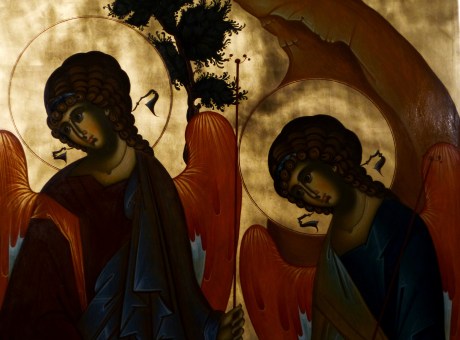
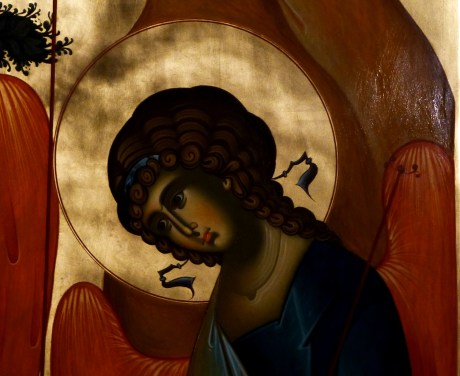
Well, while in Dublin, I have to admit that I did take pictures of a few other things besides leaves and letterpress. Even on the rainiest of days, the interiors of the churches were beautiful to view as subdued light shone through stained glass windows and fell upon lovely murals.


Posted in Uncategorized, tagged architecture, art, beauty, churches, colors, Inspiration, Photography, spirituality, stained glass on April 27, 2012| 1 Comment »
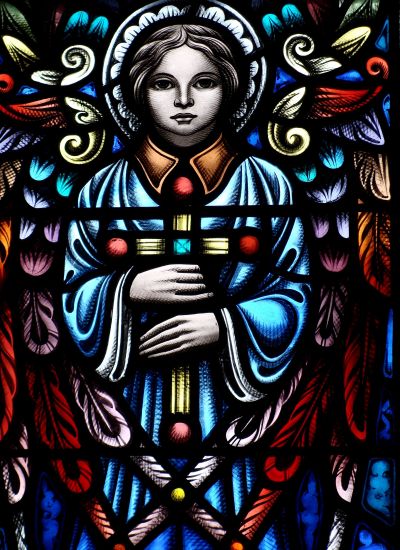
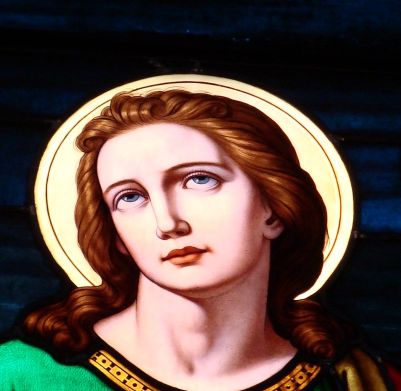
Of late, I’ve been fortunate enough to visit Boston’s Cathedral of the Holy Cross, the mother church of the Roman Catholic Archdiocese of Boston. It is a beautiful historic structure in the vibrant neighborhood of South Boston. You can learn more about the people and place via this link. Meanwhile, here’s a peek at some of the imagery to be found in the interior. Enjoy.


Posted in Branches, Guest Contributor, Inspiration, Nature Notes, tagged architecture, Charles River, Evolving Critic, landscape design, light, nature, Photography, sense of place on November 1, 2010| Leave a Comment »
Posted in Inspiration, tagged architecture, Photography, reflection, ripples, water on September 10, 2010| Leave a Comment »
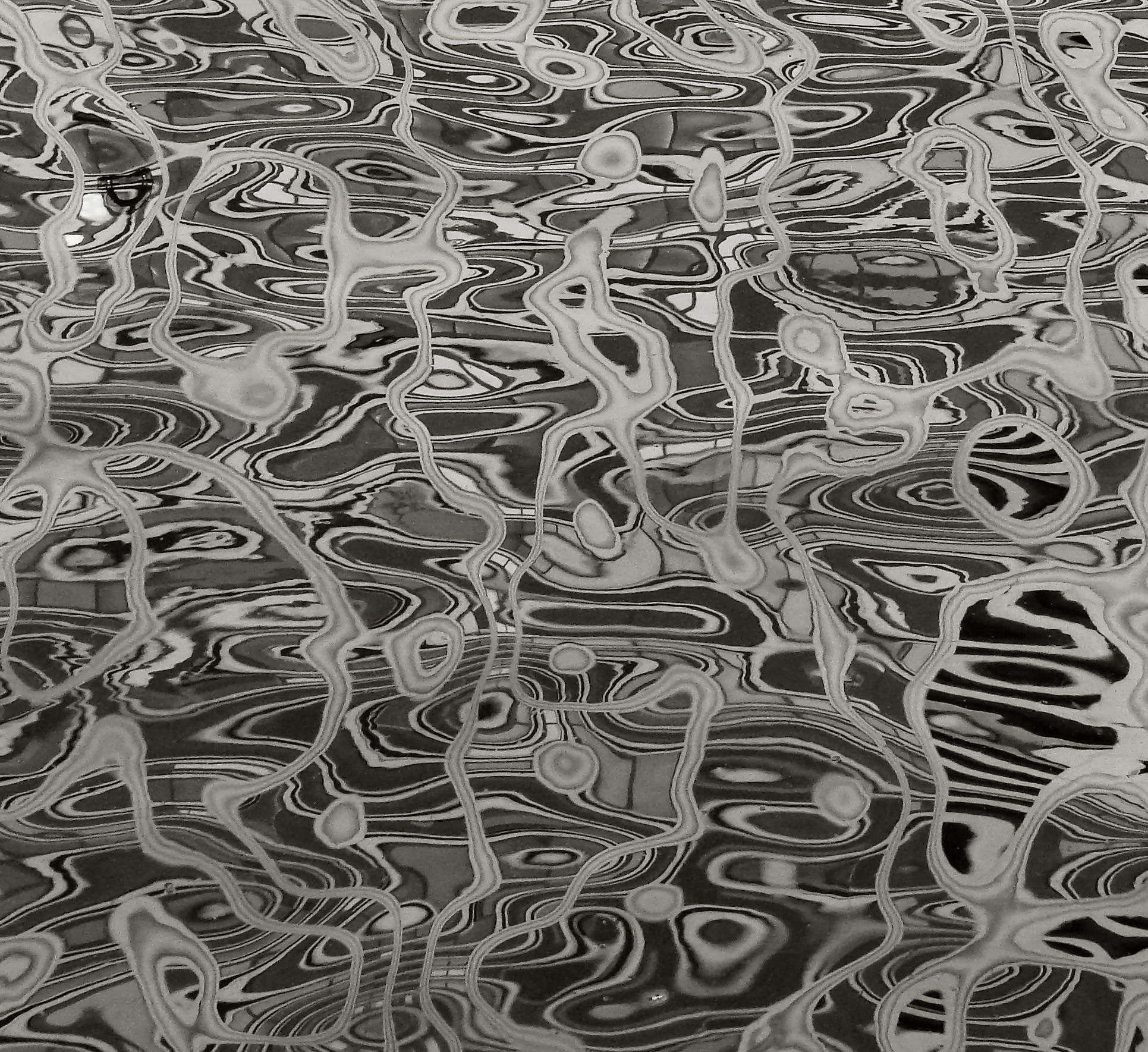
In an earlier post, I asked what is this image.
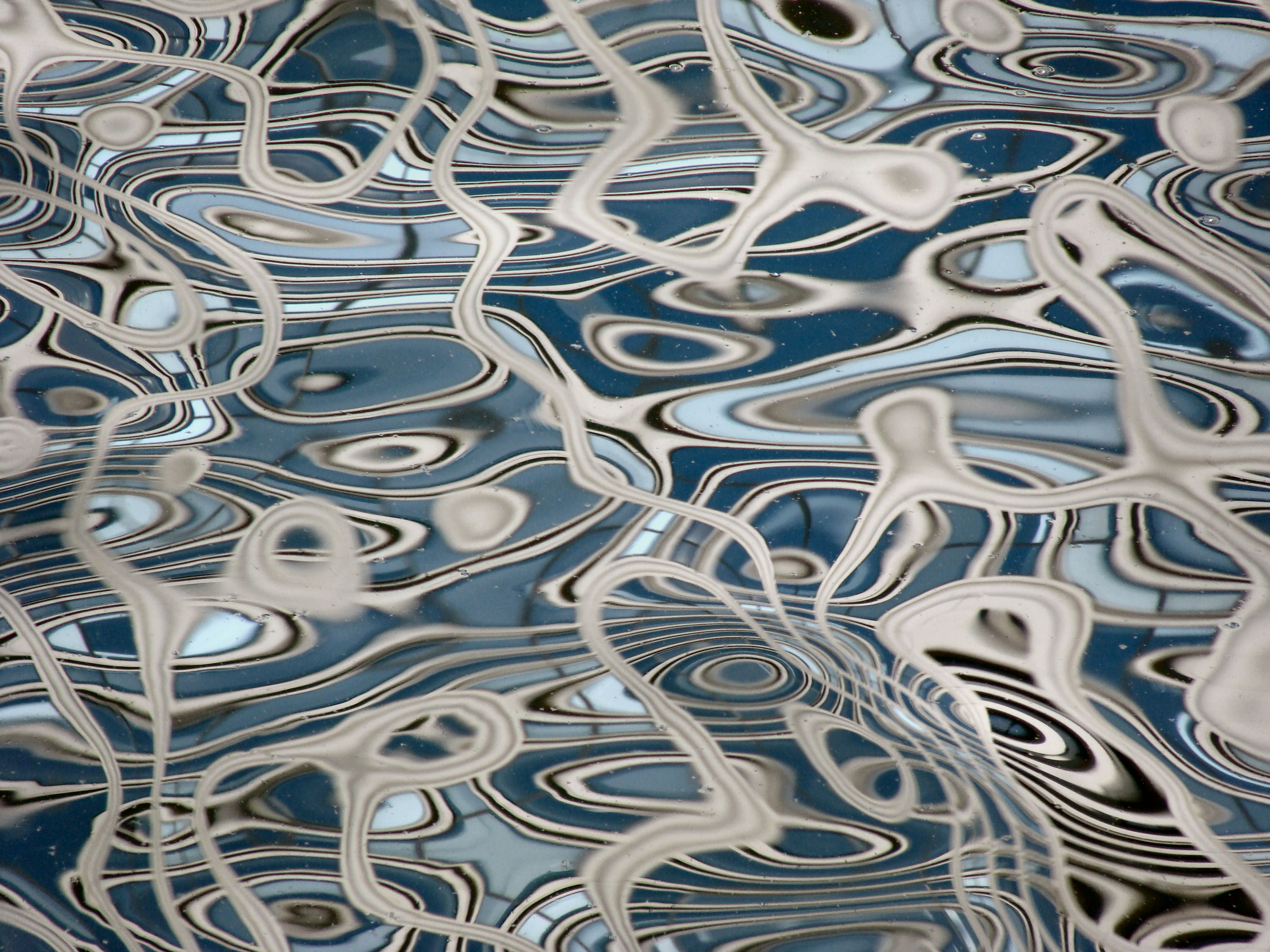
Here’s another related image.
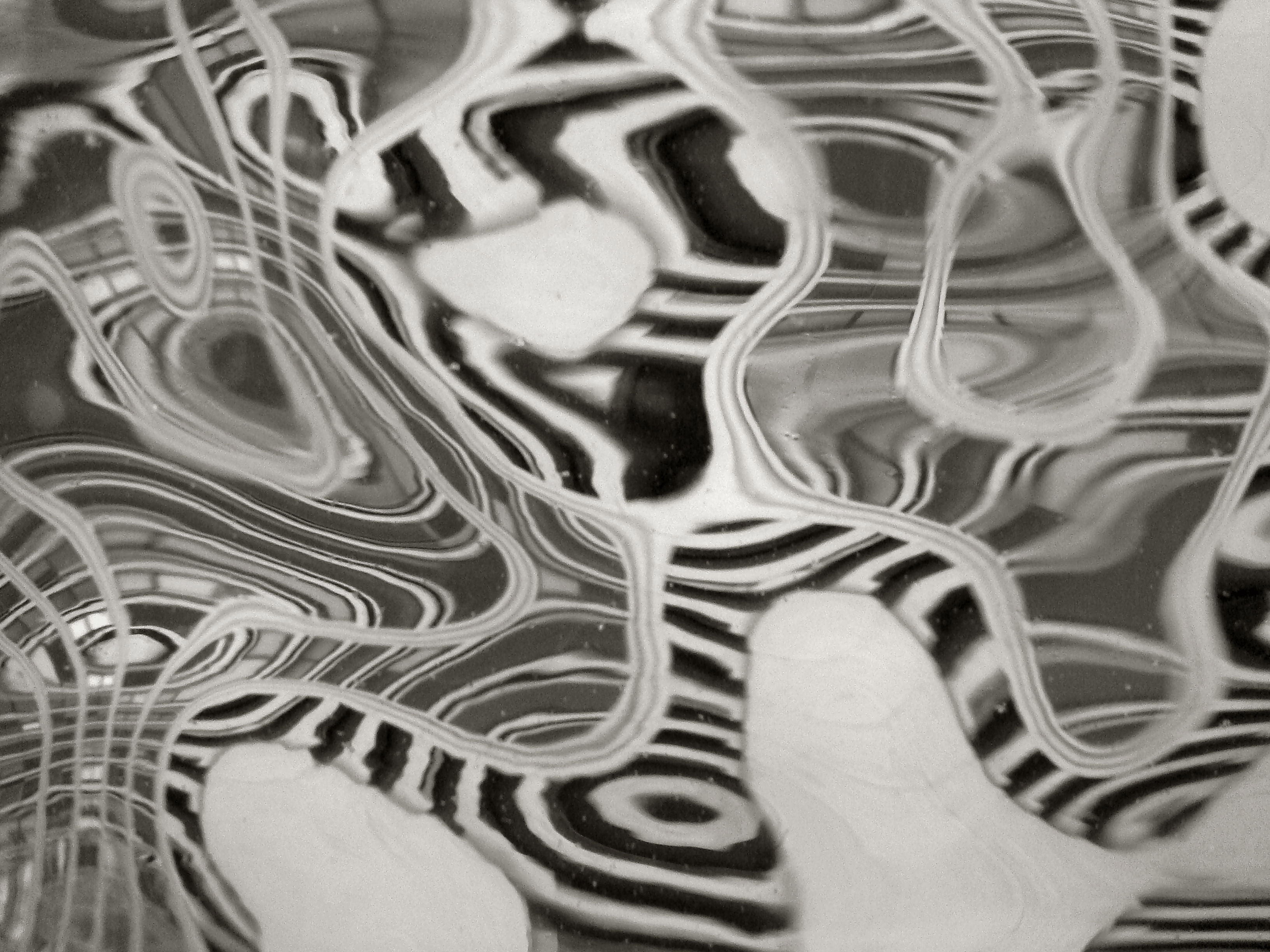
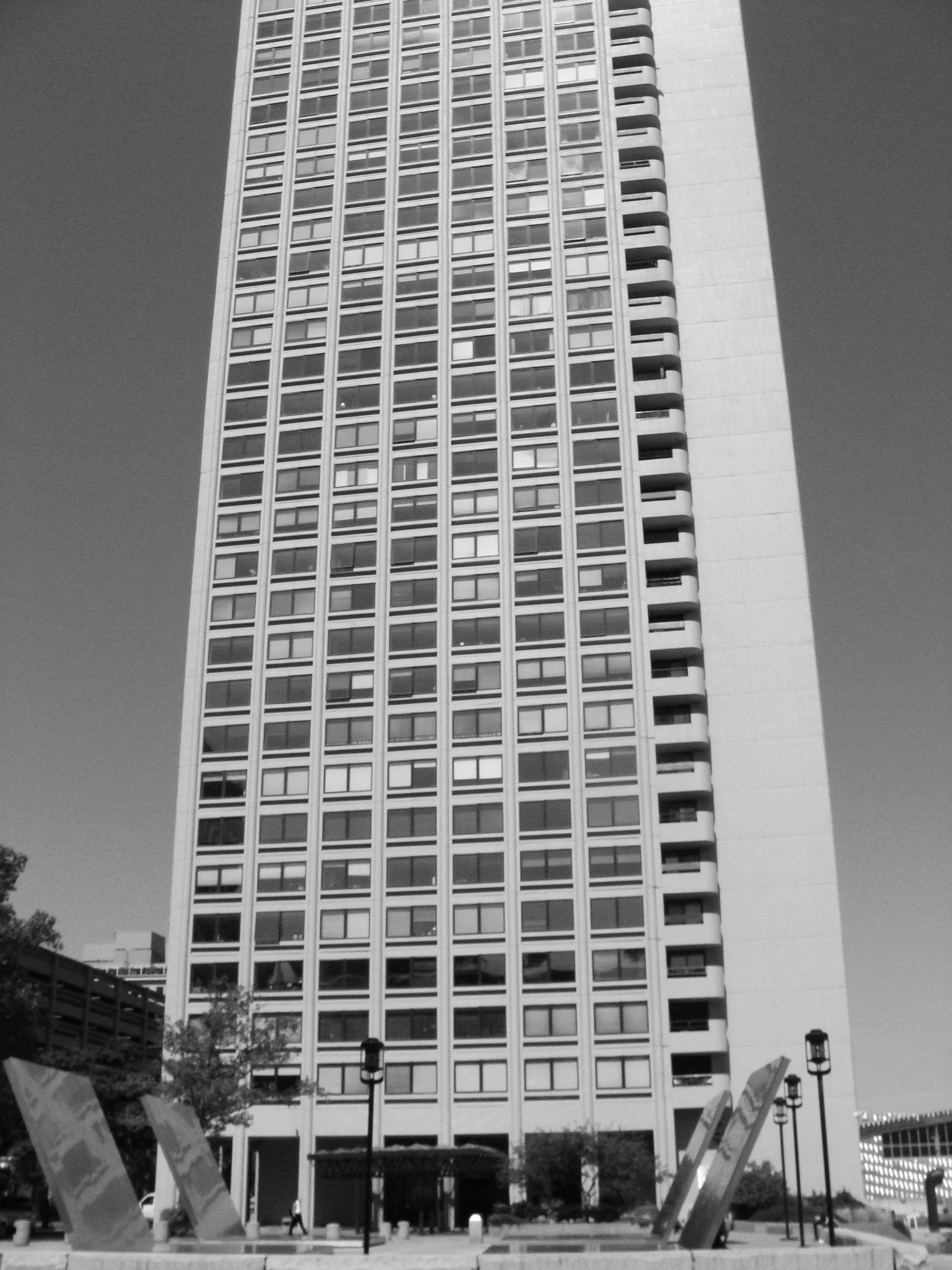
So, what’s happening here? Those of you who guessed anything to do with light and water were right on the money. What you see in these images is pure reflection. As I was walking along Boston Harbor the other day, I looked into the water and saw this:

This building was being reflected in the harbor waters.
As it was reflected in the water, it’s regular lines were distorted by surface ripples.

Luckily, I had my camera set to black and white. And then at the end, I switched back to color.
 Words + Images