1. a new stained glass project
2. the foods of summer

3. music that makes me want to write
Posted in Inspiration, Kitchen Inspirations, Music, tagged colors, food, food photography, Hozier, Inspiration, motivation, music, Photography, stained glass, Take Me to Church on July 31, 2014| 4 Comments »
1. a new stained glass project
2. the foods of summer
3. music that makes me want to write
Posted in Inspiration, tagged angels, architectural features, colors, Edward Burne-Jones, Inspiration, Photography, postcard, pre-raphaelites, stained glass, stationery, Trinity Church in Copley Square on June 5, 2014| 4 Comments »

It is always a treat to walk through Trinity Church in Boston’s Copley Square and to have the opportunity to photograph the architectural features, especially the stained glass windows. This particular detail of a gold-winged angel is in the Edward Burne-Jones window, Wonder of the Shepherds (1882). This image is now available as a postcard in the church Book Shop, located in the building undercroft. You can read more about Burne-Jones’s adoration of angels in this 2006 article by his biographer, Fiona MacCarthy. Learn more about the Book Shop here.
Posted in Inspiration, tagged A. Oudinot of Paris, architecture, art, churches, Clayton & Bell, Copley Square, creativity, Inspiration, Photography, Postcards, shopping, stained glass on January 16, 2014| 3 Comments »
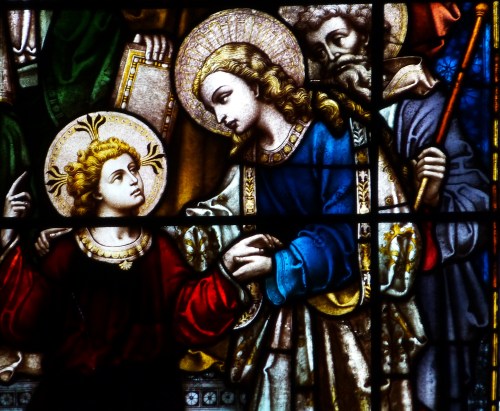
It is with great pleasure to begin the year working on producing new sets of postcards for the Book Shop in Trinity Church in Copley Square, postcards that highlight just a bit the outstanding artwork and craftsmanship of the church’s interior. The above image is a detail from one of the windows in the chancel executed by Clayton & Bell of London, Jesus in the Temple with the Doctors. The following image is a detail from The Ascension, a window located in the south transept and executed by A. Oudinot of Paris.

The postcards should be available by end of the month exclusively at the shop.
Posted in Inspiration, On the Road, tagged angels, architecture, Christ Church, churches, colors, Edward Burne-Jones, Inspiration, Oxford, Photography, saints, stained glass, the stained glass window, travel, William Morris on November 12, 2013| 4 Comments »
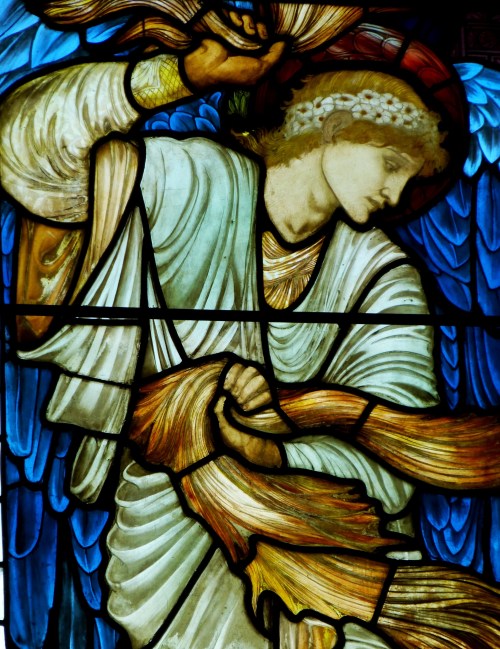
The angel above represents Victory and the angel below represents Sorrow.

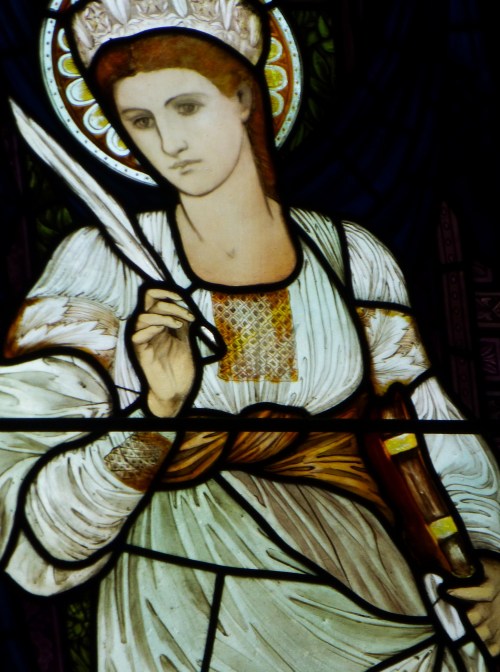
In the stained glass window (1878), designed by William Morris and executed by Edward Burne-Jones, the figure centered between these blue-winged angels is St. Catherine of Alexandria. If you have a chance to research her story, you’ll understand why both sorrow and victory were paired.
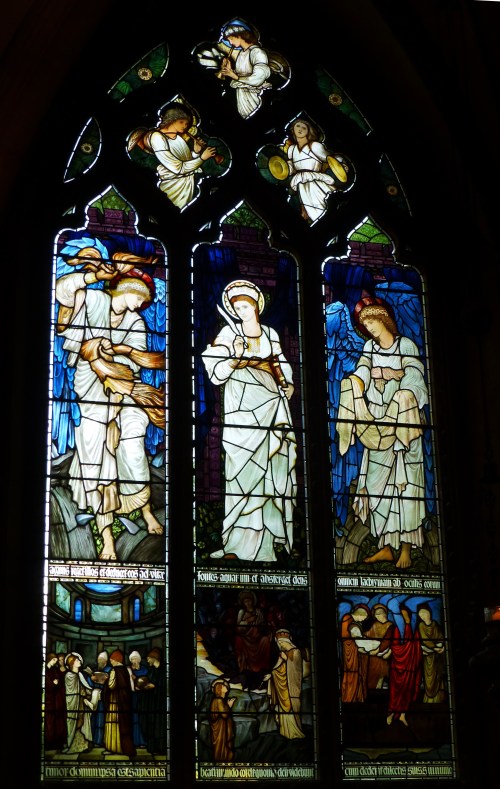
The face of St. Catherine is that of Edith Liddell. Her sister was the inspiration for Alice in the book, Alice in Wonderland.
Posted in Inspiration, tagged architecture, arts, churches, colors, Dante Rosetti, faith, Henry Holiday, Inspiration, interfaith dialogue, light, New Testament, Photography, Pre-Raphaelite, religion, stained glass, transfiguration, William Morris on October 7, 2013| 7 Comments »
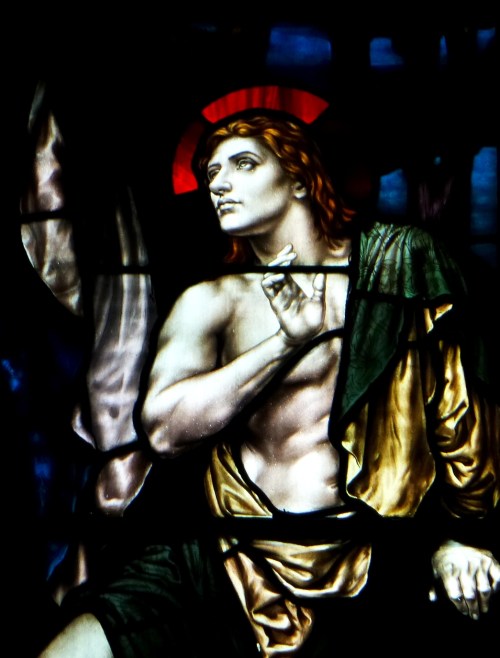
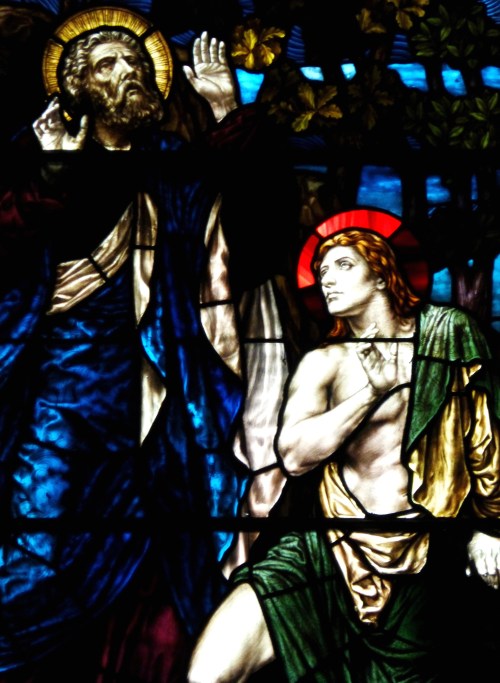
I keep reading that Henry Holiday of London was noted for his execution of drapery, i.e. the fall of cloth, around his figurative subjects; that it was a style reminiscent of Dante Rosetti. I do love the intricate layering of cloth in these scenes from his stained glass window, The Transfiguration (1878), but it is the hands I particularly notice at present. As promised in an earlier post, here is a bit more about the artist and his creation.
Henry Holiday was born in London in 1839. His talent for drawing set him on an early artistic path where he would be influenced by Pre-Raphaelites like Burne-Jones, William Morris and Dante Rosetti. Over time, he would develop his own unique style. He traveled the world as many an artist of that period did. Trips to locales like Italy and Egypt influenced his illustration, painting, sculpture and his work with stained glass. Read more about his diverse interests and artistic expressions in this wikipedia article.
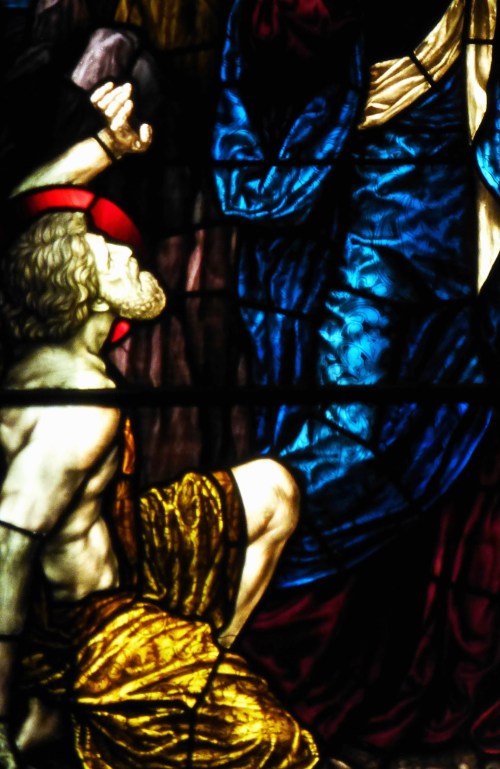
During his lifetime, Holiday did quite a bit of work for American churches, and that’s why I’ve been lucky enough to view and photograph his window, The Transfiguration, at Trinity Church in Copley Square, Boston.
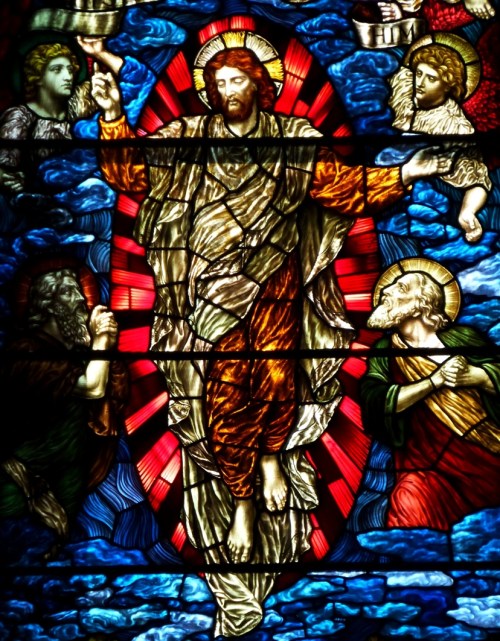
The window depicts a moment described in the New Testament. The basic story is that Jesus and three of his apostles, Peter, James and John, traveled up a mountain to pray. There Jesus begins to shine like the sun, his clothes becoming white as snow. The prophets Moses and Elijah appear at his side and talk with him. Eventually “a bright cloud overshadowed them, and a voice from the cloud said, “This is my Beloved Son, with whom I am well pleased; listen to him.” When the disciples heard this, they fell on their faces with awe. But Jesus came and touched them, saying, “Rise, and have no fear.” And when they lifted up their eyes, they saw no one but Jesus only. …” (Matthew 17:1-92, Mark 9:1-9; Luke 9:28-36; 2 Peter 1:16-18).”
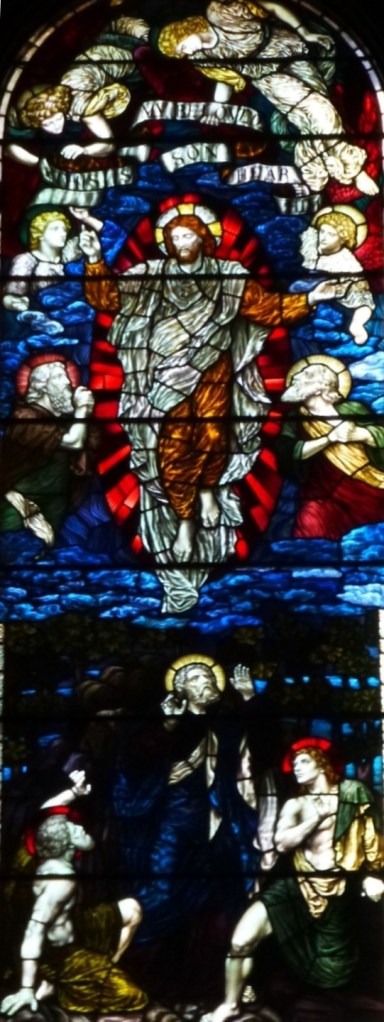
There are a lot of great resources online about the significance of this moment in Christianity and its various interpretations. If you’re in Boston’s Back Bay, view Holiday’s window firsthand, especially when the sun is shining bright. Postcards and prints available in the Trinity Book Shop with shipping available worldwide.
Posted in Inspiration, tagged architecture, art, arts, beauty, churches, colors, faith, Henry Holiday of London, Inspiration, Jesus, Postcards, religion, stained glass, transfiguration, Trinity Church in Copley Square on September 25, 2013| 3 Comments »
That is this lay person’s interpretation of this image of The Transfiguration of Jesus, a stained glass window in Trinity Church in Copley Square. It is by Henry Holiday of London. I hope to share more about the whole window and its maker in the coming month, but meanwhile I can share that I’ve been lucky enough to photograph this center part of the window. It will be available as a postcard in the church’s Book Shop in early October. Have a good day, folks.
Posted in Inspiration, tagged architecture, arts, Boston Back Bay, Boston Public Library, churches, colors, design, Inspiration, Photography, stained glass, Tiffany, tiffany glass on June 3, 2013| 6 Comments »

Nine minutes. That’s all the time I had to walk through the Church of the Convenant before the doors would be closed for the day. Located in Boston’s Back Bay on Newbury Street, the church is famed for its interior design work and stained glass windows by Tiffany Glass and Decorating Company. The opportunity to photograph just a bit of this interior arose the same wonderfully rainy day I had my photographic adventures in the Boston Public Library.


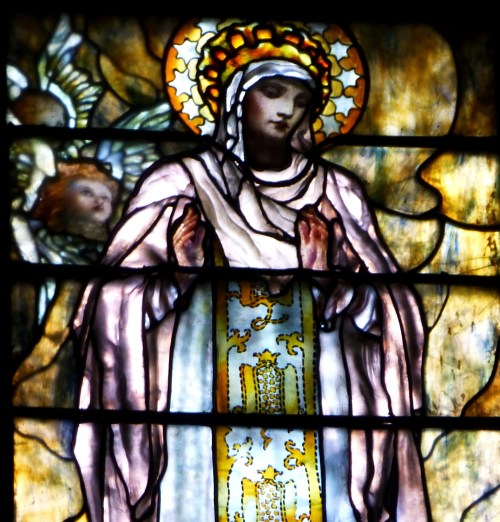
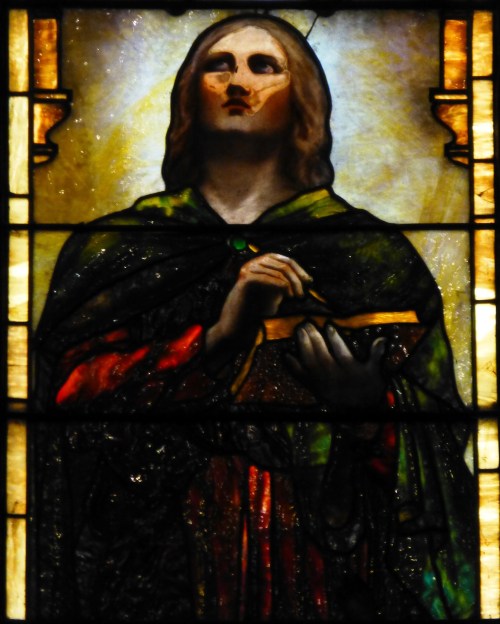

You can read more about Church of the Convenant’s architecture and artwork via this link.
Posted in Inspiration, Nature Notes, On the Road, tagged colors, design, Inspiration, nature, Photography, stained glass, urban landscape, water, Woburn on June 2, 2013| 10 Comments »
Posted in Inspiration, tagged angels, architecture, art, arts, churches, Edward Burne-Jones, Fiona MacCarthy, illustration, love, muse, Photography, pre raphaelite artists, stained glass, stained glass window, Trinity Church in Copley Square on April 8, 2013| 5 Comments »
This scene is a detail from the Edward Burne-Jones and William Morris stained glass window, David’s Charge to Solomon, 1882. The window, designed by Burne-Jones and executed by Morris, is located in the baptistry of Trinity Church in Copley Square. I was drawn to this particular section because of the colors, the incredible drapery of the cloth, and the faces of the women.
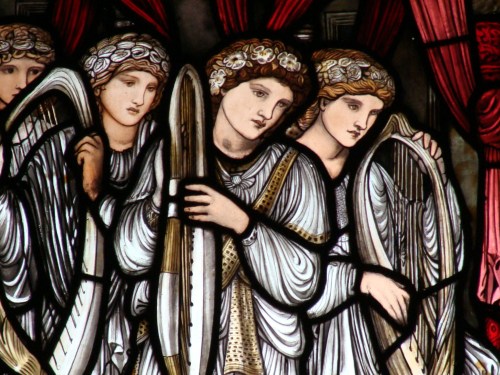
The faces of these women and apparently the faces of many of the women in Burne-Jones’s post-1860’s artwork all have a similar look. They are likely the face of his great love and muse, Maria Zambaco. She appears to have been the muse for many of the Pre-Raphaelite artists. This wikipedia article gives a broad overview of the Burne-Jones/Zambaco relationship, but I must say that this Oxford Today article referencing Fiona MacCarthy gives a much richer picture of a complicated man, his many muses and the influence of his art.

Study by Burne-Jones, c. 1870

Posted in Inspiration, tagged Cathedral of the Holy Cross, colors, happy valentine, heart-shaped, Inspiration, Photography, stained glass, Valentine's Day on February 14, 2013| 2 Comments »

 Words + Images