Feeds:
Posts
Comments

Archive for the ‘Guest Contributor’ Category

In Steve’s own words …

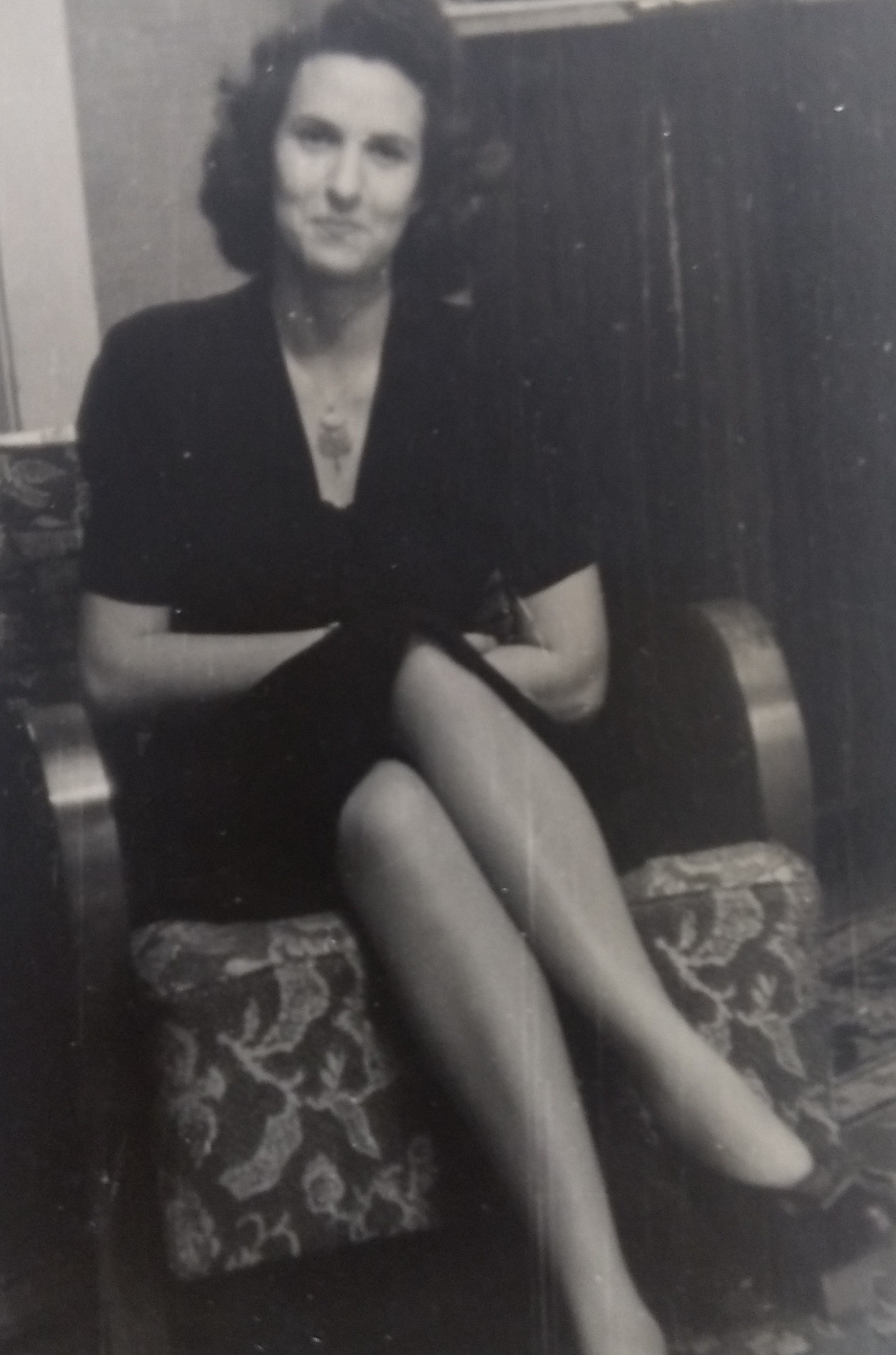
In Bangalore, I used to walk to the local Indian school, St. Anthony’s Boy’s School. Sometimes I took a rickshaw. The driver would be peddling on the street and I would wave him down. It was cheap and I had enough pocket money. I thought school was thorough and complete meaning subjects were covered thoroughly and completely without any gaps or holes. But when I went on to a British school in Bangalore I discovered there were holes in what I had been taught. It didn’t matter. I just loved learning and reading. Given that my father ran a library there were plenty of books at my disposal. My parents were open to me reading anything. There were no PTA (parent teacher association) meetings. No judgements. My father probably gave me the most books on all sorts of subjects. 

The dachshund would meet me when I walked home from school. My general routine after returning home was to put on outdoor clothes and go climb a tree. There were not so many other kids around. Sometimes a few. We lived on Richmond Road, a street with lots of bungalows. White people generally lived in these bungalows, mostly Brits. They worked for the state I guess maybe civil servants.

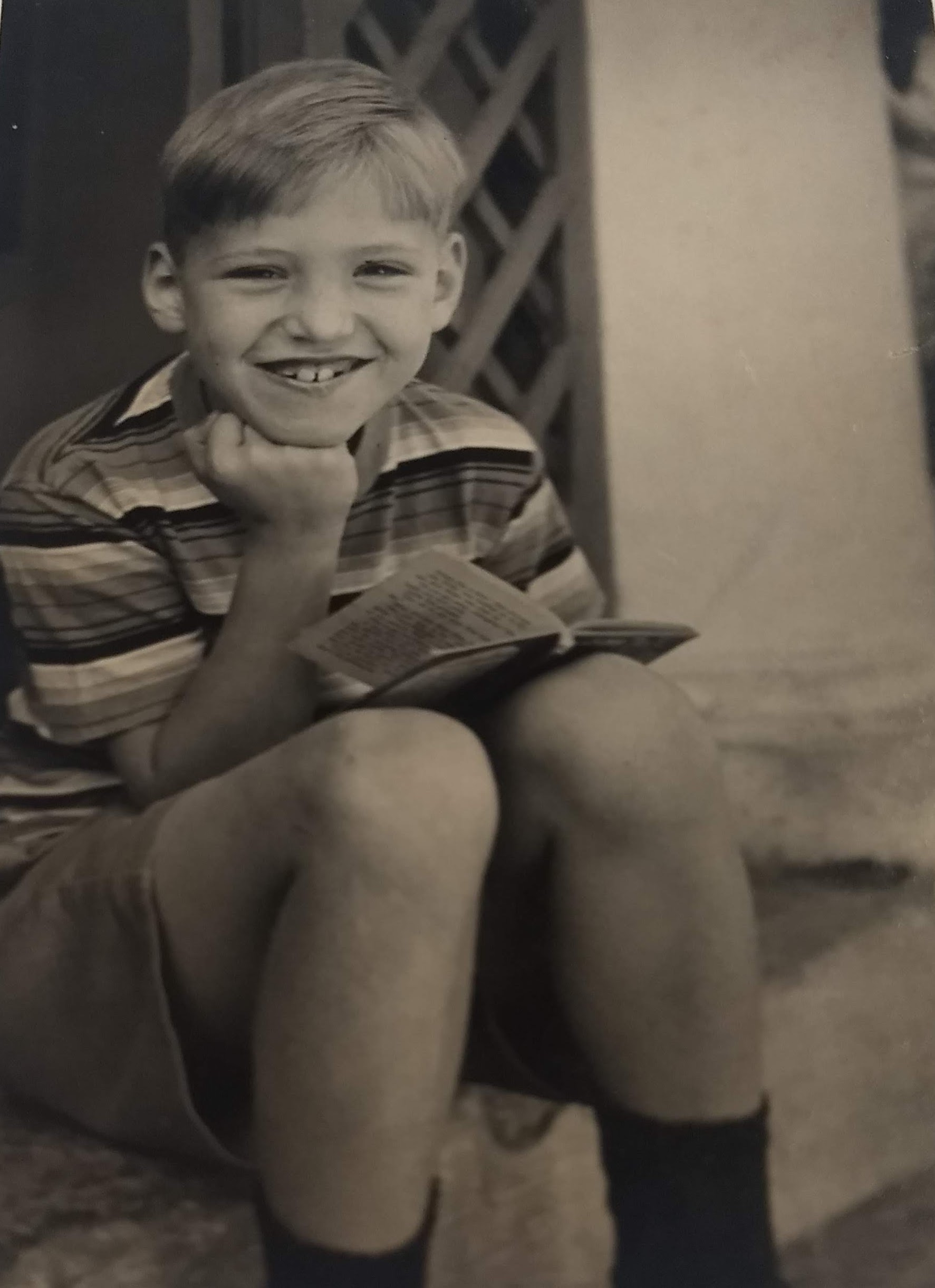
after first communion

My dad had a jeep as part of his job. On Sundays we would drive to mass at the Catholic church. I remember the building as spacious. Sometimes he would drive me to the library where he worked. That seemed spacious to me too. Everything seemed spacious to me back then. Even our bungalow.

I remember the bungalow had a veranda. I remember lots of plants on ours planted by the gardener and by my dad as well. My father liked to garden growing all kinds of plants edible and not. I remember everything from African violets to basil. 

In addition to the dachshund and siamese cat, he owned parakeets. About four or five blue parakeets in a green cage. He also kept fish in a standard fish bowl. They were just plain old fish not very interesting to me. He also kept two horses. He loved animals. He’d grown up on a farm in Nebraska. 

I fell from a mango tree and my dad looked at my arm and decided it was broken and took me to the doctor. I also fell while climbing a wall. A piece of the wall broke off in my hand and that’s how I fell. A stranger, an Indian man,  picked me up and took me up to the house. Broke my arm that time too catching myself with my hand and elbow beneath me. But aside from events like this I felt safe and happy in Bangalore.

I enjoyed the food. My first glass of water there I drank not realizing there were peppercorns in the glass. Overall the food was not spicy. We had a cook. He would make me fried chicken. When my father was entertaining he would take over the kitchen. He greatly enjoyed cooking. From him I learned how to make pesto. He was a good cook. 

My younger sister had been born in Italy. My mother had her hands full with me, a baby and my father and all our animals. She was very beautiful and always smelled nice. Like flowers.
Read Full Post »

In Steve’s own words:

We were there from 1957 to 1962. My father worked as a librarian for the U.S. State Department. I was five years old when we arrived and I could still speak Italian from his previous post in Genoa, Italy. I had great pets in India. My father had a dachshund. A long skinny regular sized dachshund not a miniature. He also had a Siamese cat that he had brought from Italy. In addition I had a young mongoose. His name was Mongi. My father purchased him from a snake charmer. I most remember how he used to run up the sleeve of my shirt. I first saw him when the snake charmer came to visit our bungalow. He took him out of a bag and put him on the ground. He ran up to the snake and sniffed. The snake had come out of the bushes around our place. I think it was a cobra. The mongoose ignored the snake for a bit and sniffed all of the hands and feets he could find before returning to the snake. The snake charmer held a bag open and the mongoose ran back inside. The snake charmer picked up the snake very carefully and placed the snake in a different bag. The snake charmer, who probably saw my face filled with delight, made my father an offer. In exchange for a 5 rupee note, maybe about a $1, my father bought me the mongoose.

sitting on the steps of the bungalow book in hand

Over time I had more than one mongoose though only one at a time. The first Mongi got too used to people and got too close to someone cutting grass with a sickle and was killed. The snake charmers visited the house once a week and they always had a mongoose for sale. I remember my father reading Kipling’s Riki Tiki Tavi to me. In the end I think I had two or three mongoose before we left India for the U.S. before embarking for Austria. They were all killed by the sickle because the men wielding the sickle sat in the grass looking very inviting and the mongoose would get too close. The last Mongi I had to leave  behind because he was not allowed to enter the U.S. I felt like he was being unfairly blamed for killing chickens when he’d never killed a chicken in his life.

They are about as big as a gray squirrel. Our Siamese cat liked to carry them around in its mouth and treated them like kittens. The dachshund also liked to pick them up and carry them around by the waist. The trio got along fine even when a new Mongi appeared. They liked to sleep together and with me. When the Ayah put me to bed, she covered my bed with mosquito netting. The mongoose would wait and unstuff the net where it was tucked underneath the mattress and slip into bed with me. We kept him fed fairly well with leftovers from the table and bits of chicken. They could come and go as they pleased in and out of the house and into any bedroom. My mother thought me and my father were nuts but she bore with it. The family gardeners liked them because they killed the snakes that the gardeners chanced upon.

My mother had a harder time dealing with the goats. They weren’t pets. They were more of a nuisance. We kept a few in the compound. They were kept for their meat and had free range to wander wherever liked. I rarely messed with them because they would butt fiercely with their heads. Sometimes they wandered into the house. They’d walk right through the screen door by butting the screen out. They usually made their way to the couch and fell asleep. I think they thought they were people.

The most common animal I saw in India were monkeys. There were several mango trees in the compound. The monkeys infested the trees. Rheesus monkeys. They made a chittering sound. They ate the mangoes and also threw them to the ground. I liked to climb the mango trees to pick mangoes and just eat them fresh. I still like the taste of fresh mangoes.

Read Full Post »

Adriana is one of the most inspiring artists I know whose passion around the climate crisis really does invite one to stop and think creatively about how to make a difference individually as well as collectively. Learn more and be inspired through her own words and images shared in this guest post.

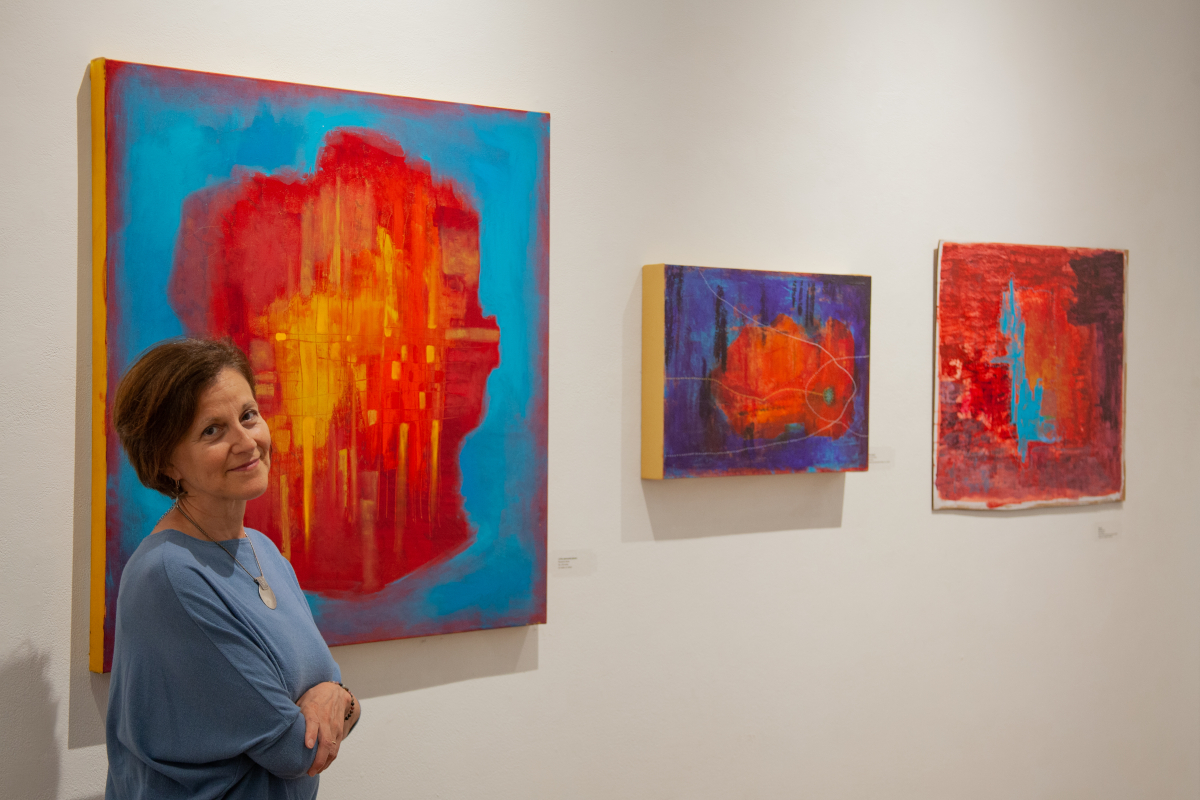
Adriana Prat stands next to her work, Breaking Free.

I am so thrilled and honored to write in Cynthia’s blog! I first met Cynthia years ago at the Riverside Gallery during one of our group exhibitions and since then I have always admired the poetry and poignancy of her blog posts, her empathy and humbleness, and the beauty and sensitivity of her photographs. I am delighted to have more opportunities to interact with Cynthia and her beautiful art lately through the i3C Artists Group we both belong to, and that I will talk about further here.

Pollution and the Gold

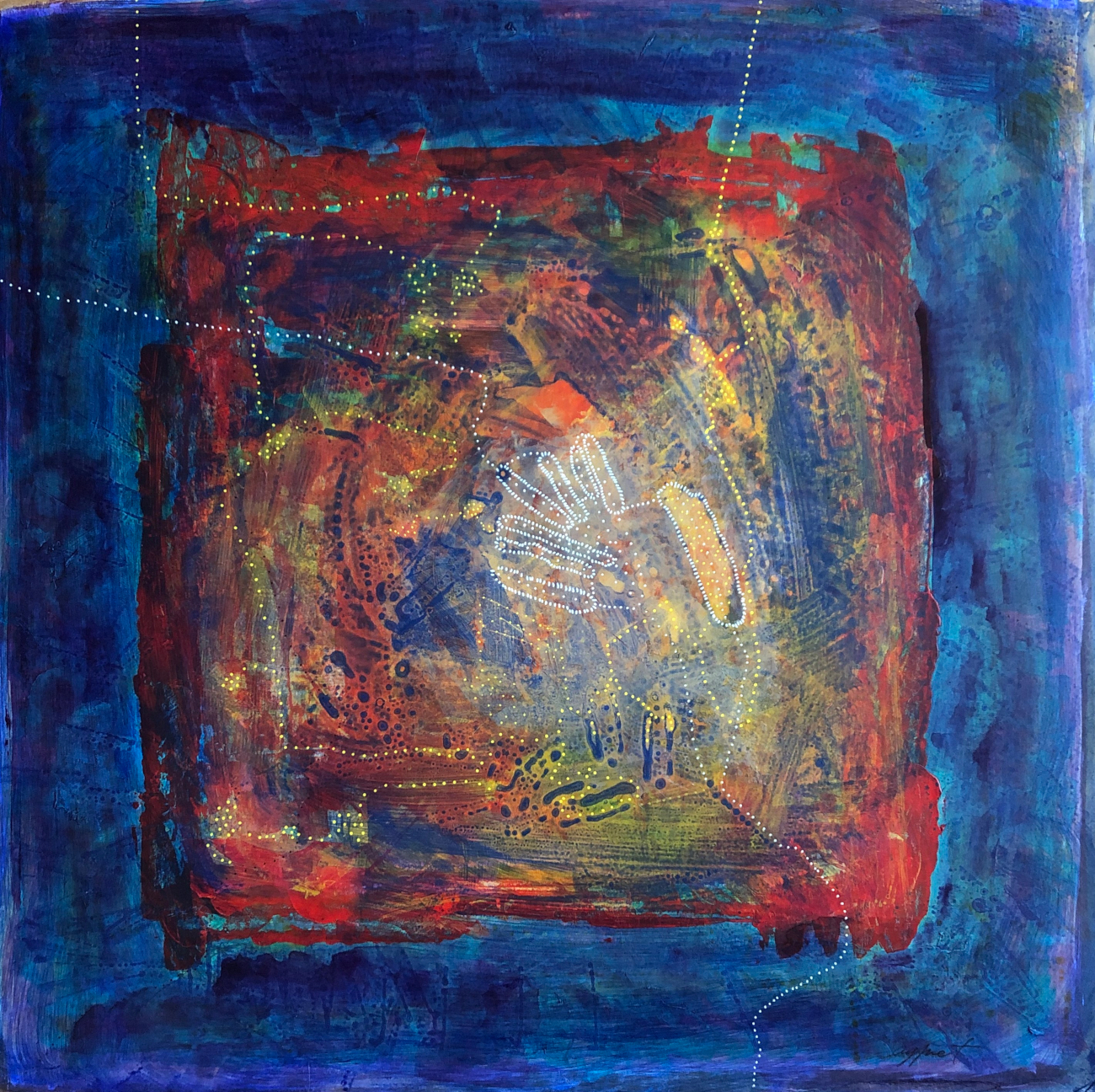
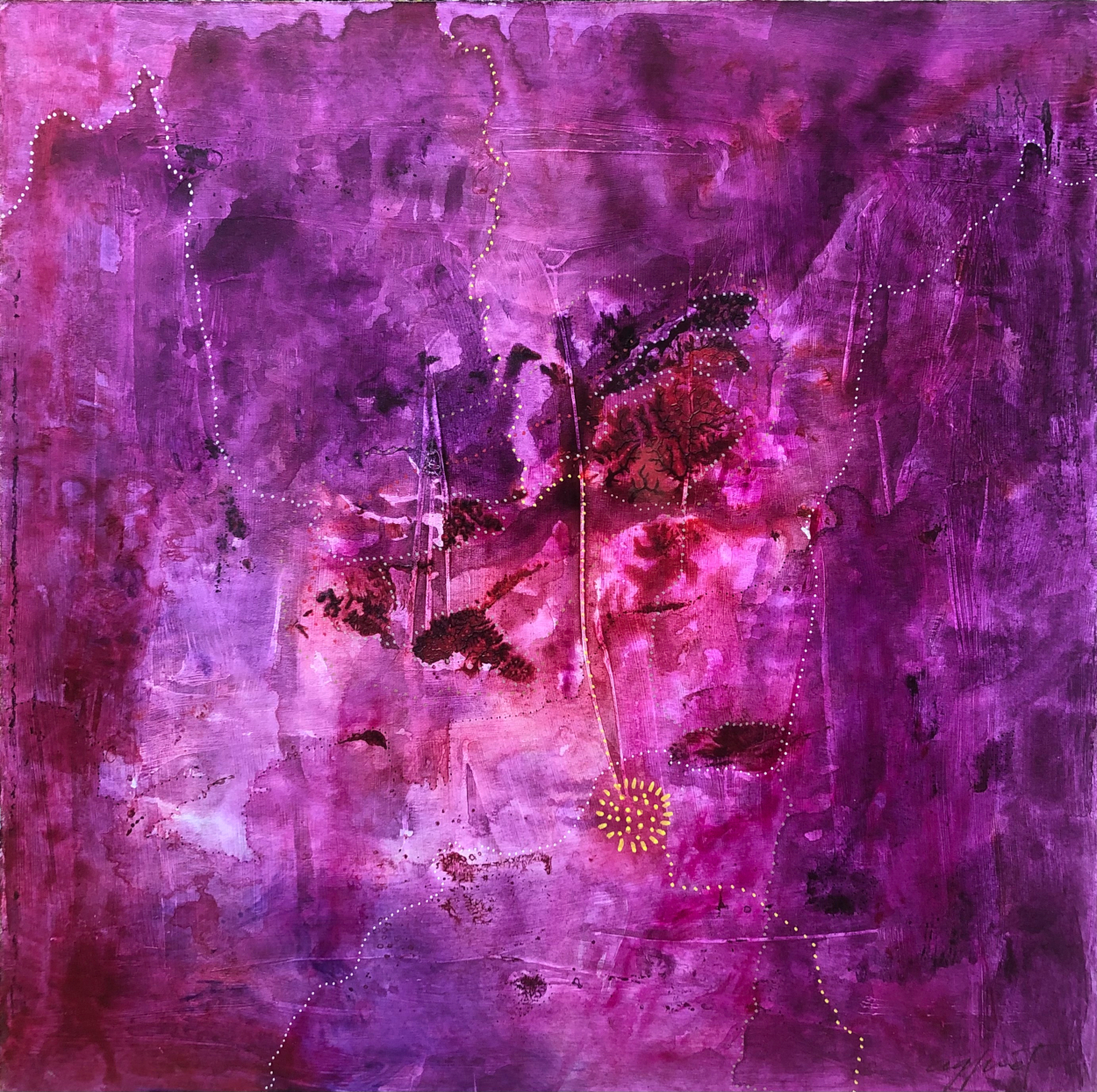
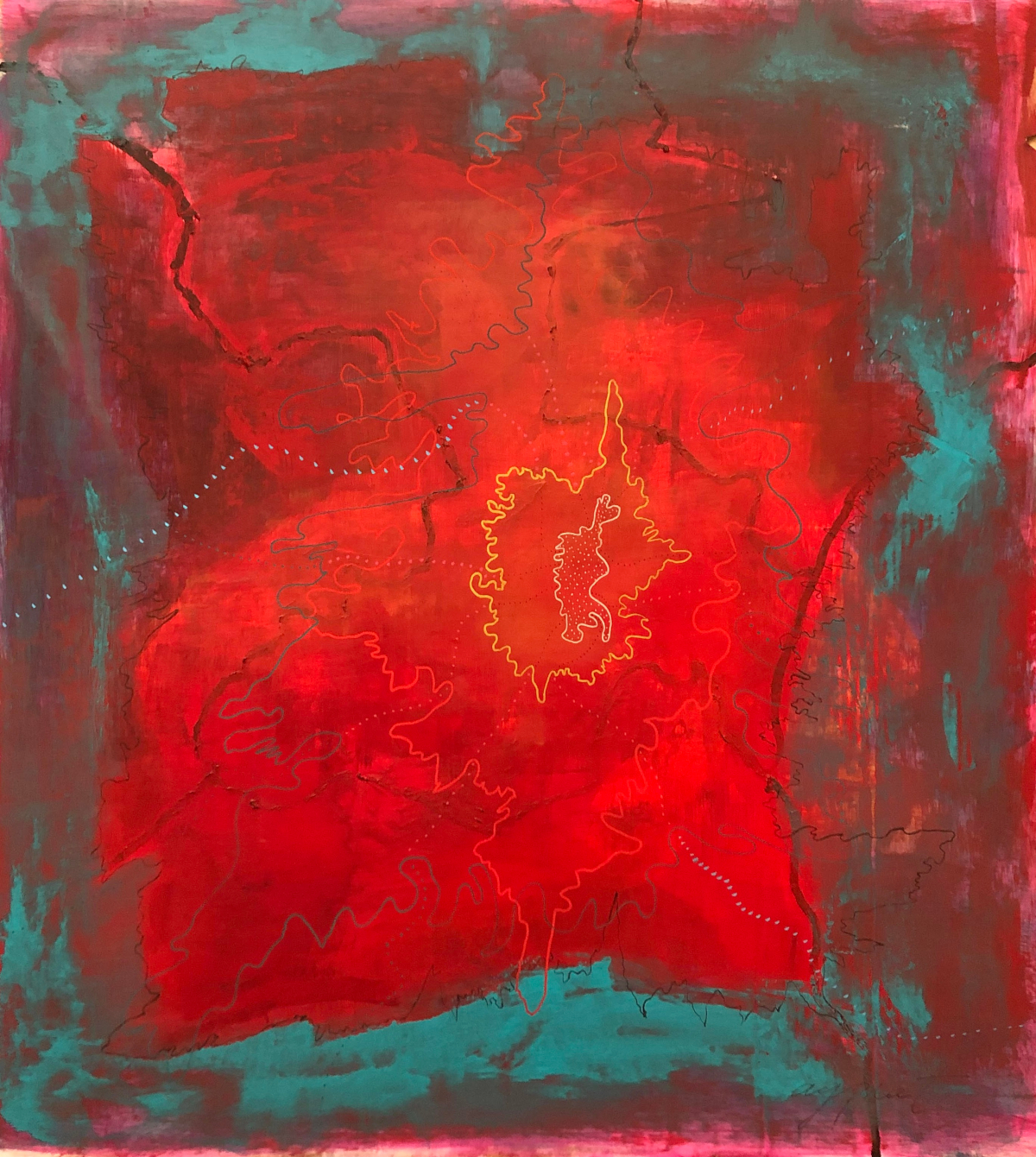
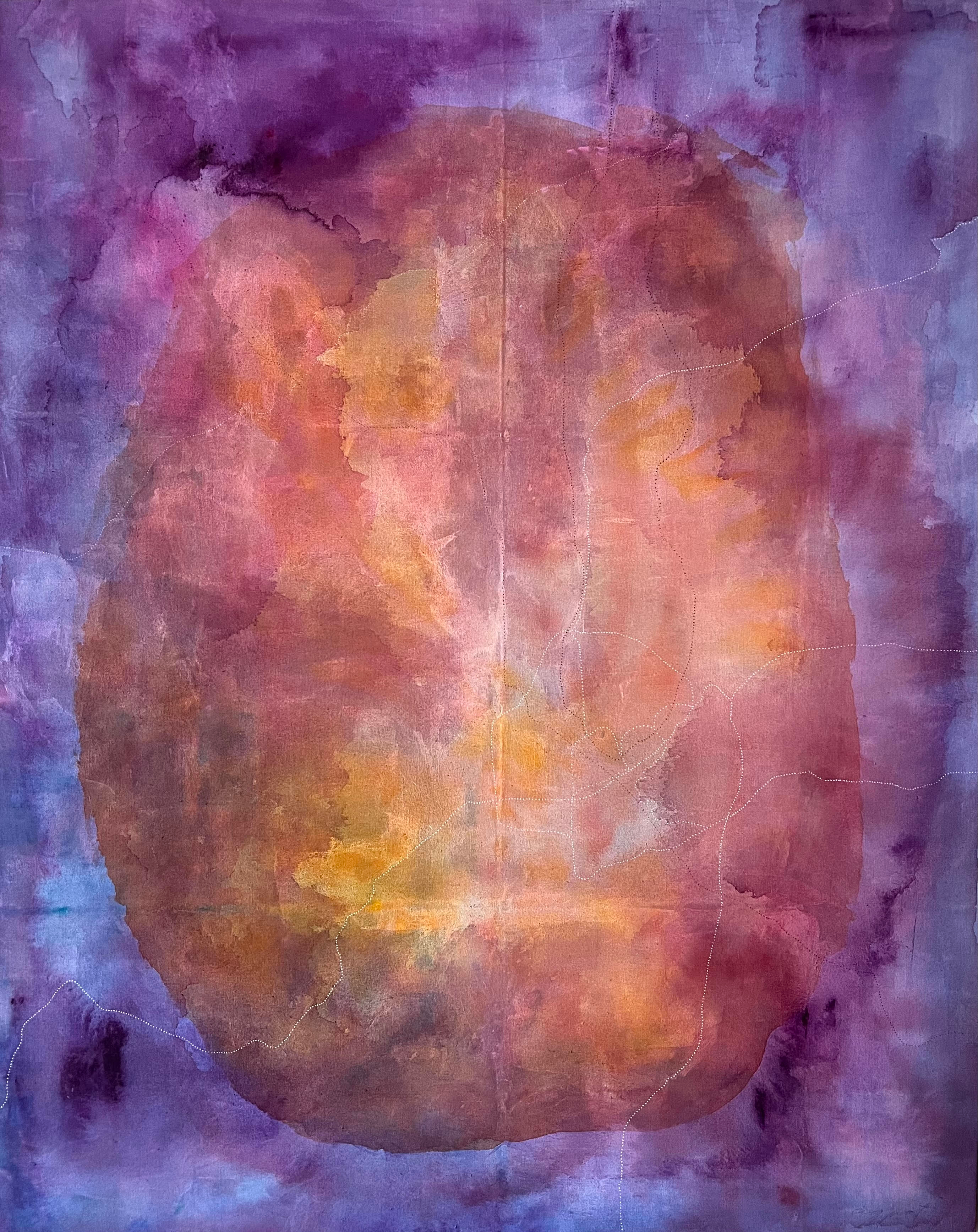
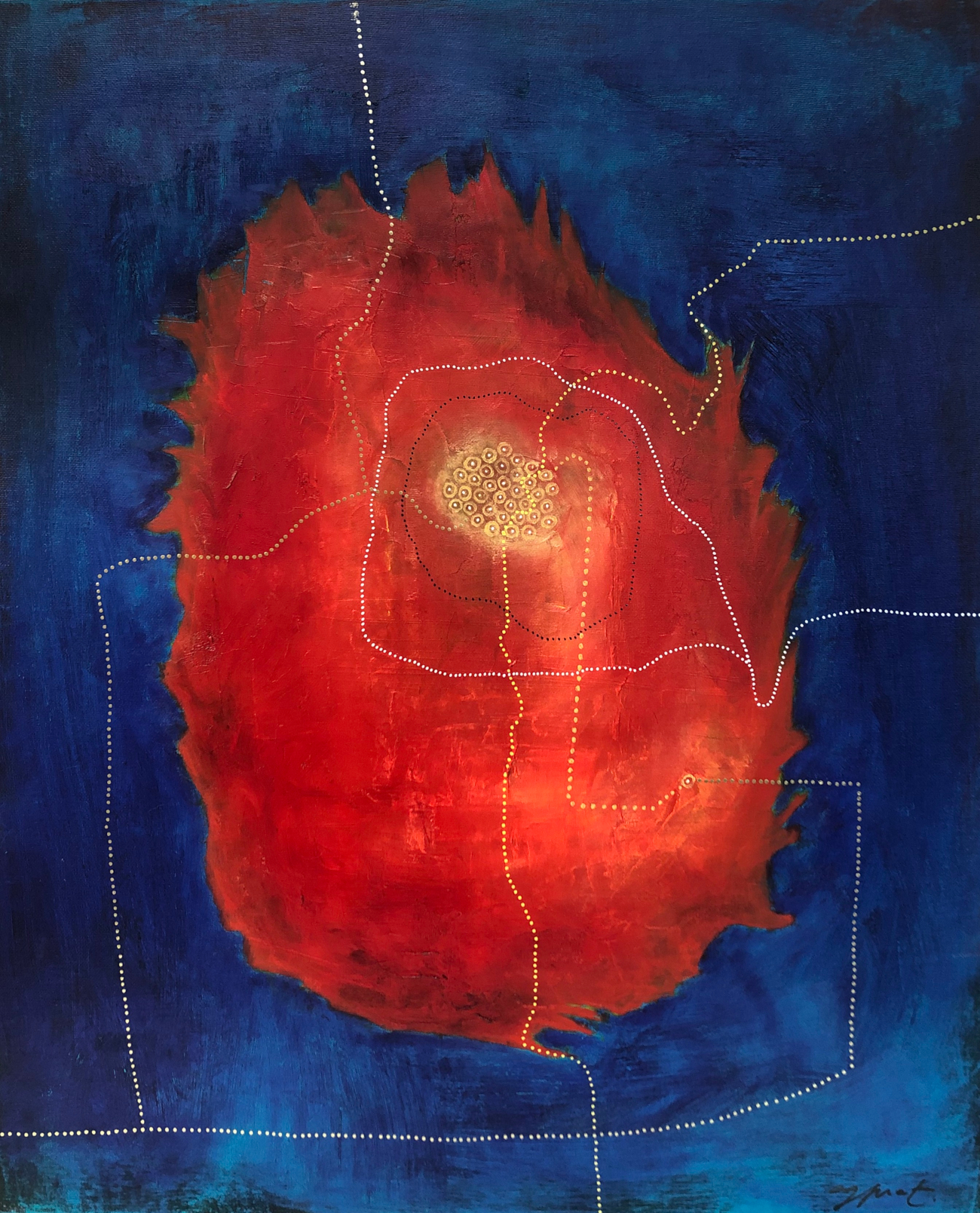
I am a non-representational artist who intuitively creates mixed media paintings, while mostly meditating on the urgency of the environmental crisis, its impact, and the adaptation all ecosystems must go through to survive. I work driven by my emotions and by the physicality of the art materials, open to happy accidents and chance, and with a strong thirst for color and texture.  

Exploiting Beauty

During my early days in Argentina, I spent hours drawing or building craft projects. My father, an environmentalist ahead of his time, influenced me into value nature and the other species, and to be curious about the world that surrounds us. This early life experience impacted my decision to study science. After I moved to US, a more introspective life reconnected me with my old love for artmaking and I became an artist who worked part-time but with passion and determination, even while working full-time in science and raising a family that was always supportive of my life choices.

Topographies of the Exploitation of Our Land II

Because I lived much of my early life under a military dictatorship in Argentina and later as an immigrant in the US who could not vote, it was not until I became a full-time artist and a US citizen that I was able to speak up through my art. I am focused in using my art to bring awareness and action for the urgent environmental crisis.

Change is on its Way

Like in other aspects of life, I face a dilemma of what materials to use in my art practice that are better for the environment. In the spirit of refusing, reducing, reusing, repurposing and/or recycling, I paint mainly on corrugated cardboards from packaging materials, or on rejected, found surfaces, like canvases I find on the curb, or I thrift, and I push myself to consume only a small amount of new art materials. I believe the climate crisis resolution is an ethical and moral obligation we have for our future generations and for the other species that share our beloved planet Earth. By finding more sustainable ways to produce my art, I feel I move in the direction of halting my environmental impact in the world.

Your Brain on Climate Crisis News

Informed by my science background, my abstract work frequently resembles topographies that can be imagined either on a microscopic or a macroscopic scale. At a microscopic level, they are evocative of the cells of organisms I have studied and manipulated during my scientific research days, and of the metabolic paths and intracellular structures I have analyzed and investigated.

Andriana standing next to various works.

At the same time, while I paint, I find myself exploring these forms or topographies at a macroscopic level and they seem reminiscent of maps, geographies, or even our planet, in its constant struggle to survive due to the constant human-induced exploitation. Some of my works evoke the explorations found on vintage maps, much like itineraries of digging expeditions set to exploit the vital and finite natural resources (water, fossil fuels, gemstones, etc) found underground. In some of my paintings, the textures and marks I introduce delineate approximate concentric maps that evoke how some of the land’s ecosystems, the coastlines, for example, are changing due to ocean water raising. As global warming continues with the consequent water rising, some islands, lands are doomed to disappear…  

Treasure Island

You can see more of my work on my website www.agprat.com or my Instagram account @agprat.art.

As part of my curatorial activities, I am actively curating the i3C (inspiring Change for the Climate Crisis) Artists Group and its exhibits. The i3C Artists Group has currently over 20 multidisciplinary artists (and counting…) from New England, New York, Pennsylvania, and Canada. The i3C artists’ diverse backgrounds and art practices enhance our shared commitment to the topic of the environmental crisis and our mission to inspire action to help resolve the environmental crisis. The group’s exhibits are conceived as an evolving and ongoing project, with iterations in different venues to continue spreading the i3C artists group’s mission. The group’s art processes and visions vary: some artists explore the impact of consumerism by reinventing reclaimed materials, or by creating a dialog with humanity’s waste and pollution; some celebrate the natural beings and their interconnection, pointing to their unique beauty or vulnerabilities; and some address the effects of climate change in our communities or global ecosystems.

You can check out the i3C Artists Group’s website (www.i3CArtists.com) or our Instagram account @i3cartists to get inspired and to know more about the group’s events in art centers, gallery spaces, and other venues.

Read Full Post »

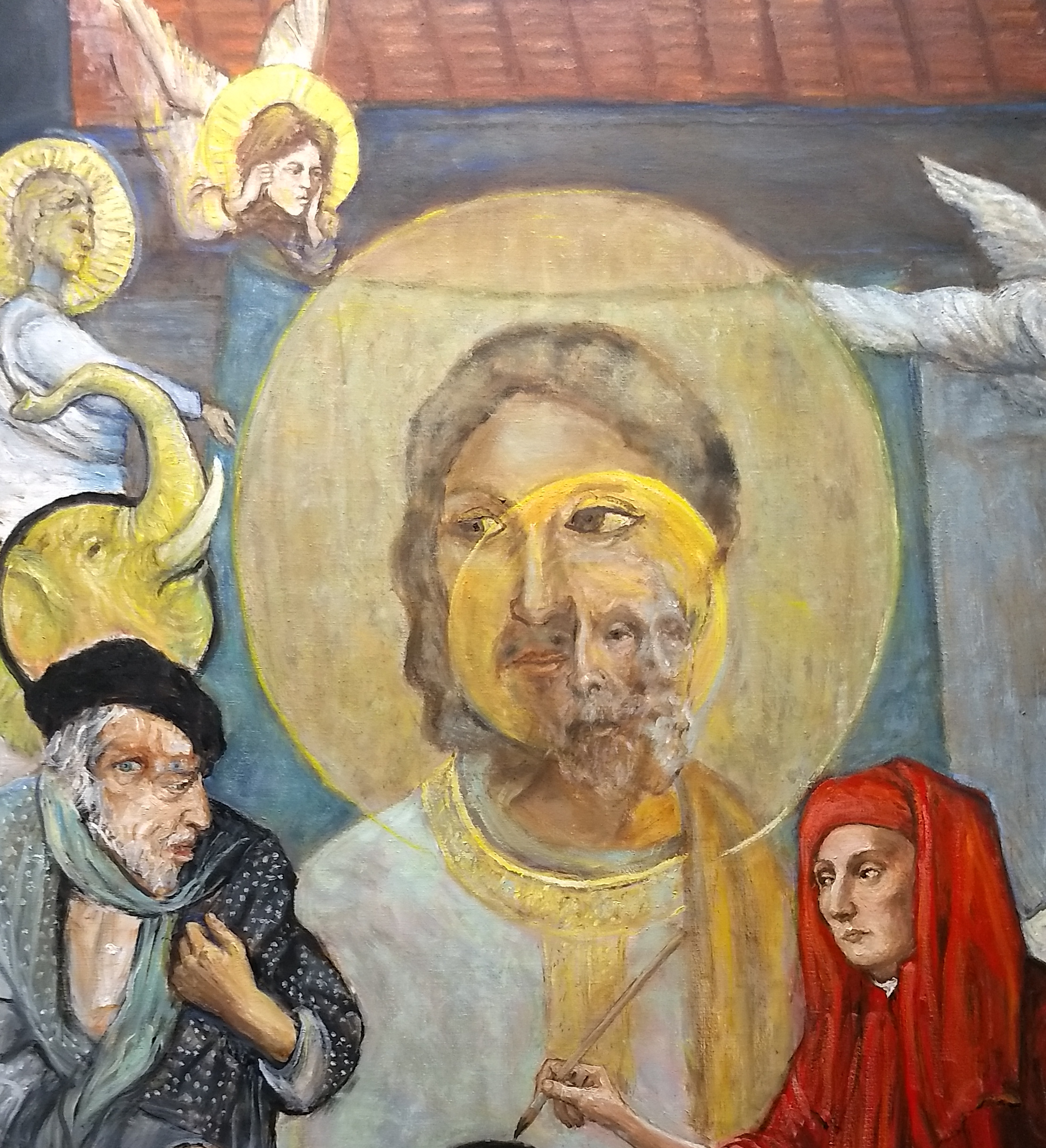
painting by donald langosy

Now on view at the Multicultural Arts Center in Cambridge, MA, an exhibit of works by artist Donald Langosy. Learn more on the center’s website: https://www.multiculturalartscenter.org/. If you’re unable to make it into town, the website also presents a virtual gallery.

painting by donald langosy

FYI, it was my pleasure years ago to take a peek inside his studio. Enjoy.

https://wordsandimagesbycynthia.com/2016/07/07/in-the-langosy-studio/

Read Full Post »

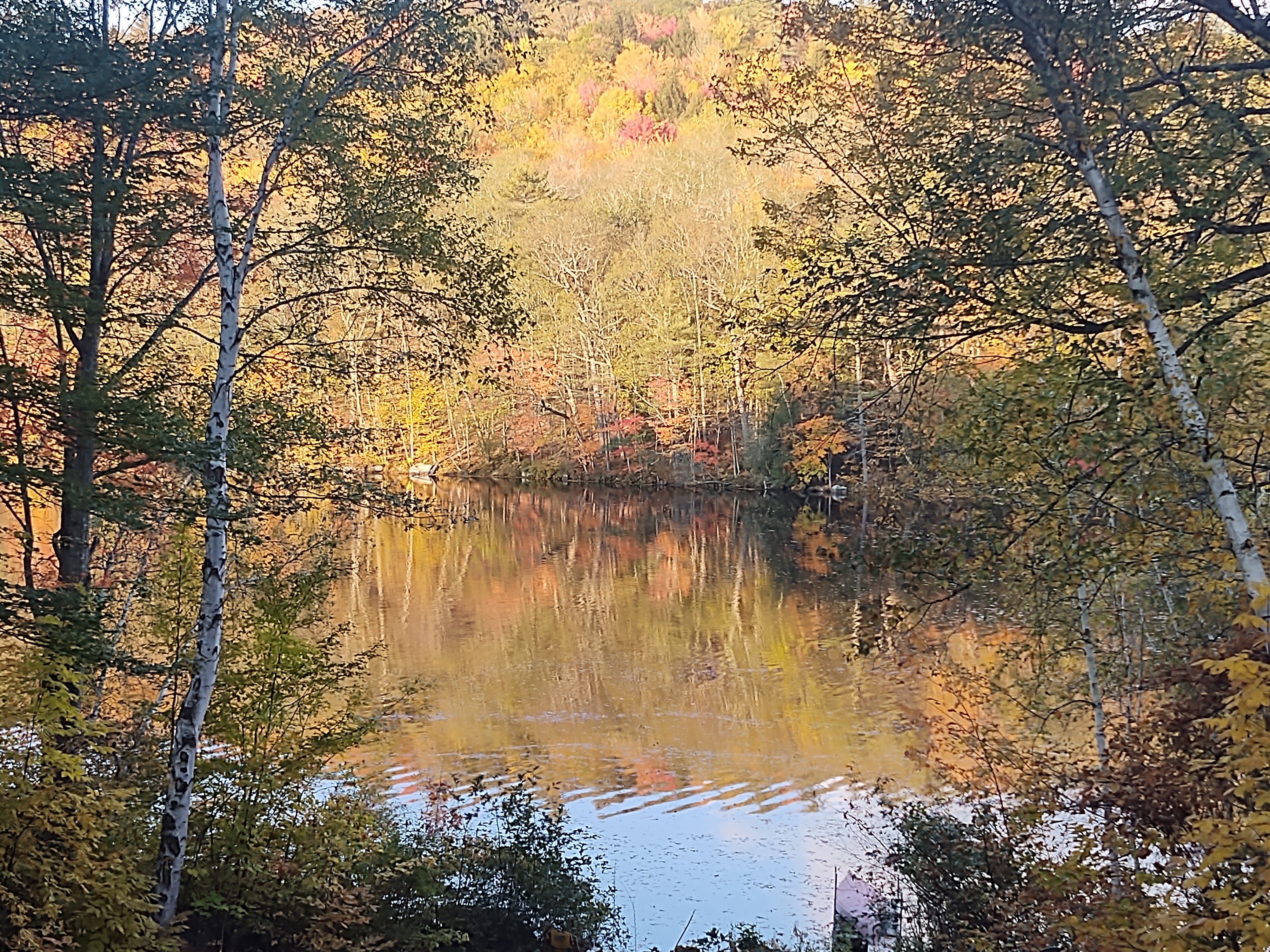
When I saw Donna’s photos from Lovell, Maine I knew I wanted to share them and so I asked her for some words to accompany them. She shared a poem written by her partner’s daughter, Kristin Roberts, and suggested Kristin’s words might work instead. A perfect pairing. The poem, written by Kristin in the 7th grade, attests to her sensitivity and great observational skills about nature, about the people who engage with the Lovell landscape, and about the passage of time. Please enjoy this lovely pairing of words and images that capture the season.

Photo by Donna Stenwall

Autumn

Crimson, buttercup, marigold leaves swirl rustling around in rhythm of Autumn. The icy winds swipe.

Bee charmers with nets on their crowns, collect the pure golden honey from dripping cones. Farmers collect apples just before the tart crispy fruit turns to ripe.

The bitter winds nip at my face, redden my cheeks, numb my fingers, while icy blue Jack frost freezes Queen Anne’s lace.

Warm golden summer’s gone.

Photo by Donna Stenwall

Oaks and birches are stripped bare. Rifle shots ring out in echo as sharp eyed hunters bring down swift graceful deer.

Sweet singing birds long ago flew south, replaced with huge black crows with their loud mocking mouths.

Soft fluffy snow will soon replace corpsed grass. And the awful sight soon will pass.

Photo by Donna Stenwall

My lawn is littered with bright leaves, each unique in its own way. Dark misty evening is extended. Gray dawns are gloomy, bright mornings have ended.

Brilliant gay summers will be here at last, when the silver season after golden Autumn soon comes to pass.

by Kristin Roberts (1981-2011)

Read Full Post »

20200211_113735 (1)

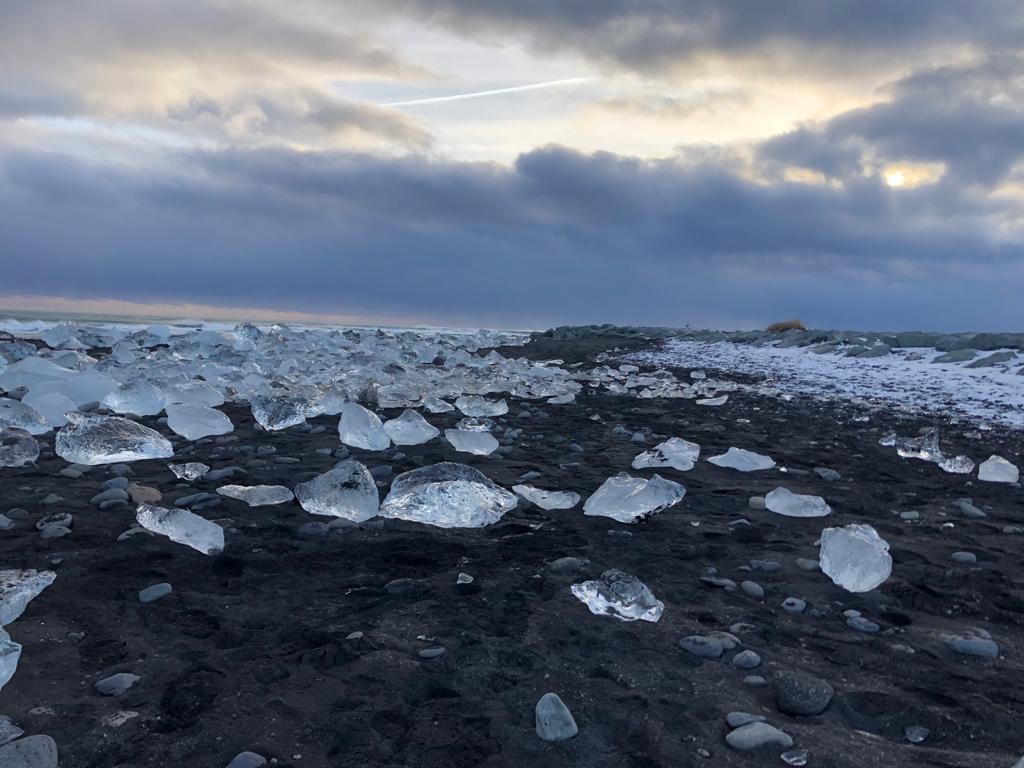
Icebergs

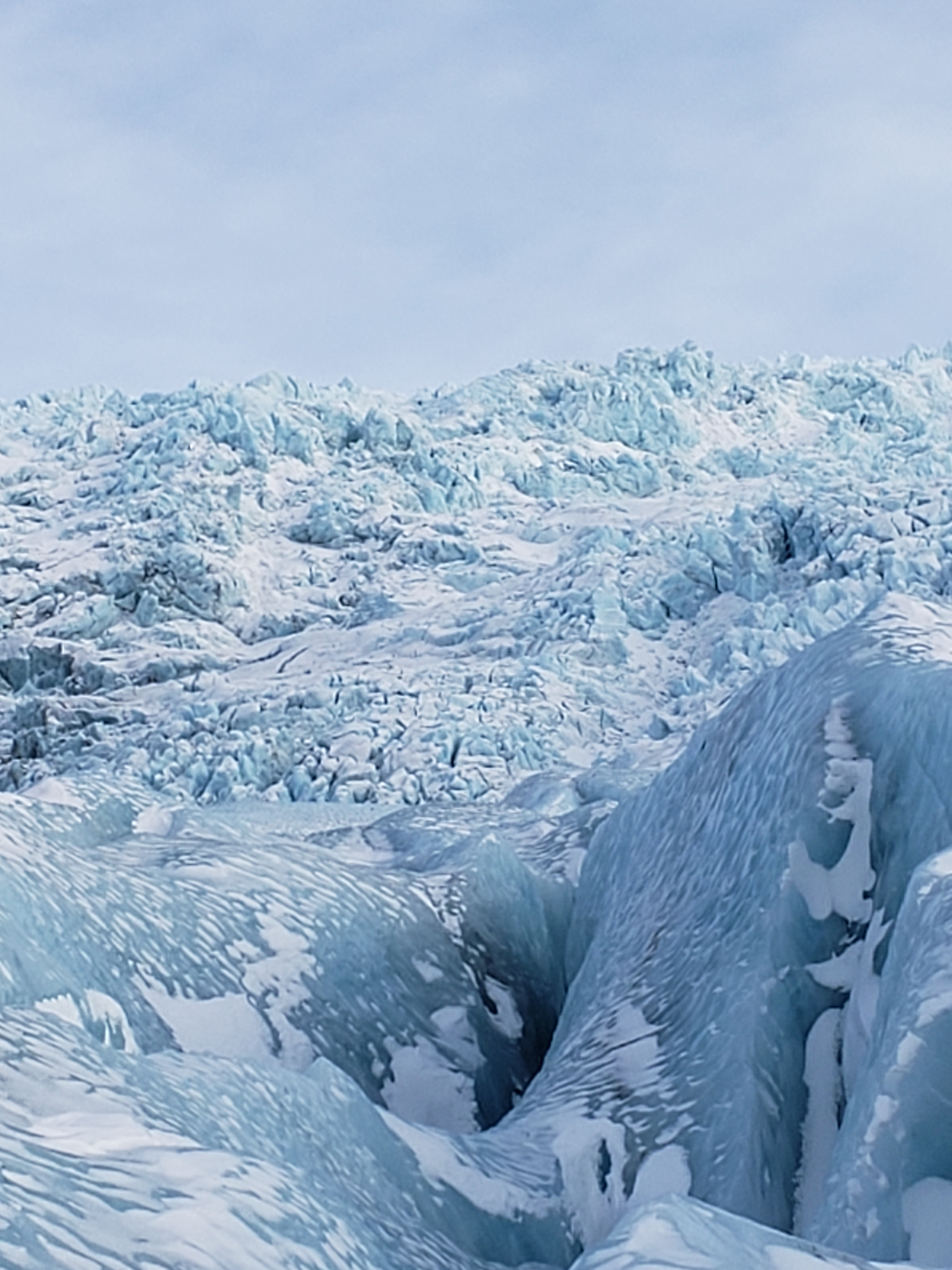
Editorial note: Do you miss traveling? I do too! I thought my friend Andrea’s images of Iceland, taken before the pandemic, were beautiful but now … they are truly majestic, capturing a dynamic landscape rich in color and full of light. Thanks for sharing, Andrea!

20200211_071713

 Ice Cave

IMG-20200211-WA0002

Diamond Beach

20200211_074425

Glacier

20200210_114945

Black Sand

20200208_063532

Blue Lagoon

Photos courtesy of Andrea Ranger

Read Full Post »

IMG-9738

Photograph by Rodrigo Larios

I’d previously shared in “when you look up” how a photograph of the painted ceilings of Trinity Church had inspired designer Donna McNett to produce a vibrantly hued men’s tie, bow tie and pocket square collection. She did an amazing job working with a single photograph to produce something truly unique that celebrates the beauty orchestrated by painter John La Farge and presents it with a modern twist.

ACS-0101

Photograph by Rodrigo Larios

For 2019 we hope to collaborate once more in the production of a matching shawl and perhaps silk square. Stay tuned for further updates about that! Meanwhile there are still a few ties and pocket squares on the shelves of the shop. Drop by to see for yourself.

ACS-0105

Photograph by Rodrigo Larios

Not in the Boston area? Shipping is available. Send inquiries to artandarchitecture@trinitychurchboston.org


Read Full Post »

IMG_0599

… a little boy with big bottles of bubbles. Photos of one of my littlest cousins taken by his older cousin. Hope that smile and those bubbles brighten your day.  🙂

IMG_0607

IMG_0610

Thanks, L!

Read Full Post »

image1

photo by DL

According to Kiya’s owner, DL, she selected the rug before the kitten selected her. Clearly this relationship was meant to be. 🙂

Read Full Post »

BurneJonesandTrees

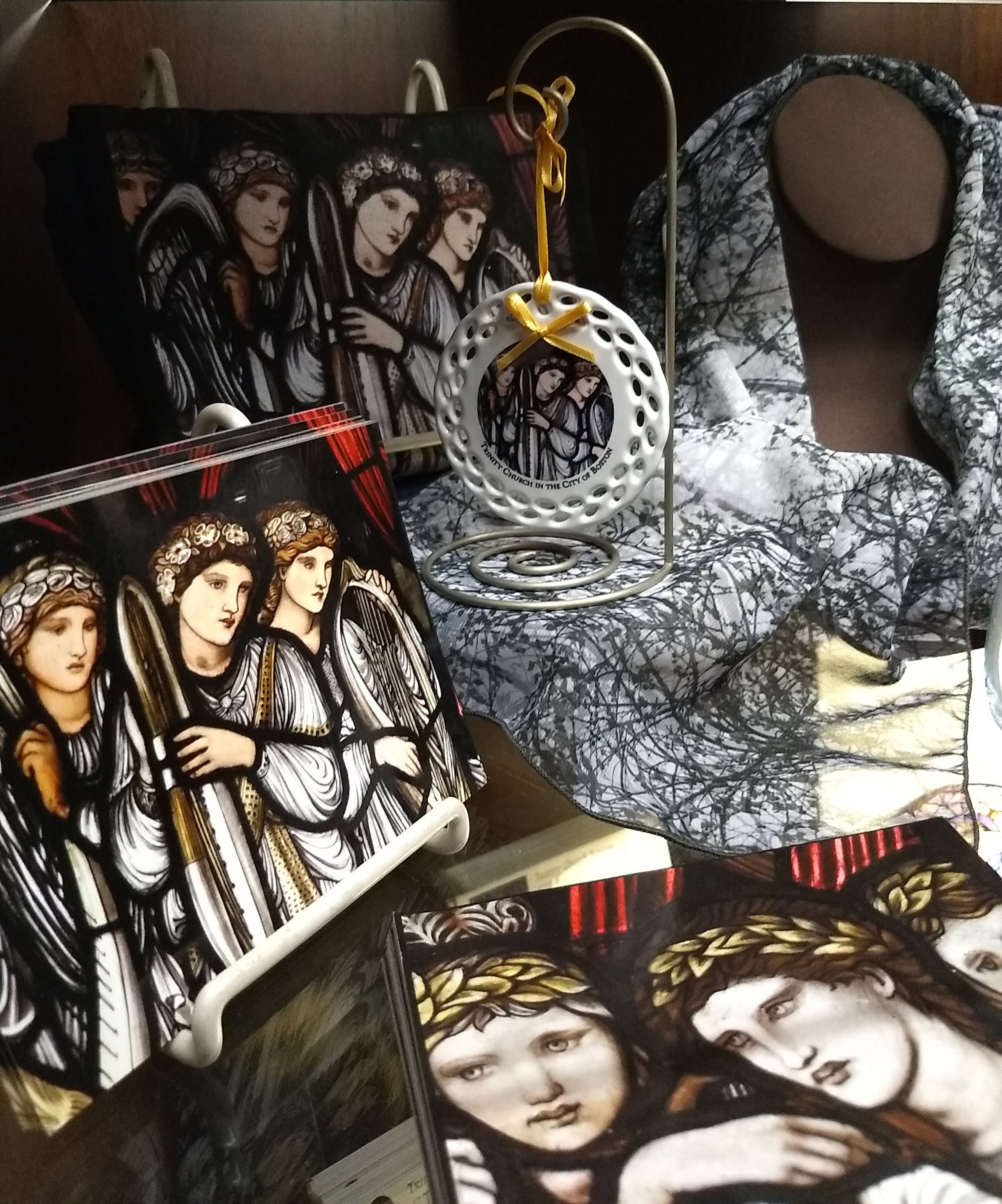
The versatility of white: Postcards, t-shirt and ornament with details from David’s Charge to Solomon, a stained glass window by Edward Burne-Jones and William Morris paired with a silk chiffon scarf featuring swaying tree branches

It has been my pleasure over the past few years to work with Donna Stenwall, Manager of Visitor Services at Trinity Church in Boston. While I think I have a pretty good grasp of color, one of the things I continually learn from Donna is how to put those colors together to create “visual eye candy” on the shelves of the shop at Trinity. Having previously worked for Laura Ashley for 35 years, she has a command not only of color but of style. The vignettes that she puts together whether based on motif or, in these examples, on color, truly captivate the eye. As she says, “There is nothing worse than having a display that is so jarring to the eye that people don’t really know where to look!”

madonnaanddove

Warm reds, pinks and gold: Boxed note cards featuring 19th century reproduction of a 15th century painting of the Madonna and Child paired with a ceramic ornament with dove motif from The Ascension stained glass window, with just a peek at the flowers from the window The Five Wise Virgins

Visit the shop at Trinity Church and you can see these colorful vignettes for yourself.

trinityblues

Cool blues: A framed watercolor print of Trinity Church at night paired with an oval glass ornament of Jesus from the window The Resurrection by John La Farge and a blue-tinted card featuring an etching of Trinity Church by Henry Blaney

trinitychurchboston.org/visit

Read Full Post »

Older Posts »