
Posted in Inspiration | Tagged cityscape, colors, Inspiration, nature, Photography, sunset, urban landscape | 3 Comments »

standing in the rain
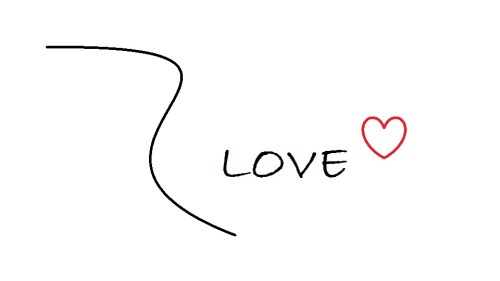
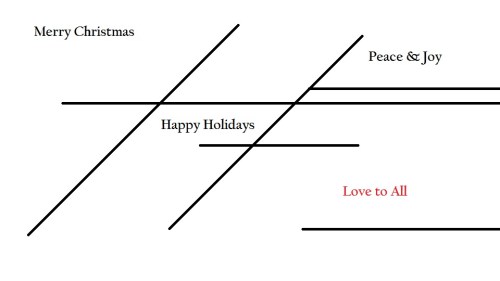
My cousin Tim is an artist extraordinaire who creates elaborate urban settings with detailed maps. As a child I watched him do this with pencil to blank paper. He must have quite a collection of notebooks. But at some point he began working with MS Paint. He recently shared with me his latest creation and when I have his permission I hope to share his work and the stories behind his world. Meanwhile, I had to update my hardware and I “discovered” that I had Paint on my machine. I told Tim, “You create maps. I can’t even make a straight line.” He told me about holding down the shift key to solve that problem. He promised to continue sharing his maps with me and I mostly promised to share my adventures with 21st century technology that most people have known about for ages. Between tutorials from young cousins and Youtube videos, I may continue to delve into this digital art world. Meanwhile, here’s my fun for the day. Be well. 🙂


Posted in Inspiration | Tagged art, colors, creativity, fun, graphic design, Inspiration, microsoft paint, stationery | Leave a Comment »

James Weldon Johnson (1871-1938) and Aaron Douglas (1899-1979)
Originally published in 1927, James Weldon Johnson’s book, God’s Trombones, is a slim volume composed of a prayer and seven poems: Listen, Lord–A Prayer, The Creation, The Prodigal Son, Go Down Death, Noah Built the Ark, The Crucifixion, Let My People Go, and The Judgement Day. The verses were inspired by his experiences attending black churches throughout the American south. The preachers’ oratory inspired Johnson to write these poems and, in the book’s preface, to reflect upon the nature of oration and folk traditions. His poems, I assume, inspired his artistic collaborators, Aaron Douglas and Charles B. Falls. The signature styles of two very different artists were brought together to complement Johnson’s words.

Lettering by Charles Buckley Falls (1874-1960)
A publication was produced that is really quite distinctive with regard to words, images and overall concept. Johnson as scholar as well as poet produced a tome that captured in a unique way the power and importance of religion in the African American experience. He makes real even for those not having attended black churches how the preachers – God’s trombones – used word, rhyme and rhythm to give voice to the stories in the bible even when no bible was present.

It would be easy to pick up this book, to skip the preface and go straight to the poems. But don’t. Johnson’s preface is critical, for his brief and cohesive insights into religion and the American experience, and for his guidance in how to truly appreciate what he was attempting to do with this book.
“I claim no more for these poems than that I have written them after the manner of the primitive sermons. In the writing of them I have, naturally, felt the influence of the Spirituals. There is, of course, no way of recreating the atmosphere — the fervor of the congregation, the amens and hallelujahs, the undertone of singing which was often a soft accompaniment to parts of the sermon; nor the personality of the preacher — his physical magnetism, his gestures and gesticulations, his changes of tempo, his pauses for effect, and, more than all, his tones of voice. These poems would better be intoned than read; especially does this apply to “Listen, Lord,” “The Crucifixion,” and “The Judgment Day.” But the intoning practiced by the old-time preacher is a thing next to impossible to describe; it must be heard, and it is extremely difficult to imitate even when heard. …”
“… The tempos of the preacher I have endeavored to indicate by the line arrangement of the poems, and a certain sort of pause that is marked by a quick intaking and an audible expulsion of the breath I have indicated by dashes. There is a decided syncopation of speech — the crowding in of many syllables or the lengthening out of a few to fill one metrical foot, the sensing of which must be left to the reader’s ear. The rhythmical stress of this syncopation is partly obtained by a marked silent fraction of a beat; frequently this silent fraction is filled in by a hand clap. …”
The ensuing poems do read like song and the power of the words are echoed and strengthened by the complementary visusals.

Illustrations by Douglas for the poems, The Creation, The Prodigal Son, and Go Down Death.
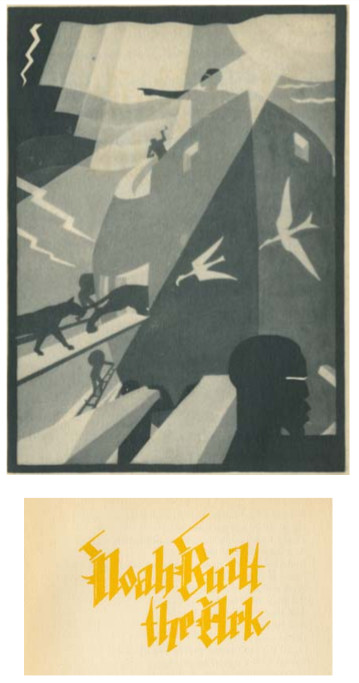
Illustration and complementary chapter head for Noah Built the Ark

Illustration for The Crucifixion
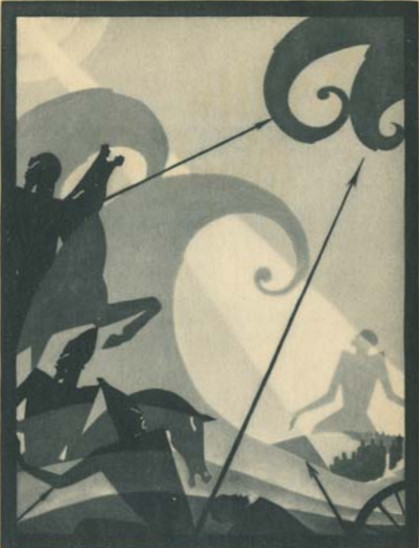
Illustration for Let My People Go
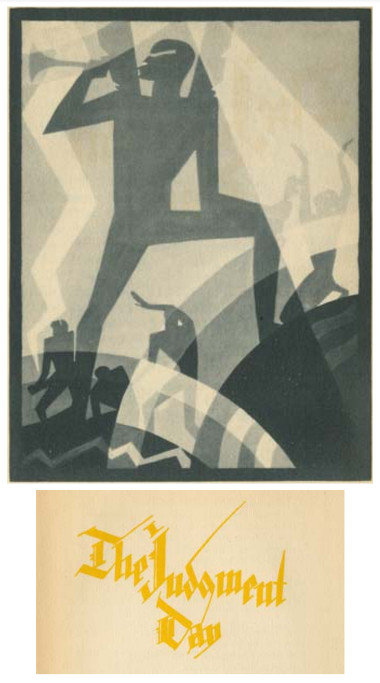
Both Johnson and Aaron Douglas are considered key figures of the Harlem Renaissance. Charles B. Falls was a noted illustrator and designer especially remembered for the posters he created during World War I and II as part of the Victory Books Campaign.
Over time the book has been reprinted numerous times including an edition by Penguin Classics, edited by Henry Louis Gates and with an introduction by Maya Angelou. As Johnson wrote in his preface the poems are really meant to be performed and over the years many individuals and institutions have done just that. Recordings can be found online. You can also find the book fully digitized and viewable online thanks to the Documenting the American South project at University of North Carolina at Chapel Hill, my primary source for this post. I hope you have the opportunity to view the book in-hand or online: http://docsouth.unc.edu/southlit/johnson/johnson.html
Sources & Additional Readings
God’s Trombones (digitized) – http://docsouth.unc.edu/southlit/johnson/johnson.html
James Weldon Johnson – https://en.wikipedia.org/wiki/James_Weldon_Johnson
Aaron Douglas – https://en.wikipedia.org/wiki/Aaron_Douglas
Charles Buckles Falls – https://en.wikipedia.org/wiki/Charles_Buckles_Falls
The New Negro Renaissance – http://exhibitions.nypl.org/africanaage/essay-renaissance.html
More about the Victory Books Campaign – http://arcweb.sos.state.or.us/pages/exhibits/ww2/services/books.htm
Posted in Books I Love, Inspiration | Tagged Aaron Douglas, art, beauty, black history, books, Charles Buckley Falls, God's Trombones, history, illustration, Inspiration, James Weldon Johnson, poetry, religion | Leave a Comment »
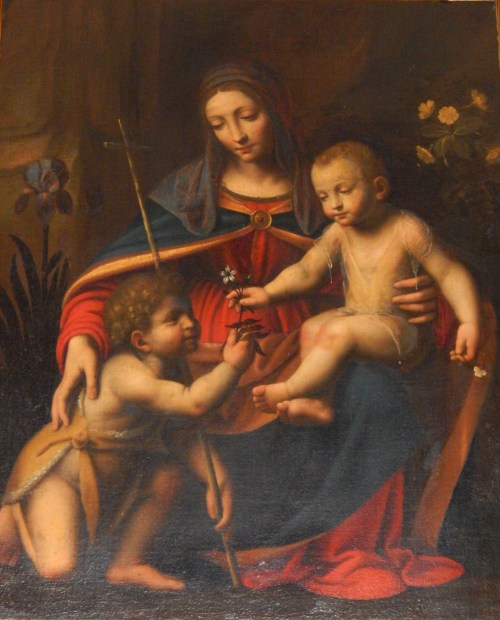
In a church, I walked into a room to photograph a specific set of stained glass windows that were at eye level, and when I turned to walk out I happened to look up and this is what I saw hanging on the wall. I don’t yet know the name of painter or painting. That research continues, and if you have any incites please let me know. I’m not a formal student of fine arts but I can imagine that there are layers upon layers of meaning in the choice of colors, the flowers shown, etc. More information to follow in the near future I hope.
Posted in Inspiration | Tagged art, art history, beauty, Inspiration, Photography, religious art | 2 Comments »
I’m not as limber as I once was and so I was having difficulty getting through the window but I didn’t have to fret for long because a stranger took my hand and pulled me through and when I lost my shoe on the rim of the window frame, he picked it up and gave it back to me and then turned and continued to help other strangers out of the train.
I wasn’t sure that I’d write about the chaotic experience of being on the Orange Line train yesterday in Boston’s Back Bay Station that filled with smoke. In the moment I was less concerned about the possibility of a fire in the station and more concerned about the growing panic of the people around me. Later I just wanted to let the incident go. But then today I picked up something and I remembered the feel of that man’s hand holding mine.
It was rush hour. People had had a long day and just wanted to get home. The car in which I stood was not packed but it was tight enough especially as most of us wore the beginnings of our winter gear. The lights were on but there wasn’t much air circulating and the intercom system must not have been working because there was no news being shared by anyone. The train had partially pulled away from Back Bay Station before coming to a halt, and later, officials would note that that was the reason the train operator could not open the doors, because of the danger of people stepping onto the tracks and landing on the electrified third rail. But most people were not thinking of that as the smoke grew thicker, and from inside the car, we could see people on the platform start to run for exits.
Even as I was starting to say, please, be calm, I felt my own panic rising. And then people began to scream, especially when they realized the doors were not opening. People began beating at the windows. The smaller windows on the sliding doors were easier to break. Individual flight was on many a person’s mind for sure but others were trying to help scared people through the small openings. Then in the part of the car where I stood, a man on the platform motioned people away from a larger window. He was not a train official or one of the policeman stationed in the area. He was just a regular guy. He kicked at the window, again and again, until it flew in, a single large sheet, shattering into a spider’s web pattern but no jagged edges did I see. People started leaping out the window while that man and some others stood, held out their hands and helped strangers out. I did not stop to ask his name but I think I shall never forget him.
Read more: Boston Globe article
Posted in Uncategorized | Tagged Boston, compassion, Contributing Writer, helping hands, Inspiration, musings, orange line, storytelling | 3 Comments »
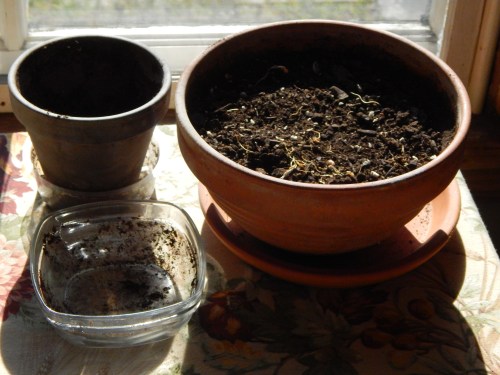
I need to prepare for winter in all sorts of ways. I am beginning by planning my garden. I finally, finally, finally cleared away those things that had died or had served their time and their purpose. I consolidated the potted herbs that thrived like the oregano with those herbs struggling but worth nurturing like the tarragon. Spread around me are empty pots, vases and votives. So many votives in different colors and sizes. I love lighting tealight candles in the winter time, not so much to banish the darkness but to bring out the beauty as light and shadow dance on the various surfaces.

In previous winters I’ve grown tomatoes and potatoes in addition to herbs, sprouts and edible flowers. I live in a house with many windows so there is a wonderful greenhouse effect. Though I sometimes freeze the plants do surprisingly well as light pours in at different angles throughout the wintry days. It’s not yet happened but it will — the oak tree that towers over one side of the house will lose its leaves and even more light will enter. I try to remember that as I plan my gardening strategy.

It is also a decorating strategy. What is it that I want to see and perhaps even need to see in the winter time as I enter a room or hallway in my home? What do I want others to see? While I don’t think I think it through that thoroughly it is a rather, soothing creative time. It might also be a procrastination time … there are so many books I need to read, want to read, and things I need to write. But I choose to believe that putting those things aside, concentrating on this task of cleaning, arranging and strategizing is part of my creative process.
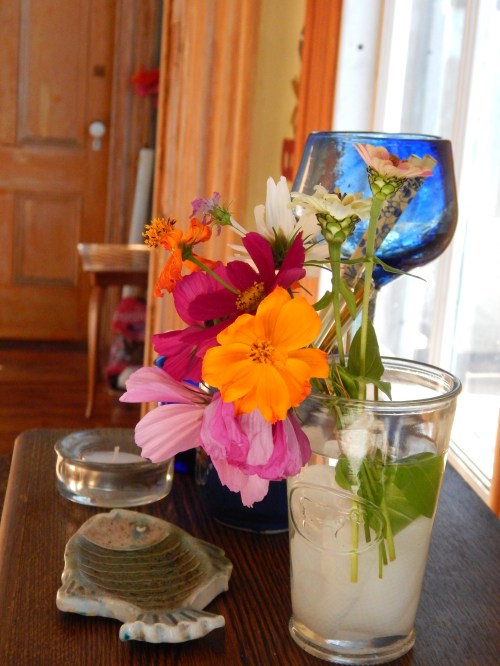
I am done for the day and pleased enough with the results so far. My to do list for next week includes buying a small bag of potting soil and then I’ll begin to plant my sprouts and we’ll see what else falls in to the soil.
Posted in Inspiration | Tagged decorating, flowers, gardening, indoor gardening, Inspiration, Photography, plants | 1 Comment »

Focusing my camera on rocks and water and sand on the shores of Revere Beach. There’s a story in their interaction but I just don’t know how to read it yet. That’s why yesterday I picked up Tristan Gooley’s How to Read Water. It’s subtitle – Clues and Patterns from Puddles to the Sea – captured me. If I don’t post for a while, it’ll be because I’m lost a darn good book. Meanwhile, have a good weekend, folks. 🙂

Posted in Inspiration, Nature Notes | Tagged books, Inspiration, nature, Photography, physics, Revere Beach, water | 2 Comments »

… light, wind, and water in action at the Copley Square fountain in Boston. It was a breezy day with bright sun. I sat by the water’s edge with my camera tucked away, intent upon eating a late lunch. I’m glad I had no expectation because I may not have seen what I did see just by sitting quietly by the water. After a while I could not ignore what I was seeing and so I had to put away my lunch, dig out my camera, and begin to photograph the motion before me.

Autumn leaves floating on the water’s surface first caught my attention, but the brightest of the leaves lay on the bottom. I’m not sure what forces kept them there even as the fountain’s mechanics and nature’s wind erratically churned the water. The sun was bright too, low angled. It dispersed in the waters producing rainbows.

Nearby buildings and surrounding trees were reflected so they appeared to float above the sunken leaves. A friend came over and sat next to me, and while I listened intently, yes I did, my eyes kept sliding back to the water to see what a friend describes as the accidental and casual things water does to light.

Accept for playing around with my ISO settings on the spot, there is minimal post processing of these images. If you chance by the fountain and sit by its side, if the day is sunny and the wind is rippling the water’s surface, this is what you might see too. Or maybe something different. But I think it will all be beautiful.

Posted in Inspiration, Nature Notes | Tagged beauty, colors, Copley Square fountain, Inspiration, light, Photography, physics, science, urban landscape, water, wind | 1 Comment »



🙂
Posted in Inspiration, Nature Notes | Tagged beauty, colors, Inspiration, mystery, nature, Photography, urban landscape, water | 1 Comment »

I finally found the leaf, curled but not crumbled, at the bottom of a bag. It survived the trip from South Carolina through three states before returning to Massachusetts. It came from a tree in my uncle’s yard originally planted by his wife. One day at the kitchen table she mentioned making a cup of fig tea. I’d never heard of such a thing.

She pointed to the tree outside, wide canopied with dark flat leaves, and said it was too bad we hadn’t been visiting when the branches had been weighted down with fruit and the birds were all about. She sometimes made a jam, she said, but this year she just pulled off some leaves to dry and make tea. As I snapped off my leaf, I promised to photograph it as it dried and then its final journey into tea. She laughed.
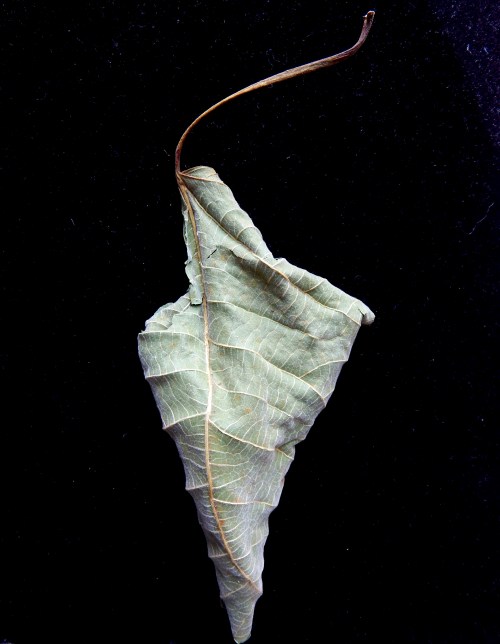
I think this leaf has a bit more drying to do and until then makes a fun photographic subject.
Posted in Branches, Inspiration, Nature Notes | Tagged family, figs, green, Inspiration, leaves, nature, Photography, tea, trees | 1 Comment »

