Feeds:
Posts
Comments

Posts Tagged ‘art’

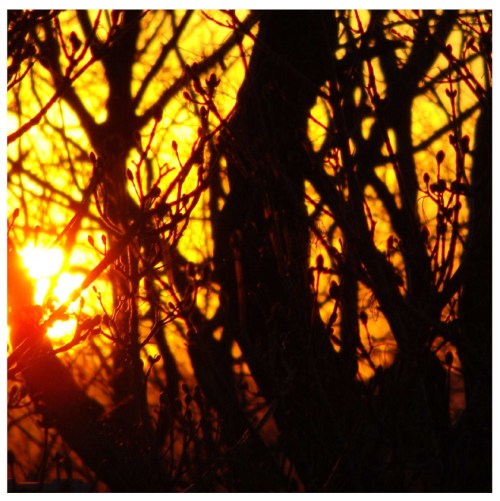
Recently, a friend invited me to join her for an “art-in,” and there she provided me with paper, pens and watercolors and encouraged me to paint whatever came to mind.  I decided to paint what I call a little somerset sky.

a somerset sky

a somerset sky

Its origin is this:  Of late, W. Somerset Maugham’s  Of Human Bondage has found its way into my hands, and there is a particular color-filled passage that I return to.  It is near the end of the book.  After an eventful night, Philip Carey, the main character …

“He leaned against the parapet and looked toward the morning.  At that hour the great city was like a city of the dead. The sky was cloudless, but the stars were dim at the approach of day; there was a light mist on the river, and the great buildings on the north side were like palaces in an enchanted island.  … It was all of an unearthly violet, troubling somehow and awe-inspiring; but quickly everything grew pale, and cold, and grey.  Then the sun rose, a ray of yellow gold stole across the sky, and the sky was iridescent .”

Thanks, Carol, for the opportunity to put brush to paper.  More about Carol’s beautiful artwork later this summer.

Have a good day, folks. 😉

Read Full Post »

Following is an updated table of contents (TOC) for the series of interludes, a collection of historical vignettes, threaded together by following in the footsteps of one gentleman, Joseph A. Horne (1911-1987). It’s a glimpse into history that continues to shape this world.  It’s been a wonderful, sometimes surprising, experience for me. The interludes will conclude over the next few months including a few more “interlude extras.”  I hope you enjoy this journey of words and images.

I. interludes TOC

i. foreward to the interludes

ii. interlude: genesis

iii. interlude: exodus, part 1

iv. interlude: exodus, part 2

v. interlude: dust in the wind

vi. interlude: lamentations

vii. interlude: to protect, preserve, and return … if possible

viii. interlude: offenbach archival depot

ix.  interlude: amerika haus

II. interlude extras

interlude extra: arnold genthe

interlude extra: edward gordon craig

interlude extra: carl hofer

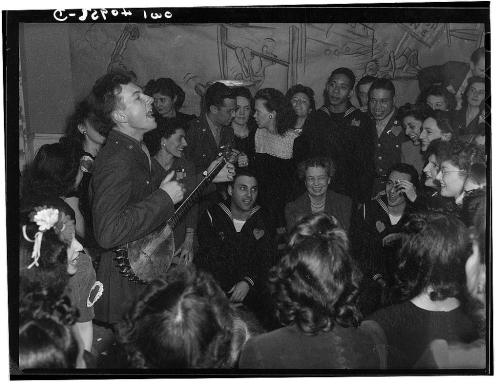
interlude extra: washington labor canteen, eleanor roosevelt and race relations

interlude extra: erich stenger

interlude extra: ludwig aloysius joutz

Read Full Post »

Oh, I don’t know but Picasso certainly came to mind as I watched this mallard contort in the blue waters of the Mystic River. A lovely sight.  Her partner seemed to enjoy, as well, as he watched from closer to shore.

Read Full Post »

Photographer Arnold Genthe

Photographer Arnold Genthe

One of the unexpected gifts of researching the life of Joseph Anthony Horne has been exposure to photographers from the late 19th and early 20th centuries whose work and craftsmanship are no longer that widely known outside of scholarly circles.  Via the Library of Congress Prints & Photographs Online Catalog, I’ve most recently enjoyed learning about Arnold Genthe.  Born in Germany in 1869, by 1895 he would be living in San Francisco, California, serving as the tutor to a Baron’s son.  There, he would gain access to a camera, become adept at its use and begin documenting his travels around the city, especially in Chinatown.

Friends, Chinatown, San Francisco by Arnold Genthe. taken between 1896 and 1906

Friends, Chinatown, San Francisco by Arnold Genthe. taken between 1896 and 1906

Eventually he would become a famed photographer for the wealthy elite, politicians, artists and to budding movie stars like Greta Garbo.

Portrait of Greta Garbo, taken July 1925

Portrait of Greta Garbo, taken July 1925

His earliest photographs, with the exception of photos he took in Chinatown, would be destroyed by the city’s devastating 1906 earthquake and fire.  But with a successful career that spanned three decades, the Library of Congress has archived thousands of his photographic images — the negatives and other materials were purchased from his estate after his death in 1943.  During his lifetime, like many people of his generation with his financial resources, Genthe would spend time traveling throughout Africa and Asia.
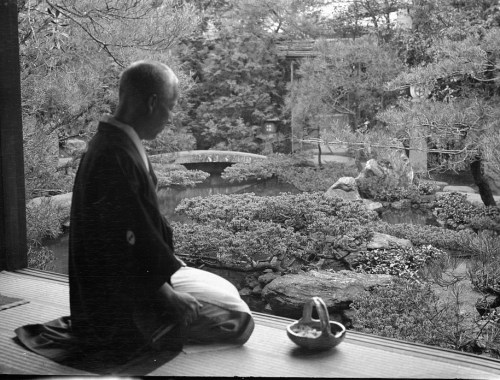
It is his images taken in Asia during a several month sojourn in 1908 that I find especially captivating.  Collectively titled, Travel Views of Japan and Korea, the breadth of imagery is extensive.

No city names are cited or any geographic locations given.  There are certainly clues to be gleaned from the landscape (e.g. an image of a giant buddha that may be in Kamakura and images of the Itsukushima Shinto Shrine).

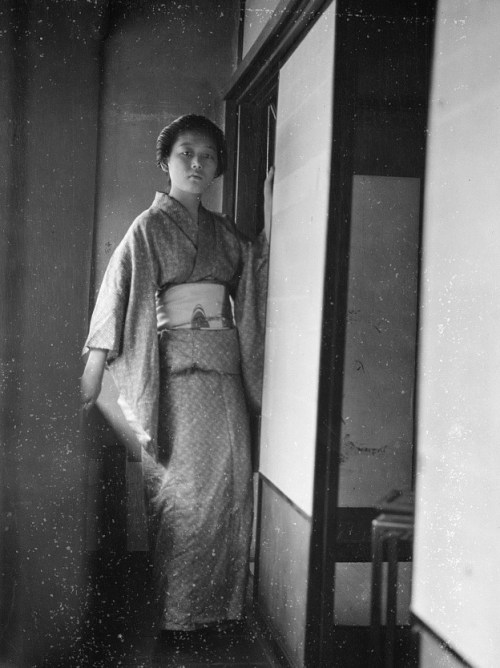
I am particularly fascinated by his photographs of the people.

Each image holds a story in the expressions captured on faces over a hundred years ago, in the clothing worn, in the backgrounds of each scene.

Genthe seemed particularly drawn to photographing how, rich or poor, young or old, everyone took care of the babies.

The images are a dream in terms of capturing a very specific moment in time.
The Genthe Collection at the Library of Congress can be viewed via this link: http://www.loc.gov/pictures/collection/agc/

If you’re particularly interested in the photographs of Old Chinatown, there’s a book available here.

And it appears that at least one chapter of his 1936 memoir, As I Remember, is available online here.

Read Full Post »

Detail from David's Charge to Solomon Stained Glass Window, Trinity Church in Copley Square

Detail from David’s Charge to Solomon Stained Glass Window, Trinity Church in Copley Square, by Burne-Jones and William Morris

Returning to the Trinity Church Book Shop are items with a detail I photographed from David’s Charge to Solomon, a stained glass window located in the church’s baptistry.  The magnificent window was designed by Pre-Raphaelite artist Edward Burne-Jones and executed by William Morris Studios in 1882.  These “four angels” are located in the upper left corner of the window.  There they look down upon David, near the end of his days, as he instructs his son Solomon in how to move forward in life as a man and as a leader of his people.

Items currently available are magnets, mugs and postcards.  Coming soon are totes and t-shirts.  Visit the Shop to view these and many more lovely and thought provoking spiritual items at 206 Clarendon Street, Boston, in the heart of Copley Square.  Shipping is possible.  For more Book Shop information, click here.  And to see additional details from the window David’s Charge to Solomon, please check out images 25-32 here.  Better yet, if you’re in the area, take one of the excellent guided tours so that you can see the window firsthand. 😉

Read Full Post »

When I wrote the photo essay Branching Thoughts at the end of last year for Creativity-Portal.com I made some promises that I actually wasn’t sure I was going to keep, about being disciplined and stop putting off until tomorrow what I could conceivably do today.  I love trees. I’ve always written about trees and once I picked up a camera I began photographing them, especially the branches.  I’ve finally put together a big book of branches, a 108-page collection of images taken across Massachusetts.  It is available as a soft cover book or PDF for $8.95.  Click on any of the images below to check it out.

Branches Cover by Cynthia Staples

Branches Cover by Cynthia Staples

Read Full Post »

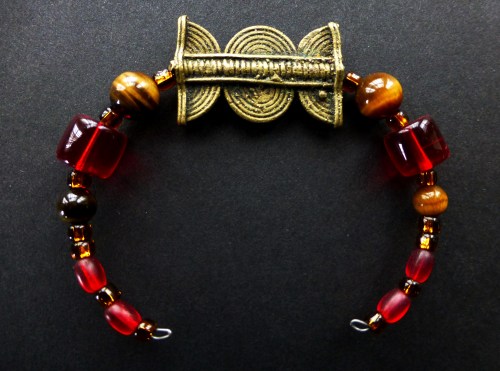
Once upon a time, I made jewelry.  It was a hobby to give my hands something to do when I wasn’t writing and my eyes something to concentrate on when I wasn’t watching television.

I was simply following in the footsteps of my friends who did much more elaborate, skilled, and exquisite work.  I admired their craftsmanship and eyes for design while I mostly played around with colors and textures.

Up to a certain point I could be disciplined enough to complete a piece but then more and more pieces remained unfinished.  That’s when I realized mostly what I wanted to do was experiment with placement of beads and unique baubles.

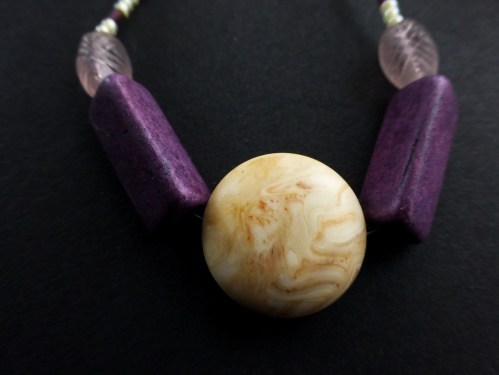
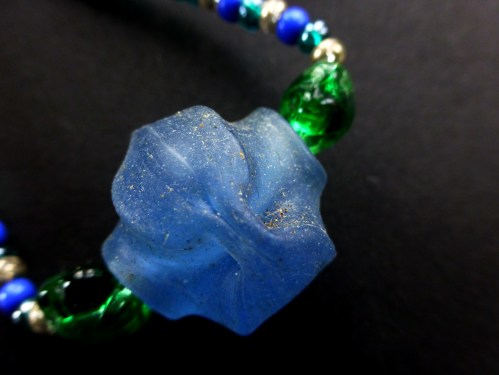
I still have the tools to make jewelry, at least my simple kind.  I have not tried in years. These pieces, and many more, I found in an old jewelry box as I was trying to do some early Spring cleaning.

Some pieces I may keep to wear while others will most certainly continue to be used as photographic inspiration.  As for individual beads and baubles, still unstrung, I may share some of those with a young friend still quite fascinated by the colors of the rainbow and how to hold bits of it in your hands.

And once there has been some space cleared in that jewelry box, perhaps I’ll try my hand at creating some new pieces. Or at least I can dream. 😉

Read Full Post »

In February 1944, a photographer took a series of photos at the opening of a Labor Canteen in Washington, DC.  The entertainment that night was a young Pete Seeger and in the audience First Lady Eleanor Roosevelt.  Two years after I found the picture, I wrote Mr. Seeger asking if he remembered the photographer.  I was hoping for but not really expecting a response.  But one day I checked my mail and there was a postcard.

One side was covered with words, actually one word, peace, translated into many languages.  On the other side, handwritten, was essentially the following note:  “Cynthia, I’m 94 years old. The details from that time aren’t so clear anymore but my memoirs are being updated and I will make sure that the photographer’s name is duly noted.  Joseph Anthony Horne.”

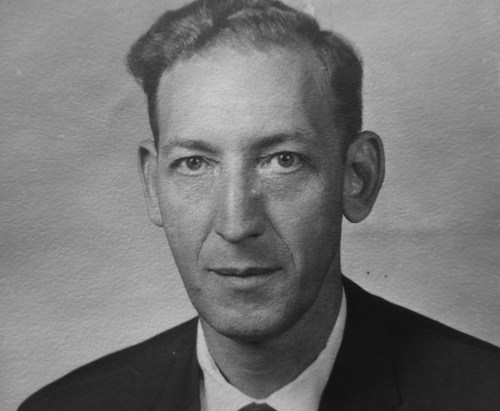
Joseph A. Horne

Joseph A. Horne

Joseph Anthony Horne was born in 1911 and died in 1987.  I began researching his life out of curiosity.  You see, I knew a man who kept telling stories of a 1950s and 1960s childhood spent in exotic places.  Of fishermen in Genoa, Italy dropping seahorses into his hands. Petting a white elephant belonging to the Maharaja of Mysore. Skating in Vienna by doctor’s orders.  It was a life made possible by his father, Mr. Horne, working for the U.S. foreign service, a post he’d taken on after World War II.  As for what he’d done during the war, “something involving art and books while stationed in Germany.”  In the 1960s the family moved back to the U.S. to the Maryland/DC area where Horne continued to work in foreign service until retirement.

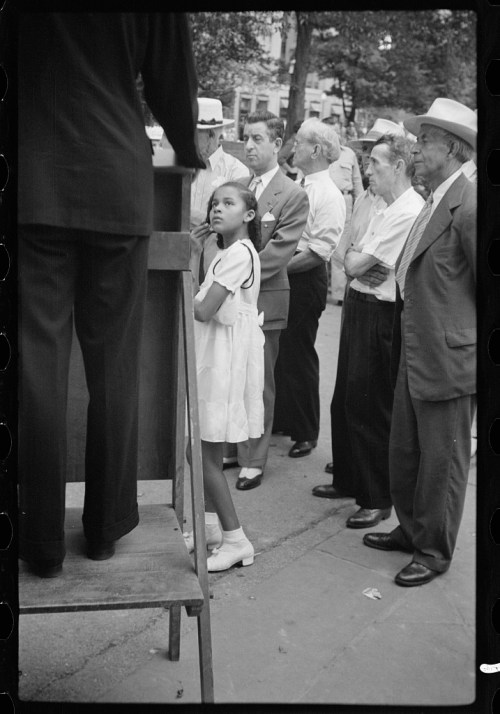
Photo by Joseph A. Horne, 1944, Library of Congress

Photo by Joseph A. Horne, 1944, Library of Congress

I already knew from the son that his father had been a photographer, loved books and music, and that the foreign service position held in all the various countries had involved working with libraries and inviting American musicians, writers and other artists to share their works.  Perhaps inspired by that PBS show, History Detectives, I asked the son was there anything more he’d like to know about his father.  I was given carte blanche to research as I liked.  Those mysterious post-war German years working with books drew my attention but soon I was researching his early years as well. So many files from the early and mid-twentieth century have been digitized, but I kept hitting a wall with finding information prior to 1940.  When I queried the son he mentioned, “that might be because he changed his name. ”  Turned out that Mr. Horne used to be Mr. Wisniewski and had grown up in Nebraska not Maryland as I had assumed.  “So he was born to the Wisniewski family?”  The son shook his head.  “He was adopted, along with a baby girl.  My father thought he’d been born in New York.”  When asked why he had selected Horne of all names, the son replied with a smile, “He thought he was an illegitimate love child of two New York families. the Astors and Langhornes.”  As I stared at the son, he laughed.  “My dad was quite the storyteller.  He even mentioned studying in Europe and hearing G. K. Chesterton.”

One bit of information was easy to find thanks especially to National Archive records available online.  In 1946, Joseph Anthony Horne joined the Monuments, Fine Arts and Archive unit.  From 1947-1948, he would serve as the director of the Offenbach Archival Depot, one of the primary collection points for preserving and returning books, artwork and cultural items stolen by Nazi Germany during World War II.  He had been a Monuments Man.  As for how an orphaned baby in New York City might travel to the American Midwest (along with many thousands of other orphaned and homeless children), and how a young man from Nebraska might find himself working as a photographer in Washington, DC … not to mention exactly who were the people, places and events experienced in Europe during and after the war … Well, all of that, would take a bit more digging.  It would be a treat to discover his connection to photography historians like Erich Stenger and artists like Karl Hofer and quite a surprise to learn of the drama at Offenbach involving missing books and the complex decisions made as the Cold War loomed, reminiscent of decisions made in the world today.  This post is just to set the stage.  More stories to follow.

Read Full Post »

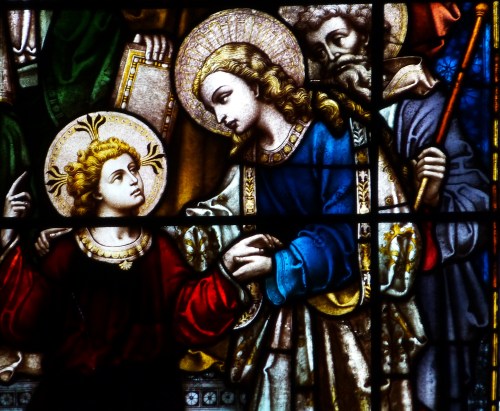
It is with great pleasure to begin the year working on producing new sets of postcards for the Book Shop in Trinity Church in Copley Square, postcards that highlight just a bit the outstanding artwork and craftsmanship of the church’s interior.  The above image is a detail from one of the windows in the chancel executed by Clayton & Bell of London, Jesus in the Temple with the Doctors.  The following image is a detail from The Ascension, a window located in the south transept and executed by A. Oudinot of Paris.

The postcards should be available by end of the month exclusively at the shop.

Read Full Post »

On New Year’s Eve, I chanced upon the PBS broadcast of Yo Yo Ma performing Azul with the New York Philharmonic Orchestra.  I felt frozen listening to the musicians and enraptured by the passion on Yo Yo Ma’s face.   Later I learned in this program note of composer Osvaldo Golijov’s desire in developing this recently commissioned work for cello and orchestra to “recapture for the present that ability of the late Baroque composers to suspend time without stopping motion in their music …”  A complicated piece to say the least.  Time felt suspended for me on occasion.  When you have a chance, give a listen and see what you experience.  This link will take you to an actual video of the New York Philharmonic performance (Azul can be accessed at 14:33) or you can listen via the following Youtube video.

Read Full Post »

« Newer Posts - Older Posts »