… at rest on a bright day in the Boston Public Library in Copley Square, Boston.
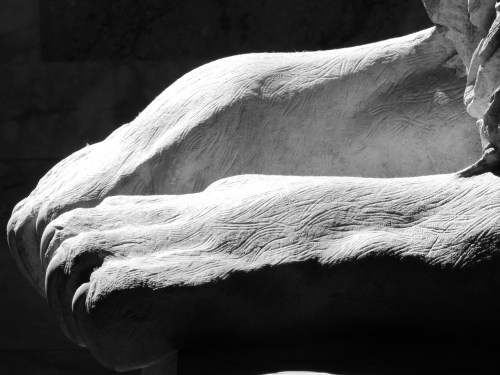

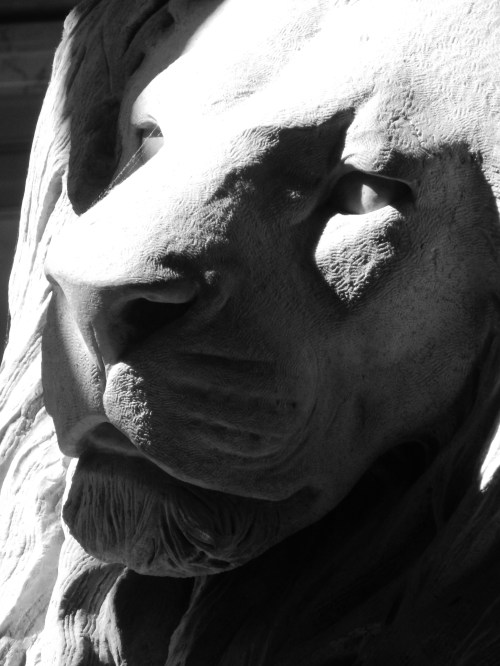

Posted in Inspiration, tagged animals, art, beauty, black and white, Boston Public Library, couchant, Inspiration, lions, Photography, sculpture on September 23, 2015| Leave a Comment »
Posted in Inspiration, tagged architecture, art, beauty, Charles Connick, churches, colors, design, faith, Inspiration, light, Photography, religion, saints, St. Peter's Episcopal Church, stained glass, Wilbur Herbert Burnham, windows on September 17, 2015| 5 Comments »

Detail from Baptism Window
There are thirteen stained glass windows inside St. Peter’s Episcopal Church in Central Square, Cambridge, MA. And I had the wonderful opportunity to stand before them all thanks to the kind gentleman, Rector Brocato, who let me through the door.

Detail from St. John the Baptist Window
He took me on a brief and informative tour of his church and provided me with detailed literature. The parish was founded in 1842. The current building was constructed in 1867. The first stained glass window was added in 1917, designed by Wilbur Herbert Burnham.

Wilbur Herbert Burnham designing a stained glass window, ca. 1940 / Paul Davis, photographer. Wilbur H. Burnham Studios records, circa 1904-1991. Archives of American Art, Smithsonian Institution.
Burnham is one of two stained glass designers highlighted in the church’s guidebook. He designed several windows for the church.

Detail from St. Anne Window designed by Burnham
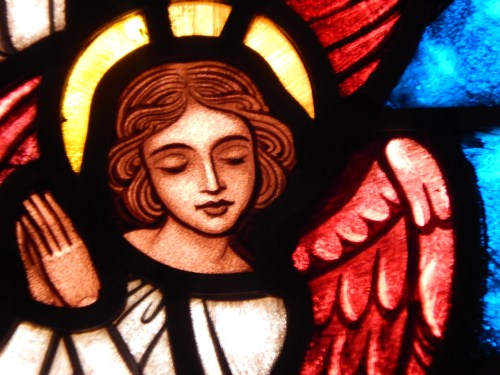
Detail from St. Anne Window
In the 1930s, two windows were added from the Charles J. Connick Stained Glass Studios, most noted of which may the High Altar Window.

Detail from High Altar Window, by Connick Studios
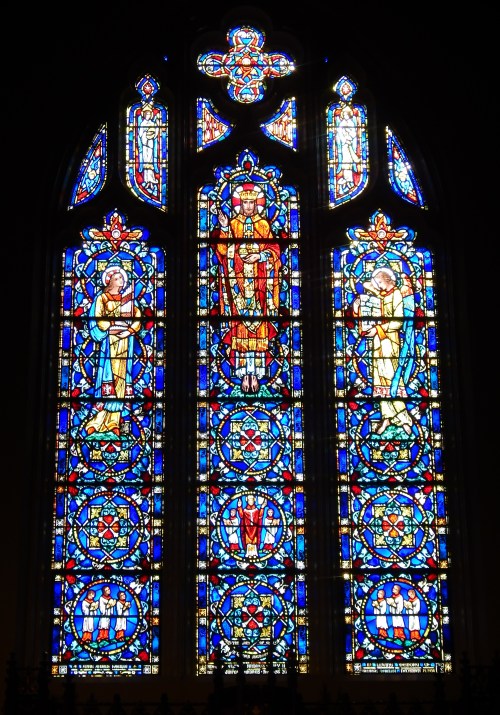
High Altar Window
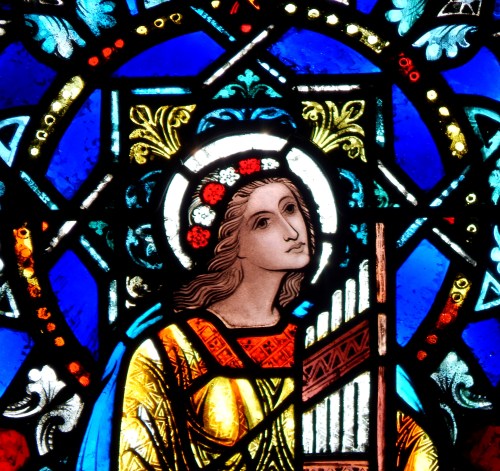
Detail from High Altar Window
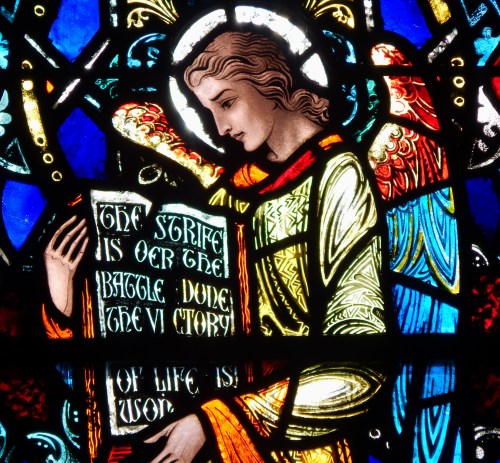
Detail from High Altar
The current guide book is being revised to include the names of all the designers.
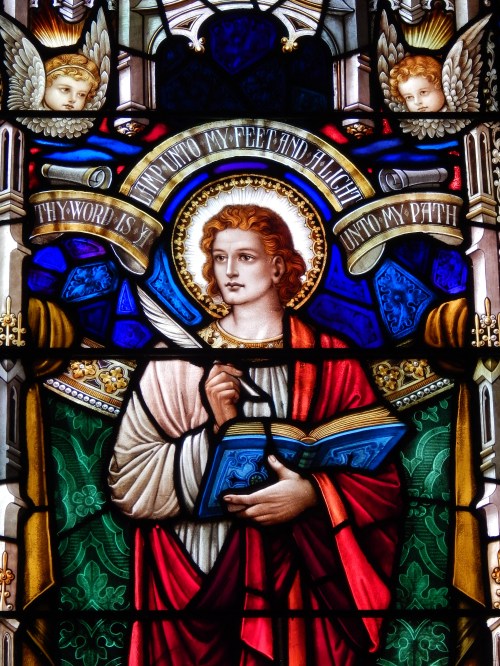
Detail from St. John Window
Even so, the current guide book provides a wonderful historical summary of the of the parish and detailed description of the biblical and secular symbolism in each window.

Detail from St. George Window
You can find out more about this welcoming place, from services and tours to community outreach, via the church website: http://www.saintpeterscambridge.org/

Detail from Nativity Window
Sources/Additional Reading
Learn more about Wilbur Herbert Burnham in the Archives of American Art via this link.
Learn more about Charles J. Connick in the Archives of American Art via this link.
The Charles J. Connick Stained Glass Foundation is also a wonderful resource.
Posted in Inspiration, Nature Notes, On the Road, tagged abstract, beauty, colors, Inspiration, nature, Photography, urban landscape, walking on September 16, 2015| 2 Comments »
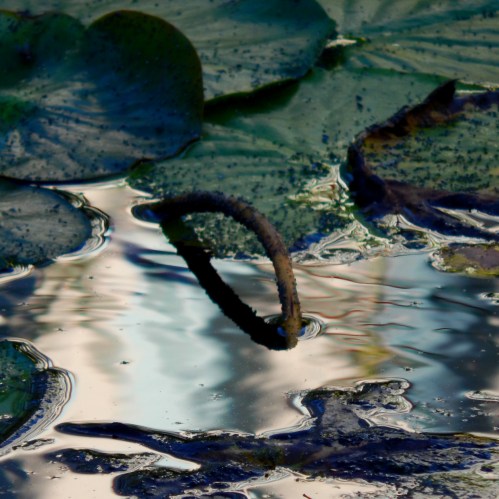
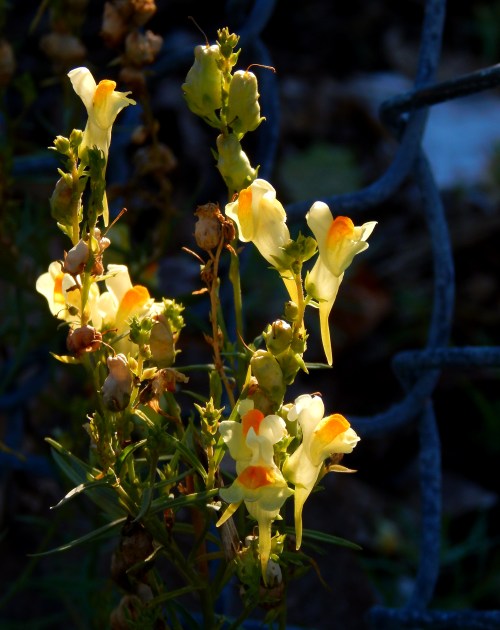
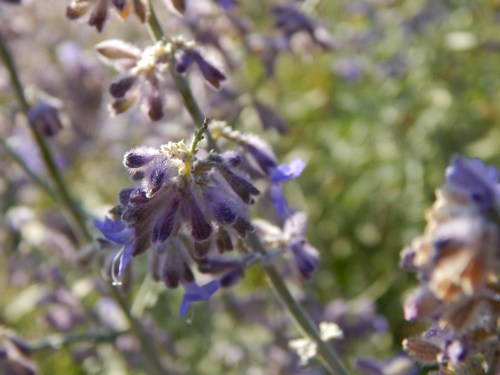
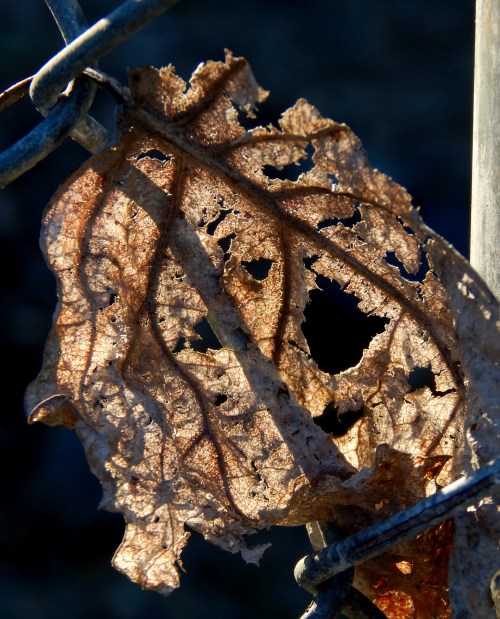
I took a friend’s advice. Instead of walking all the way home from Copley Square, I walked half way and this is what I saw.

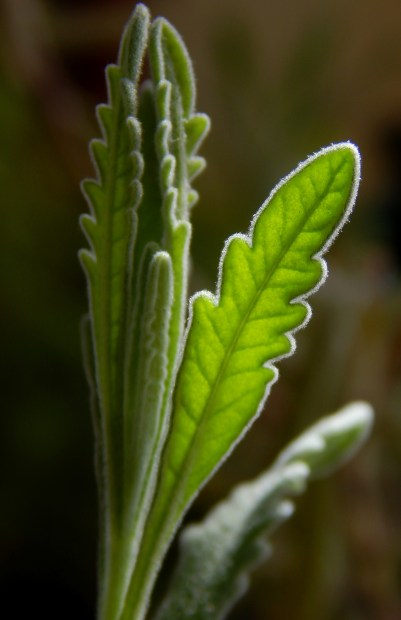
Posted in Inspiration, Kitchen Inspirations, tagged green, herbs, indoor gardening, Inspiration, lavender, Photography on September 13, 2015| 1 Comment »
Posted in Inspiration, Kitchen Inspirations, tagged creative writing, food, food writing, herbs, indoor gardening, Inspiration, Lyrical Somerville, perspective, Photography, poetry on September 9, 2015| 4 Comments »
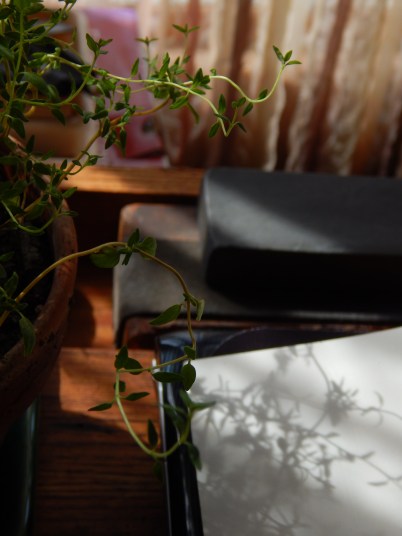
I must say, I’ve had a good year with gardening in so many unexpected ways. Please enjoy a new poem, hot off the press, published in Lyrical Somerville: Near the Window.
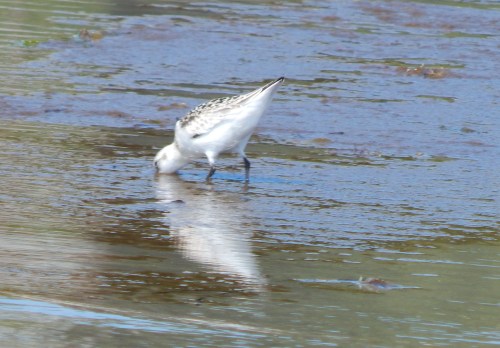
Posted in Inspiration, Nature Notes, tagged animals, birds, colors, Inspiration, nature, Photography, Revere Beach, water on September 9, 2015| 4 Comments »
Posted in Inspiration, tagged beauty, colors, flowers, friendship, gardening, gifts, Inspiration, Photography on September 7, 2015| 2 Comments »

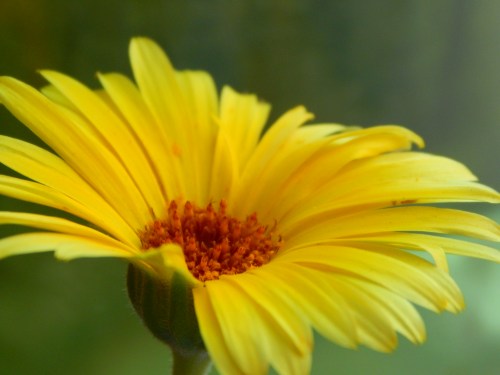
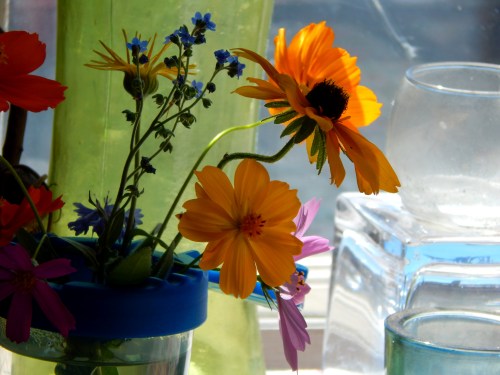
A very young friend to whom I send postcards recently gave me a gift in return.

Flowers from her first garden.

A beautiful sight in the morning light.

Thanks, Vanessa. 😉
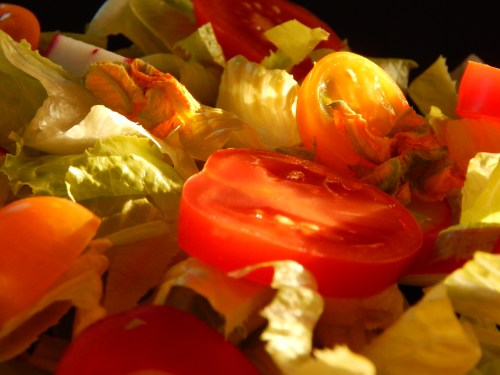
Posted in Inspiration, Kitchen Inspirations, tagged beauty, colors, food, food photography, Inspiration, Photography, recipe, salads, vegetables on September 6, 2015| 1 Comment »
Posted in Inspiration, Kitchen Inspirations, tagged abstract, colors, fun, Inspiration, light, Photography, shadows, silhouettes on September 2, 2015| Leave a Comment »
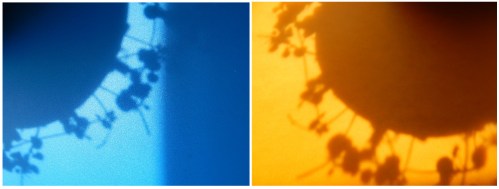
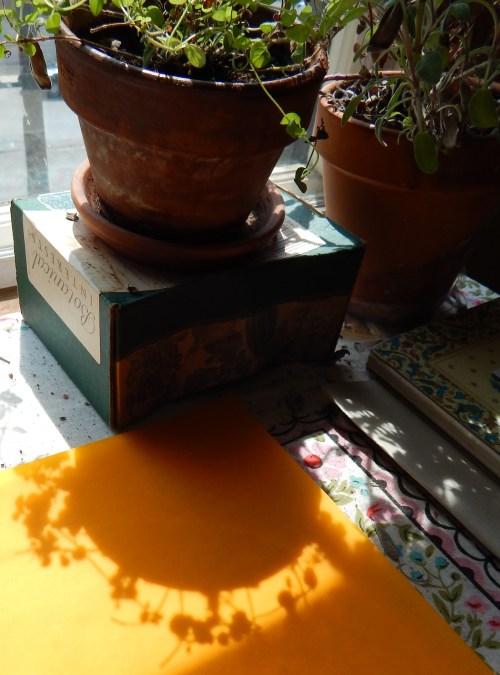
herbs in silhouette against my notebook covers

votives and vases

the sight that sparked the idea
Posted in Inspiration, Kitchen Inspirations, tagged fish, food, food photography, Inspiration, Photography, recipes, sardines on September 1, 2015| Leave a Comment »
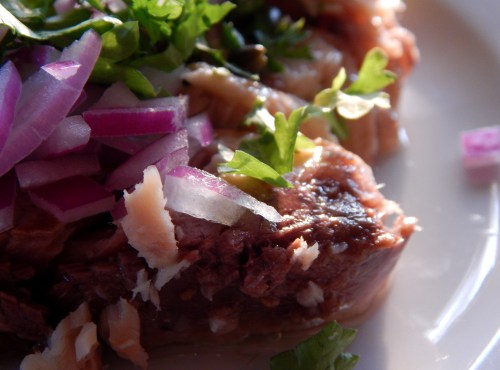
One can of sardines, drained, placed on a small plate, topped with fresh cut onions and herbs, a drizzle of olive oil, and a sprinkle of black pepper. That’s all. Okay, okay … there was some homemade mayonnaise on the side along with some toasted bread. An impromptu dinner after being too lazy to go to the store. 😉